On holidays, do you fall sleep in the Afternoons ! (not a Q to those fortunate to sleep on all days of the week !) Sleep is every day activity. Many a times, when you get up after a short [or long sleep in AN] – you may have some confusion on the time of the day – is it morning or evening ?
A few decades ago, most people believed sleep was a passive activity during which the body and brain were dormant. “But it turns out that sleep is a period during which the brain is engaged in a number of activities necessary to life—which are closely linked to quality of life.”
For many of us addicted to social media, the sleeping time is getting reduced. When one is sleep-deprived, eyes and mind crave for a nap. Napping offers various benefits for healthy adults, including: relaxation, fatigue reduction, increase in alertness, good moods, quicker reaction and better memory. The timing of sleep in humans depends upon a balance between homeostatic sleep propensity, the need for sleep as a function of the amount of time elapsed since the last adequate sleep episode, and circadian rhythms which determine the ideal timing of a correctly structured and restorative sleep episode.
Siesta, a ‘Spanish’ word from the Latin hora sexta – "the sixth hour" (counting from dawn, therefore noon), hence "midday rest”. It is the traditional daytime sleep of Spain, and through Spanish influence, of many Latin American countries. Factors explaining the geographical distribution of the modern siesta are mainly high temperatures and heavy intake of food at the midday main meal. The "siesta" can refer to the nap itself, or more generally to a period of the day.
The afternoon sleep is often called ‘Catnap’. A catnap is a short sleep, usually one which you have during the day. The phrase dates back to at least the early 1800s, with notable literary use in 1916 by Edgar Rice Burroughs in "The Son of Tarzan." The term takes its origin from how cats take a series of naps throughout the day and night. This idiosyncratic cat-like behavior is thought to help cats stay their alert and agile selves, and humans can take afternoon napping to reap similar benefits. There’s no medical definition of a catnap, and there’s no strict limit on how long they last.
In case you get confused when you get up of the time of the day ! – thinking of getting up, brushing your teeth as in the morning, while it is evening, don’t feel bad and never start crazily querying on forums and searching on web. If you do so, you might get influenced by some modern phraseology like :
Confusional arousals - a sleep disorder that causes you to act in a very strange and confused way as you wake up or just after waking. It may appear that you don’t know where you are or what you are doing. One may have slow speech, stammering, confused thinking, poor memory, blunt responses !! When a confusional arousal occurs, you may seem to be awake even though you have a foggy state of mind. Episodes often start when someone else physically wakes you up forcefully.
Sleepwalking or shouting during an episode is common. Some people with confusional arousals also grind their teeth. Confusional arousals is considered a parasomnia.
‘Sundowning" refers to a state of confusion that occurs in the late afternoon and lasts into the night. Sundowning can cause various behaviors, such as confusion, anxiety, aggression or ignoring directions. Sundowning also can lead to pacing or wandering. Sundowning isn't a disease. It's a group of symptoms that occurs at a specific time of the day. These symptoms may affect people with Alzheimer's disease and other types of dementia.
வேதநூல்பிராயம்நூறுமனிசர்தாம்புகுவரேலும்
பாதியும்உறங்கிப்போகும்நின்றதில்பதினையாண்டு
தொண்டரடிப்பொடிஆழ்வார் - திருமாலைபாசுரம் - ஓர்தினத்தில்உள்ளஅறுபதுநாழிகையில்முப்பதுநாழிகைஉறக்கத்தில்கழிகிறகணக்கில்வேதசாஸ்திரத்திற்படியேநூறுவருஷங்கள் வாழ்ந்திருப்பர்களேயானாலும், அந்தசதாயுஸ்ஸில்பாதியானஐம்பதுவருஷமும்உறக்கத்தாலேகழியும் !!!
There is still some stigma about naps but as long as it does not affect your work, your mind or your night sleep, never mind. Don’t have any guilt, it is acting to the demands of body and mind. Sleep well and happy – have naps and do not have interrupted sleeps. Life is too beautiful to be spent worrying.
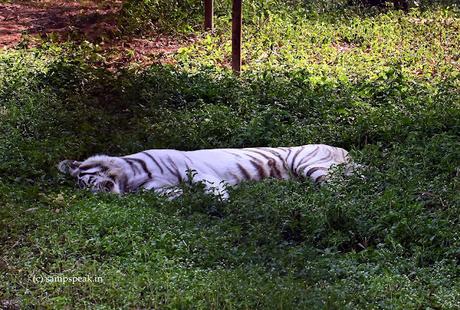
Pictured here is a White Tiger – cat-napping at Vandalur even as restless visitors wanted it to be active ! – it did get up to the amusement of onlookers. White tigers, a color variant of Bengal tigers, sleep 16-20 hours per day on average, much like other tigers. They are crepuscular, most active at dawn and dusk for hunting, so they rest extensively during daylight in shady spots like thickets, caves, or under trees to conserve energy after intense bursts of activity.
This long sleep helps them recover from high-energy hunts, maintain their large body mass (up to 500 pounds), and avoid human conflicts by aligning rest with daytime human activity. However, life is different for them in captivity. Captivity alters white tiger (as is the case of most caged / zoo animals) sleep patterns, reducing total sleep time compared to the wild (16-20 hours daily) while increasing fragmented resting and stereotypic behaviors like pacing due to unnatural environments and feeding schedules.
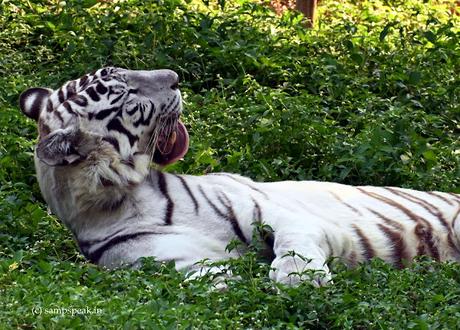
Fresh from today’s afternoon sleep – yours friendly aasami sirippu sinthanaiyaan.
7.3.2026