The Stirling Tapestries in Scotland and the exhibition about their recreation | #LRCrafts - DIY Passion: if you can think it, you can make it
We visited Stirling Castle in 2018, at the end of a wonderful trip to Scotland, and I was captivated by every part of it: the grand courts, lush gardens, imposing bastions, but especially the tapestry exhibition.
This exhibition, part of a project to recreate the historic “Hunt of the Unicorn” tapestries, was something that I could not stop thinking about. We met it at the farthest end of the castle grounds, I’m glad we didn’t miss it! Even though a few years have passed, I thought I could share my impressions with you. As an embroidery and textile crafts enthusiast, I was completely drawn in by the artistry, dedication, and sheer scale of this undertaking. I left the room inspired, feeling a kinship with those who had spent years bringing these pieces of history to life.


Historically, Stirling Castle was adorned with an impressive collection of over a hundred tapestries during the 1530s and 1540s. Among these, the most magnificent was a series known as “The History of the Unicorn”, which depicted the mythical creature’s dramatic capture and was believed to symbolize purity, strength and divine power.
This series decorated the Queen’s bedchamber, adding both warmth and opulent beauty to the room. The vibrant colors and intricate designs would have made a striking contrast to the stone walls, enveloping the royal chambers in luxury.
Sadly, these tapestries were gradually lost to history: all that remains today are descriptions recorded in the Royal inventories. With no visual records or detailed sketches of their original appearance, Historic Scotland faced the challenge of bringing these lost works back to life. They ultimately chose to commission a recreation of the series, basing it on the closest surviving example: the “Hunt of the Unicorn” tapestries housed at the Metropolitan Museum of Art in New York.
The recreation of the Stirling Tapestries is the largest tapestry project in Britain in over a century. This ambitious 14-year project brought together 18 skilled weavers from around the world, including master artisans from the West Dean Tapestry Studio in Sussex. They really faced a monumental challenge.
The tapestry weavers visited the originals in New York, studying colors and details and materials with precision. Using advanced digital imaging, the team created line drawings, known as “cartoons,” to guide the weavers in reproducing the tapestries as accurately as possible.
The tapestries were woven at a density of four warps per centimeter, half the density of the originals, to save years of labor without compromising detail. Even so, the work was painstakingly slow and required an immense amount of patience. The weavers also adapted colors to capture the brilliance the originals might have had when fresh off the loom, creating rich reds, deep greens, and soft golds that light up the Queen’s bedchamber. The result is a breathtaking recreation, that transports visitors back to the Renaissance era.
In an interview, Ruth Jones, a leading weaver on the project, discussed the challenges of recreating certain scenes, including the depiction of a maiden beguiling a unicorn. Drawing inspiration from woodcuts and engravings of the era, Jones succeeded in recreating this critical moment, adding another layer of historical accuracy to the tapestries. For Jones and her team, this work was more than a craft; it was an homage to the medieval artisans who once wove these masterpieces.


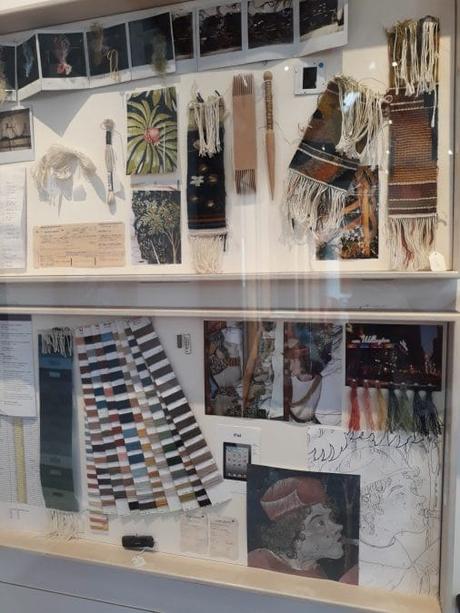
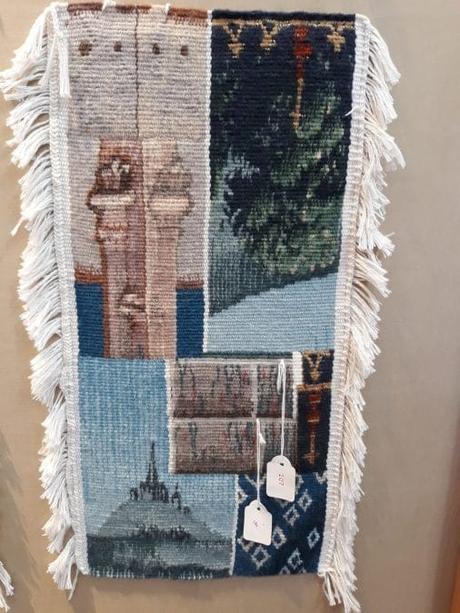
The exhibition itself at Stirling Castle is equally inspiring: it felt like stepping into a living history lesson.
Display cases holded a variety of weaving materials and equipment: bobbins, spindles, and spools of richly colored thread that hint at the dedication and labor behind each stitch. Some tools and thread samples were accessible for visitors to touch, providing a tangible connection to the art of weaving that’s all too rare in traditional exhibitions.
Video footage played throughout, immersing visitors in the methods and challenges the weavers faced. Watching the artisans carefully work through each step, from setting the warp to achieving the exact hues needed, made the process feel immediate and alive. I found myself glued to the introductory video, that I watched twice in a row, absorbing every detail, from dyeing methods to historical weaving techniques, that often reminded me of my own crafting endeavors. The level of historical accuracy and attention to detail was extraordinary, especially when it came to capturing colors that would have appeared vibrant and fresh in their original form.
Seeing the half-finished panels and detailed sketches was particularly inspiring. Each design element seemed to be layered with intention and care, creating scenes that were alive with historical resonance and artistic integrity. My favorite part, though, was observing the display of sample threads and color swatches. These weren’t just any materials: they were painstakingly chosen to match the originals as closely as possible, a testament to the dedication and respect that went into recreating the tapestries.
Standing in that room filled with materials and half-finished tapestries, I felt a profound connection with the weavers, both modern and medieval, who poured years of their lives into these projects. It sparked dreams of taking on my own historical weaving project—if I can persuade my husband to help me build a suitable loom!
It’s been several years since my visit, but the memory of Stirling and the tapestry exhibition still feels fresh. Scotland left an indelible mark on me, and Stirling Castle is a highlight I often recommend to fellow travelers and history enthusiasts.
If you’re nearby and enjoy hands-on crafts, consider looking also into the crafting retreats at Gartmore House, where you can explore Scottish handicrafts.
And if you’ve seen the Stirling Tapestries or attempted a historical recreation of your own, I’d love to hear about it! Did you feel the same sense of awe for these artisans and their work? Share your experience in the comments!
by Rici86.