


The sewing machines produced in the Singer factory in Monza (Italy) | #LRCrafts - DIY Passion: if you can think it, you can make it
I’ve been working for a while now on a searchable database of Singer sewing machine serial numbers. You type in a number, and it tells you the extant information on your machine: when and where it was made, which model it is, and – when I can find them – even manuals and other useful info.
One thing I’ve grown more and more curious about is the story of Singer machines made in Monza, Italy. Being Italian myself, I naturally felt drawn to learning more about the production that took place there. But there’s surprisingly little information available, compared to other Singer factories. Which models were made in Monza? When exactly? And how can we identify them today?
So, I’m starting a dedicated research project focused entirely on Singer machines made in Monza. My goal is to collect as many serial numbers with their model numbers as possible, and try to narrow down the production dates based on what we find. Eventually, I hope to build a complete list of what was made there and when.
If you own a Singer machine that was made in Monza (or even just suspect it might be) please consider sharing the details in the comments, with as much information as you can. Serial number, model, any markings or labels, even a photo if you’re willing. Every piece helps!
Let’s build this puzzle together.
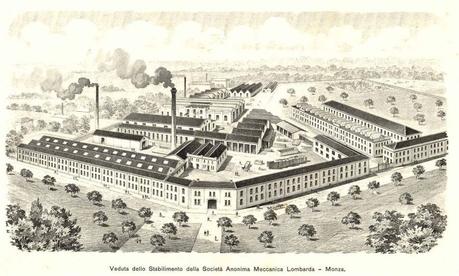
Table of contents
Sewing machines made in Monza (Italy)
Search the full databaseSerial numbers of Singer sewing machines produced in Monza can be identified by their prefix letter.
They start with MA, MB, MC, and so on, followed by six digits.
Model numbers, instead, bear the location code M.
Search for a Monza factory serial number:Total serial numbers: 39
MA38602411M1934-1964Model 411M in its original Italian cabinet. The cabinet has a label with testing date on 10th January 1964. When the cabinet is original, labels like this (usually found on cabinets for Italian- and German-made 400-series machines), can help narrow down the production date of the machine itself.
Photo of the testing label
More on the machine
MA4075115Mfrom 1934 onwardsFiligree decals
MA15840615Mfrom 1934 onwards
MA16762315Mfrom 1934 onwardsTrefoil decals
MA34924315Mfrom 1934 onwards
MA45428015M88from 1934 onwardsFiligree decals
MA46481715M88from 1934 onwardsFiligree decals.
MA49804215M88from 1934 onwardsFiligree decals
MA58306815Mfrom 1934 onwards
MA59287715Mfrom 1934 onwards
MA62055331M15from 1934 onwardsBadge with model number on the machine itself.
MA67275515Mfrom 1934 to WWIITreadle machine, filigree decal.
It's likely this machine was brought to Australia by an immigrant from Italy in the late 1940s to early 1950s. Post-Second World War, migration from Italy officially began in 1948, after the Australian government signed an agreement with Italy to accept migrants, but Italians had been emigrating there long before that.
Photo of the machine - Sales listing
MA92993231M32from 1934 onwardsBadge with model number on the machine itself.
MA94324215M88from 1934 onwards
MB1552615Mfrom 1934 onwards
MB4225015Mfrom 1934 onwards
MB46830227Mfrom 1934 onwardsProbably assembled in Australia from Monza supplied parts: the serial number comes from Monza, but on the top of the machine it's written "Made in Australia". It also has an identifying code for one of the Japanese sewing machine factories (J-A8).
MB8021115Mfrom 1950 onwardsMachine made of aluminum, so made after 1950.
MB8217715Mfrom 1934 onwards
MB17781315Mfrom 1934 onwards
MB20006615Mfrom 1934 onwardsBadge with model number on the machine itself.
MB33003315Mfrom 1934 onwardsBadge with model number on the machine itself.
MB331858227Mfrom 1934 onwardsModel number written on the machine itself.
MB425090227Mfrom 1934 onwardsModel number written on the machine itself.
MB431565227Mfrom 1934 onwardsBadge with model number on the machine itself.
MB540607227M1959Beige Singer 227M portable, from 1959
MB566455306Mfrom 1934 onwardsBadge with model number on the machine itself.
MB829589401Mfrom 1934 onwardsThis machine was bought by an Italian woman, who brought it with her to the United States, then it passed to her son, who later sold it. It has the original manual in Italian and the original beautifully Italian-made cabinetry.
MB836999306M101961-1962Black 306M10, sold as a fast zigzag machine with table, small industrial motor, knee lift and light.
The machine was sold on 17th April 1962 in Neu Kölln (Berlin) to a young lady seamstress for 854,00 Deutsche Mark.
The machine was used commercially and later in a private context until the original and - now deceased - owner became unable to use it.
MB872239306Mfrom 1934 onwardsPhoto of the machine
ME155104237M1967-1971Class 237M machines were produced between 1967 and 1971.
ME167737237M1969-1970Class 237M machines were produced between 1967 and 1971.
About the machine
ME246795239M1968-1971Class 239M machines were produced between 1968 and 1971.
ME308450237M1967-1971Class 237M machines were produced between 1967 and 1971.
About the machine
ME400849237M1967-1971Class 237M machines were produced between 1967 and 1971.
ME444976237M1967-1971Class 237M machines were produced between 1967 and 1971.
ME800807237M1967-1971Class 237M machines were produced between 1967 and 1971.
MF114911237M1967-1971Class 237M machines were produced between 1967 and 1971.
MF165429237M1967-1971Class 237M machines were produced between 1967 and 1971.
Brief history of the Singer sewing machine factory in Monza

Singer’s Italian story began in 1914 with the founding of La Compagnia Singer per Macchine da Cucire, headquartered in Milan. For twenty years, it served as the distributor of imported sewing machines.
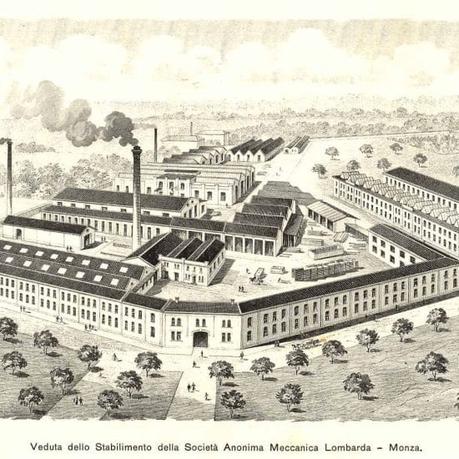
In 1934 Singer acquired the premises of the Società Anonima Meccanica Lombarda in Monza, Via Marsala 9: it was a site already rich in industrial history, thanks to Swiss entrepreneur Alfredo Zopfi and his foundry. On April 24, 1935, amidst much fanfare and the presence of Fascist dignitaries such as the Italian agriculture minister Edmondo Rossoni, Singer officially opened its new Italian manufacturing plant.
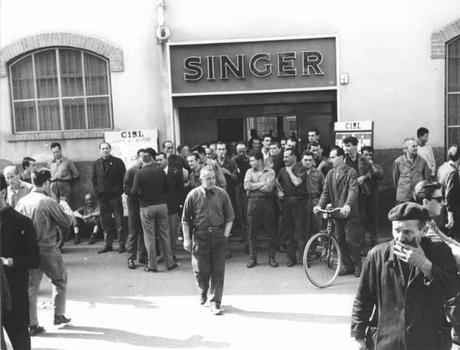
The Monza factory became a cornerstone of the city’s working life. Entire families worked there, forming a tightly knit community. The company didn’t just offer jobs—it provided social spaces, sports activities, and a sense of belonging. Even today, locals refer to Monza’s Centro Sportivo Ambrosini as the “ex-Singer” sports center.
As production ramped up, Singer outgrew the Via Marsala site. In 1968, it relocated to a modern facility on Viale Sicilia, near the suburb of Concorezzo. At its peak, the factory employed around 1,800 people and was turning out a remarkable 17,000 machines every week. That same era saw Singer release the groundbreaking Athena 2000, in 1975: it was the world’s first electronic sewing machine, designed and built in Monza.
But challenges loomed. The Monza factory faced stiff competition from Singer’s plant in Campinas (Brazil), which produced the same models at a fraction of the cost. By 1973, Monza’s production costs were reportedly six and a half times higher. Despite efforts to modernize, the financial strain was too great, and the factory began downsizing through the 1980s.
Singer changed hands several times, including a controversial sale to the Iraqi businessman Kassim Abbas. Allegations during the Gulf War linked the company to illegal exports, and Abbas was expelled from Italy in 1991. It marked the final chapter for a company that had once been the pride of Monza.
Singer finally shut its doors in Monza in 1992.
Resources
- History of Singer production in Monza
- Italian article about Singer and its recent history in the Monza factory
- On the history of Singer company
- Complete database of vintage Singer sewing machines serial numbers, plus info about serial numbers, factories and location codes, class and model numbers
- Singer sewing machine manuals
More on our vintage sewing machines
The sewing machines produced in the Singer factory in Monza (Italy)
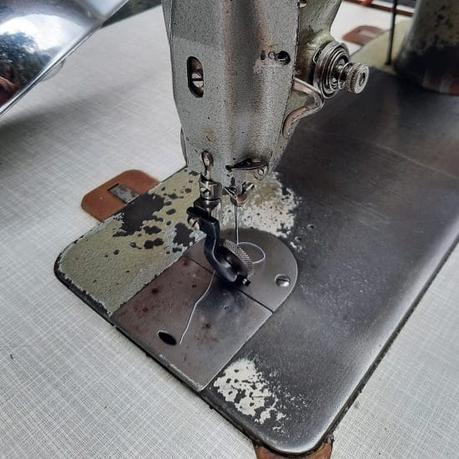
Singer 31K15 industrial sewing machine looking for a new home
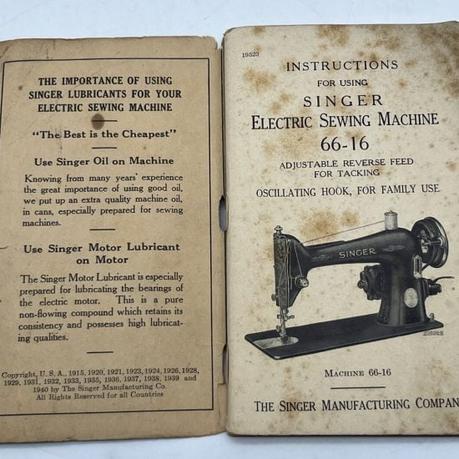
Manuals for vintage Singer sewing machines
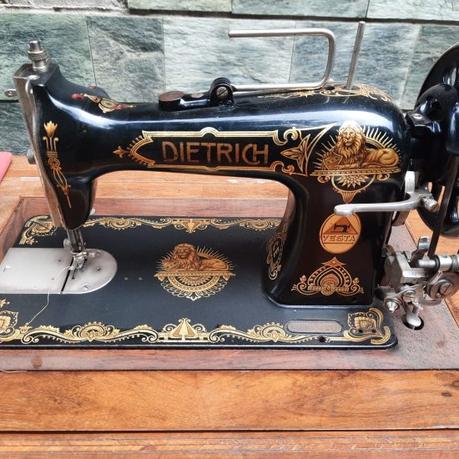
Found a vintage Vesta Dietrich sewing machine: discovering a piece of history
by Rici86.




THE %(site_name)s COMMUNITY

-
 umkhaloodie
3864140 pt -
Ch
3396455 pt -
 jesusmsanchezl
2453003 pt -
weddingblog2011
2205852 pt