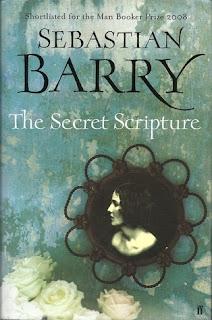
Published 2 April 2008
During her childhood, she observes her father's role in the community and watches "The Troubles" that took place in the 1930s, the time when Ireland was experiencing unrest because of the Irish Civil War. Rose and her family were Protestants in a region that was predominantly Catholic, so this created conflict for their family in general and for Rose specifically after she departs the family home. She marries a man who is Catholic, and his mother is enraged about this.
Rose not only experience conflict specific to her life situation and choices; she has to deal not only with the Irish Civil War but then the Anglo-Irish and then World War II. She also is subject to misogyny common for all women, but the Catholic church held a lot of power over her life as well. It is agonizing watching a woman who was beautiful, vibrant, and spirited suffer constraints again and again until she finally is committed to an institution that controls everything but the memories that she writes in the margins of a book she owns. The novel's title refers to these writings.
Dr. Grene has been charged to visit this ancient woman to determine if she can be released into the broader community on the occasion of the asylum being shut down. He listens to a censored version of her life while also looking for records that might provide clues to past events of her life. By Grene doing this, the novel also introduces the following themes: who determines what is true? What motives to people have when reflecting on the past? How reliable can anyone be in recalling past events? How doe people use individual power and institutional power to record events and assign them meaning?
The author, Sebastian Barry, is not only a novelist but a poet as well. This is evident by the poetic quality of his writing. I enjoyed his lyrical and philosophical embellishments during the first half of the novel; however, I was filled with suspense in trying to determine what really happened to Rose. Consequently, during the last half of the novel, I wanted the writing to be more focused on advancing the plot instead of luxuriating in the meaning of every aspect of each character and event.
Ultimately, this was an engaging read. I should probably go back and read the last fifty pages more intentionally. It was a great opportunity to learn more about the history of Ireland in the early 20th Century while also thinking about the ways some people are oppressed by others and how they find ways to resist, even if they are limited to resisting only in their perceptions and memories.
Related:
The Book of Charlie: Book Review
Nothing Can Bring Me Down: Book Review
Centenarians on the Rise in the US