


Book Review by George Simmers: This very funny and sometimes affecting novel is about the Delaneys, a family of three step-siblings. The frame narrative tells the story of the day when Charles (husband of Maria, one of the three) scornfully tells all of them: ‘You’re just parasites!’
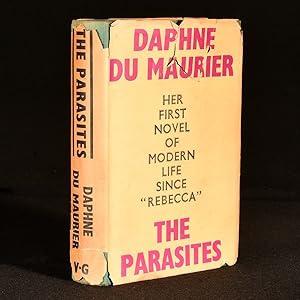
The novel flashes back through their lives. The children (variously) of a celebrated singer and a famous dancer, they spent much of their childhood rather neglected, brought up by servants while their parents were touring. They were thrown so much into each other’s company that they became a unit, a clique from which the rest of the world was excluded. Others often found them difficult company:
When people play the game ‘Name three or four persons whom you would choose to have with you on a desert island,’ they never choose the Delaneys. They don’t even choose us one by one as individuals. We have earned, not always fairly we consider, the reputation of being difficult guests.
That ‘we’ is interesting; the novel gets inside the thoughts of each of the siblings in turn, telling their thoughts in the third person, but every so often, as here, the authorial voice becomes ‘we’, speaking for all three.
All three are artistic, but they have different talents. Maria is an actress, from childhood imitating the gestures of others, sinking herself into characters. Making an effect, wallowing in illusion, though occasionally terrified that there was nothing but illusion. Niall has a musical talent, but it is a flimsy one. Sent to school, he finds the music teachers despairing of him because he will not learn music their way. He plays and composes by ear, and can’t write his melodies down. He becomes obsessed while composing a tune, but one he is made it he is dismissive of it as just a silly tune, not proper music. Celia’s talent is a more private one, for drawing pictures.
Maria goes onto the professional stage without proper training,, and is aware that initially jobs only come easily for her because she is her father’s daughter. (She’s what these days is scornfully called ‘a nepo baby’) She is insecure of her talent, but becomes a great success. She marries Charles, who has seen her in Barrie’s ‘Mary Rose’ and assumes that she must be as ‘ethereal’ as the character she plays. Maria finds real life difficult – especially later in the book, when she has children.
Niall unexpectedly truants from school and goes to live in Paris with an older woman, an ex-flame of his father’s. She is the first person to take a real interest in his music. She writes his tune down, and it becomes a great popular hit – though Niall despises ‘dance music’.
Celia gets no education to speak of. After her mother’s death she accompanies her father on his tours, looking after him, nursing him, and dealing with his increasing alcoholism. She slips past the age when marriage and children are a possibility. Through her father’s influence, a publisher takes an interest in her drawings, but she lets the chance slip.
The novel makes clear the egotism and self-obsession of Maria and Niall especially, but what makes this an excellent novel is that despite this we care for and sympathise with the characters, even when they are at their worst. The treatment of Celia is interesting. She is not an egotistical monster, as Maria and Niall can be, but her motives are anlysed perceptively, too:
Let Maria stand out upon the stage, with the glare upon her. The applause came, but she risked stony silence too; she risked failure. Let Niall write his tunes, and wait for criticism; the tunes might be praised, but they could be damned as well. Once a person gave his talent to the world, the world put a stamp upon it. The talent was not a personal possession any more. It was something to be traded, bought, and sold. It fetched a high price, or a low one. It was kicked in the common market. Always, for ever after, the possessor of the talent must keep a wary eye upon the purchaser. Therefore, if you were sensitive, if you were proud, you turned your back upon the market. You made excuses. Like Celia.
There is acute satire of the egotism and shallowness of artistic types. The character of Pappy (the children’s father) is especially well done. He is an instinctive artist, but one whose least gesture is exactly calculated. He is used to his whims over-riding other people’s wants or needs. The funniest section of the book is after Maria’s marriage, to the son of a stuffy county family, and the Delaneys descend for a weekend, spoiling all the routines and creating chaos. Another very funny scene occurs when Maria has had a baby, and neither she nor Niall has any idea how to cope with its crying. The real world often defeats the Delaneys.
 Gerald du Maurier
Pappy seems to owe a lot to Daphne du Maurier’s father, Gerald du Maurier, an immensely popular matinee idol, who triumphed in the theater through instinct and charm. Her grandfather, of course, was George du Maurier, who wrote Trulby, another novel about the strangeness of talent – the heroine’s singing can only work when she is under the hypnotic influence of the mysterious Svengali.
It has been suggested that the three step-siblings are each aspects of Daphne du Maurier’s own personality – and I can believe this. She too is a popular artist, whose great hit, Rebecca,seems more a work of instinct than planning. Each of the three has anxiety about where their talent comes from, what it is worth, and whether it will endure. Daphne du Maurier has made an excellent, utterly absorbing novel out of her own doubts and uncertainties about the nature of talent.
 Daphne du Maurier – caricature by Nicholas Bentley
.







