The Orsha vintage toy sewing machine I chose for my daughter | #LRCrafts - DIY Passion: if you can think it, you can make it
My daughter got fond of fiber arts at an early age. She started weaving when she was just three, after watching me at the loom. Then, seeing me embroider, she began asking to join in. I got her a little loom, some fabric, a needle, and thread of her own. Sometimes I have to pause my own projects to follow her into hers, and I really enjoy it. I love nurturing her interest in making things: she’s only four, but she’s already fascinated by how things are made.
When we got our first vintage sewing machine, she loved treadling with her dad and play around it. She would also watch me sew on my modern machine and ask if she could help. She even asked me to make a sewing machine for her dolls! So, after I got an Essex vintage toy sewing machine, I thought I could give a machine to her, too. A sewing machine of her own. I wanted to give her something more special than the modern plastic toy sewing machines. I wanted something sturdy and resistant, something like “mama’s”.
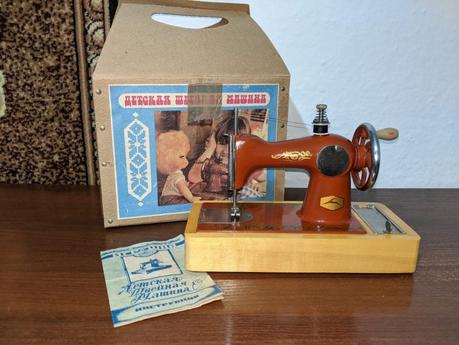
That’s when I found a vintage red toy sewing machine. Made in Orsha (Belarus), it’s all metal, sturdy and simple, and has just the right amount of magic for a child who wants to start sewing.
I thought I’d share a bit about this machine and why I chose it for my daughter’s first steps in sewing.
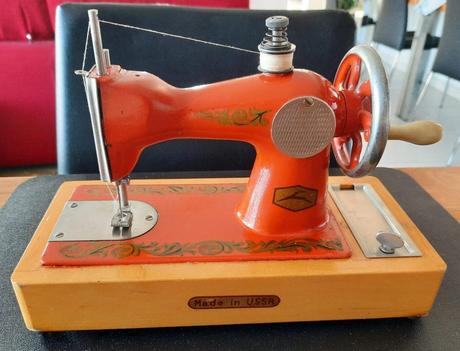
Table of contents
Why I chose this vintage toy sewing machine
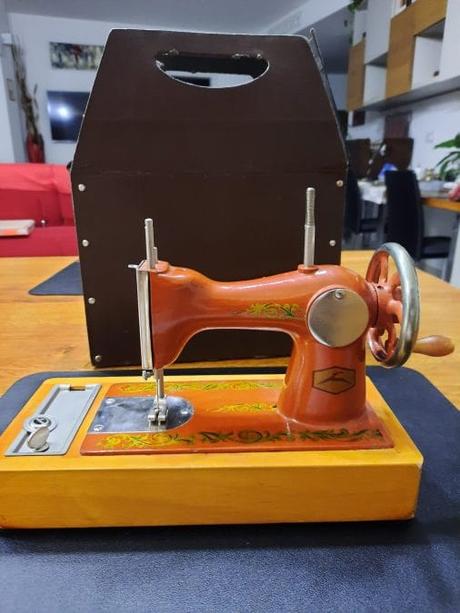
The machine itself is a lovely red, with delicate gold and black decals, featuring a little hexagonal logo of a running deer. It’s low and stable, mounted on a wooden base that helps keep it steady during use. The base also includes a small built-in compartment, perfect for storing accessories like extra thread, the original two-page manual, or little tools.
It’s a chain stitch machine, which means it doesn’t use a bobbin. Instead, it forms a simple looped chain on the underside of the fabric using a single thread: a mechanism that’s ideal for children just learning to sew, since there’s only one thread to manage. That was one of the reasons I chose this type of machine, after trying my Essex: fewer things to go wrong, and it’s easier for a child to understand and operate.
Another reason was the color: my daughter doesn’t like black, which seemed to be the most common color for vintage toy sewing machines (the ones in my budget, at least). This red one felt cheerful and inviting. The only real drawback of a chain stitch machine is that the stitches can unravel easily if the end isn’t secured, but for learning and playing, it’s still a wonderful introduction.
Moreover, I found these little machines were made in Orsha (Belarus) and often carry (like this one) a “Made in USSR” label on the wooden base.
History of the company that made the machine in Orsha (Belarush)
The little sewing machine I found for my daughter was made in Orsha, a town in Belarus. “Orsha” isn’t just the name of the place, it’s also the name commonly associated with these machines, as it was used to brand both the full-size and toy models.
The Orsha factory began in 1945, right after World War II, when the Soviet government established a plant for manufacturing heating boilers. But just a few years later, in 1952, the plant shifted to producing household sewing machines. The demand was strong in those post-war years, and production couldn’t satisfy it, so by 1963 the factory expanded into industrial sewing machines as well.
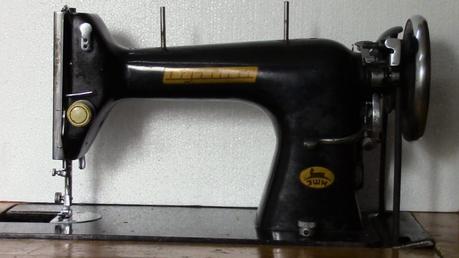
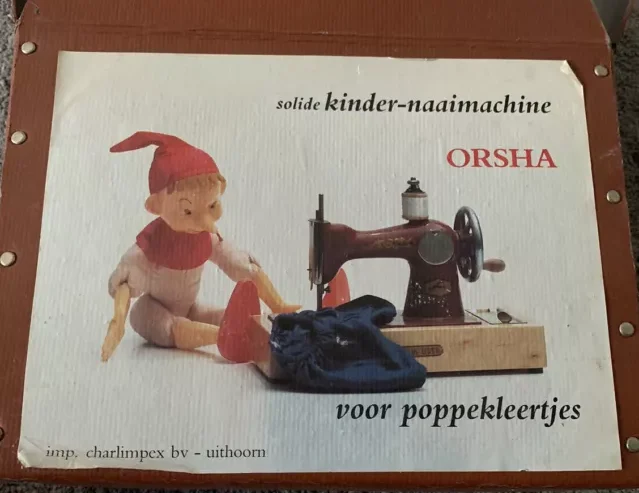
The toy chain-stitch machines were produced alongside the bigger ones and remained remarkably unchanged for decades, from the 1950s through the end of the Soviet era. As the manuals state, they were intended for children from 6 to 9 (probably, female), and were exported also in Wester Europe: France, Netherlands, Italy, UK…
In 1968, the plant was renamed “Orsha Light Engineering Factory” (Оршанский завод лёгкого машиностроения) and began specializing in sewing and knitting equipment for the garment industry. It later became the head of a large industrial group called Promshveymash (Промшвеймаш), which included other factories and a design bureau, all focused on sewing machinery.
Like many factories in the former USSR, the Orsha plant went through several reorganizations after the Soviet Union dissolved. It became a joint-stock company in 1994 (Открытое акционерное общество “Орша”) and eventually changed its name again to Zavod “Legmash” (Завод «Легмаш»), which roughly means “light machinery plant.” Although it no longer makes sewing machines today, the factory still exists and continues in other types of production.
Toy machines like ours were made right up until the early 1990s. They were simple, sturdy, and surprisingly consistent in design, so much so that it’s difficult to date them precisely. Having them come with original packaging or accessories can be a hint, even though not a strong one. Ours came with the original manual, that has a stamped date: December 19, 1990. That could make this little red machine one of the last to be made before the Orsha factory left sewing machines behind.
French advertisement of the Orsha toy sewing machines: "The sewing machine of your grand-mother"Getting and fixing an Orsha machine
The first time I ever saw one of these red Orsha toy sewing machines was at a local flea market. It stood out with its red paint and gold decals, so tiny, but clearly not just a decoration. I stopped, looked it over, and even asked for the price. It was actually quite cheap. But it seemed a little battered, and I wasn’t sure if it really worked, so I walked away.
Still, I kept thinking about it from time to time. As my interest in vintage sewing machines grew, especially after discovering the world of toy sewing machines, I found myself wondering whether I’d ever come across another one like it.
Eventually I started browsing online marketplaces, curious to see what was out there. I did find a few Orsha toy machinesand started learning a bit about the maker, but I also noticed many of them were surprisingly expensive.
It’s a common thing with vintage sewing gear: sellers sometimes stick a high price tag on just because it says “vintage,” and the items can sit unsold for ages. That’s why, when checking for a reasonable price for a vintage item, the best thing is look at sold listings rather than active ones. Ebay has a handy filter for this.
Also, I’m not mentioning specific prices here on purpose: what’s cheap or expensive really depends on where you are. Availability, demand, and local interest vary so much from country to country.
Then one day, I stumbled on a listing for a very affordable one, around the price of a pizza. I figured I could take the risk. Even if it wasn’t perfect, it would be worth having a real example of this charming little machine. I could get to know it better, take it apart to understand how it worked, and be ready to recognize a working one if I ever found another.
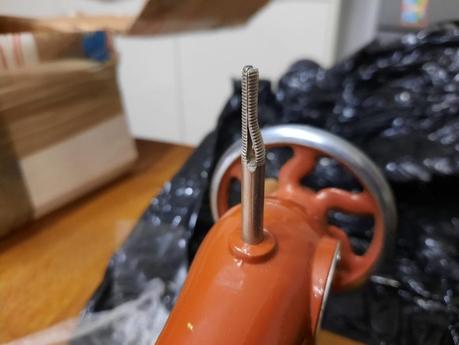
When it arrived, I was amazed by the vivid red color and intact decals, but also a bit disappointed. The tension bar had bent during shipping. I managed to straighten it, but it was missing some key parts: the small spring and nut needed to apply thread tension.
The first thing I did was remove the machine from its base and remount it properly. This way I could explore the chain stitch mechanism, otherwise hidden inside the base. It seemed to work, all the parts moving. I didn’t check if the thread passed around the loops correctly: I still had to find a spool that fit the tension bar, and all the missing pieces needed to control the tension.
When the machine was off its base, I also weighed it: it came out 1590 g (56 oz).
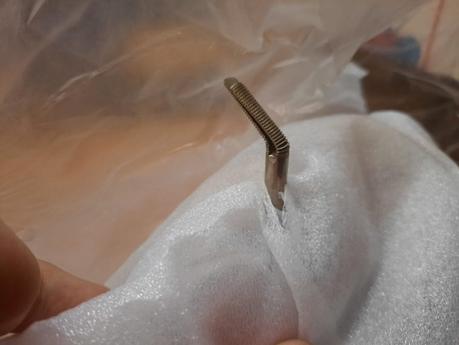
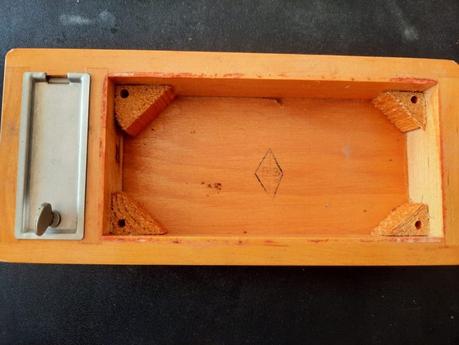
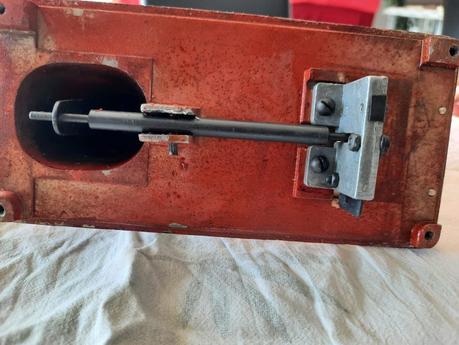
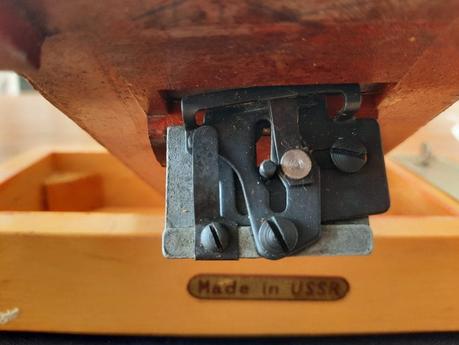
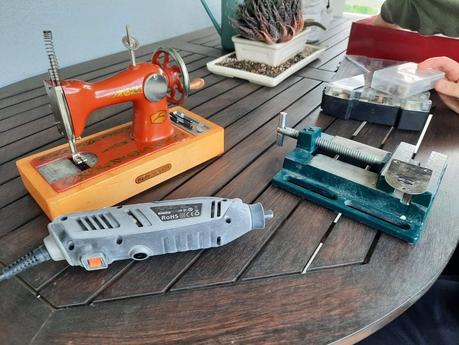
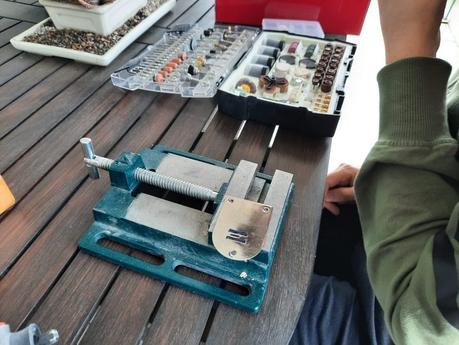
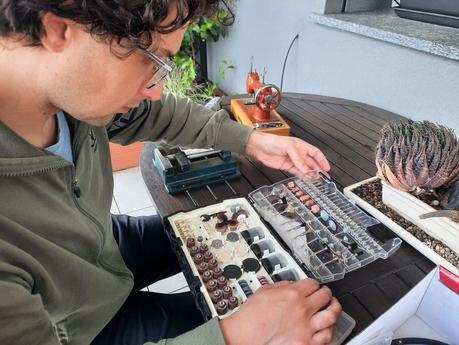
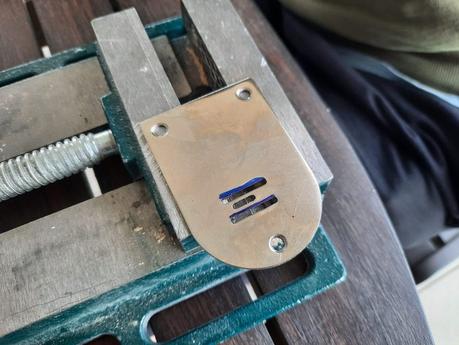
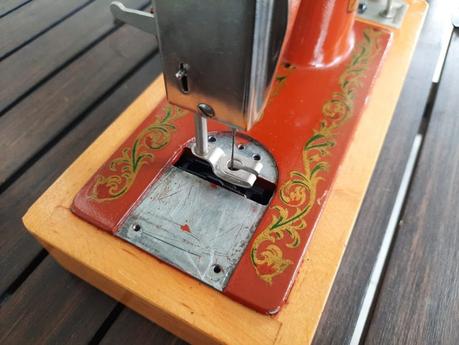
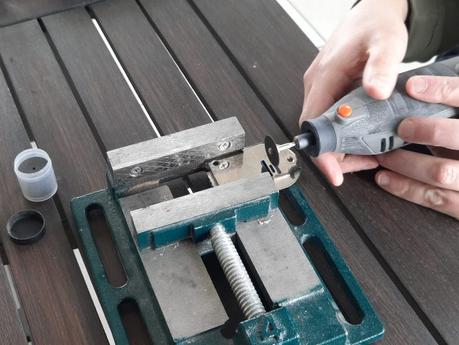
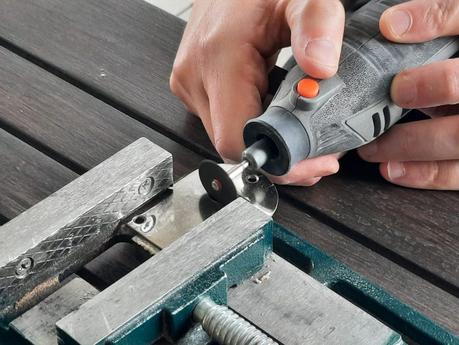
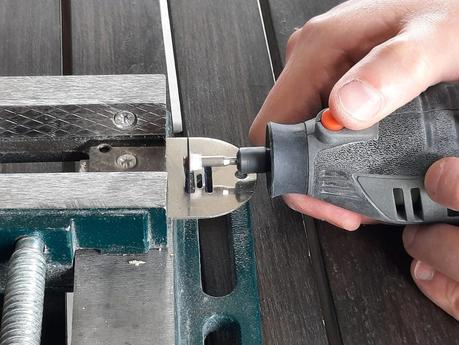
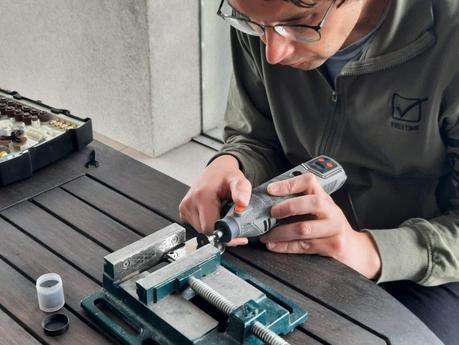
When I tested the mechanism with a piece of fabric, another problem showed up: the feed dogs weren’t working properly. My husband took a closer look, and we discovered the holes in the faceplate didn’t align correctly. Because of that, the mechanism that moves the feed dogs couldn’t emerge as it should.
I really wanted to bring it back to life. This tiny machine had a few issues, but I felt confident that my husband and I could fix it for our daughter. We were in a good place to experiment and see what might work, but I really hoped our efforts wouldn’t be in vain.
My husband ended up carefully drilling the holes to realign everything. It wasn’t an easy fix, but eventually he got it to the point where the feed dogs moved as intended. There was still more work to do, but I was confident we were on the right path.
How a second machine came into play
While we were still figuring out where to find the missing pieces to finally test the mechanism, something unexpected happened: a lady reached out and offered me another Orsha machine.
She’d actually been trying to sell it for a while. We’d even been in touch before, when I was still looking to buy mine, but in the end I didn’t purchase hers because it was just a little more expensive than the one I eventually went with. Now, tired of waiting for a buyer, she offered to give me the machine for the mere cost of shipping.
And this second machine? It had the exact pieces my first one was missing: the tension spring, the nut, and even an original paper manual as a bonus.
I told myself: with two machines acquired for less than the average price of one on eBay, surely I could put together a fully functional toy sewing machine for my daughter.
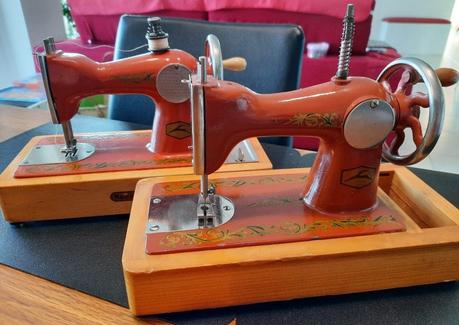
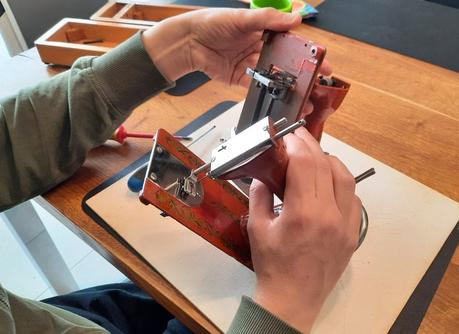
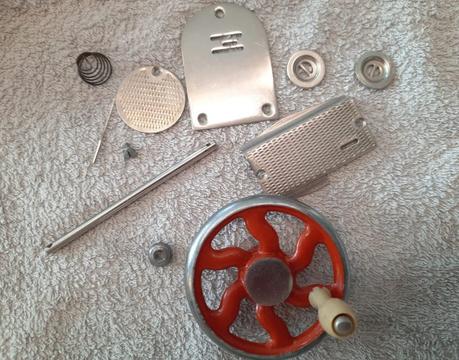
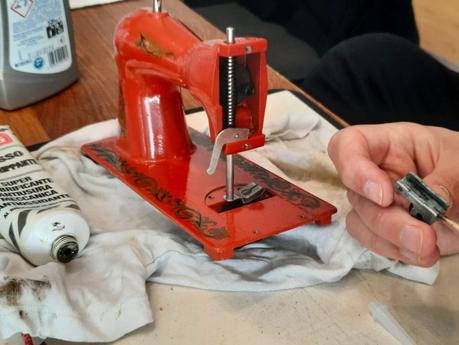
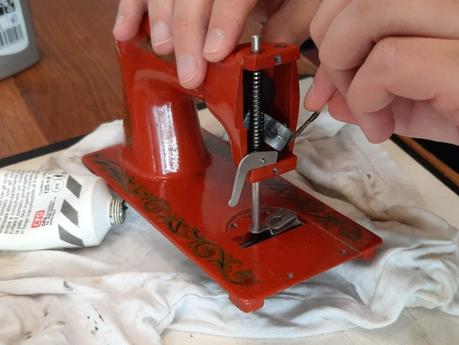
When the new Orsha arrived, I noticed a few subtle differences between the two. This one lacked the metal flap to close the compartment. The red paint was just slightly lighter, and the decals were nearly identical, only mirrored. The body felt more used overall, with a deep but tiny scratch on the back. But functionally, it was all there. It even came with a spool of thread, ready for testing. The mechanism moved correctly in all its parts.
We started disassembling it to clean everything thoroughly. As we explored the inner workings, it seemed to us this second machine had actually been manufactured better. The needle bar holes were aligned properly, the thread followed its correct path, and the tension system worked just as it should.
In the end, we decided this would be the machine for our daughter. We finished cleaning and oiling it, before putting it to the test.
As for the first one, I passed it on to a friend, whose grandmother wanted a tiny sewing machine for travelling to her second home. He also has an interest in tinkering with mechanisms, so he could figure out how to make it work again.
The sewing test
Once we had everything in place, it was time for the sewing test.
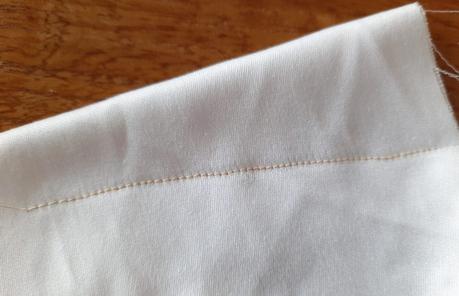
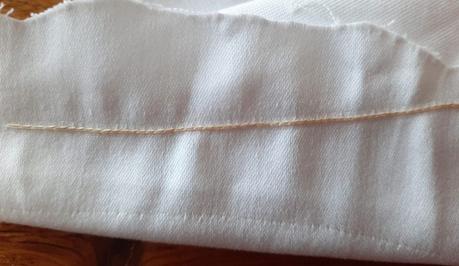
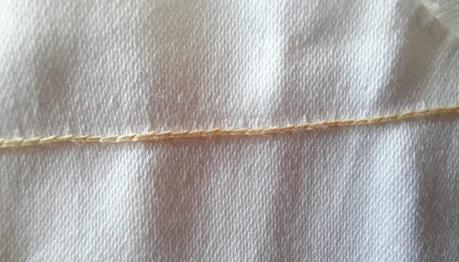
I grabbed a piece of fabric and we gave it a try. On the first go, the machine skipped a few stitches. I adjusted the tension, tried again, and… wow. The stitches came out perfectly. On the front side: even spacing, identical stitch length, flawless tension. On the back: a beautiful chain stitch, all the loops neatly aligned, maybe better than I could’ve done by hand!
Honestly, I might borrow this little machine from my daughter now and then, whenever I need such tidy chain stitches.
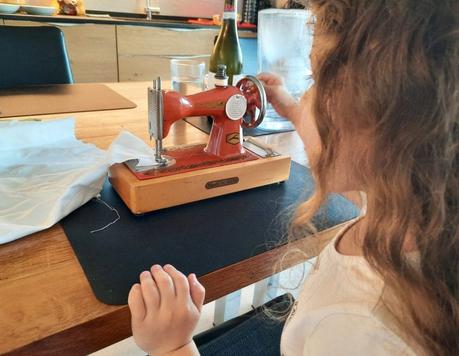
Once we were sure the machine worked smoothly, we handed it over to our daughter for her own test run. She was absolutely thrilled to have her very own sewing machine!
She did a test stitch with our help, just a straight line, but she was nonetheless enthusiast. It skipped a couple of stitches, mostly because she’s still figuring out the timing of the handwheel, but overall it was a success. She was so proud!
She immediately started brainstorming project ideas. It was clear this wasn’t just a toy to her, but a tool, a real one, and she was already imagining the things she could do with it.
I think I’ll need to pause some of my own sewing for a while, to help her with hers. And honestly? I couldn’t be more thrilled at the idea!
My review of the Orsha toy sewing machines
So, what do I think of the Orsha toy sewing machine?
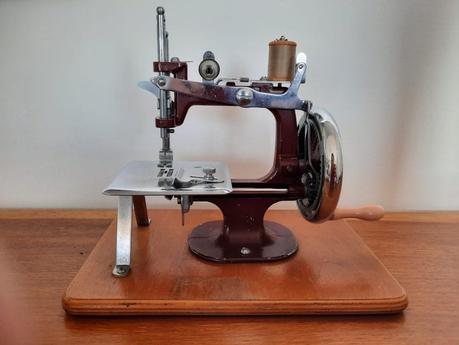
If we place toy sewing machines on a scale, the Orsha definitely leans toward the “toy” side. Compared, let’s say, to my Essex, which feels like a real sewing machine in miniature, the Orsha is simpler.
But that doesn’t mean it isn’t great. Quite the opposite: it does its job perfectly. It’s sturdy, easy to use, and more stable than some of the fancier-looking miniature machines. The Singer 20 from pre WWII, for instance, has a lovely appearance, but it’s impossible to operate it without a table clamp. I thought about this while comparing this model to my Essex MK1. The design of the Orsha, instead, is simple and solid, low and large enough to be stable. Just as a child’s toy should be.
The original manual says it was designed for children aged 6 to 9, and I completely agree. It’s the right level for a beginner of that age, offering a real sewing experience without too many delicate parts. For machines like my Essex, where all the moving mechanisms are exposed and require more care, I’d recommend being a bit older and more experienced.
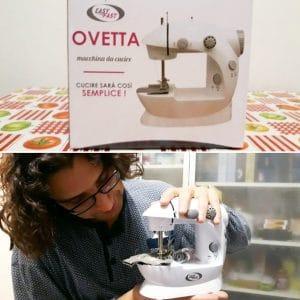
And just to put things in perspective, I once tried a modern plastic mini sewing machine. It looked nice, but it was a total disappointment. The thing didn’t even survive its first test stitch, and that was after I bought it at half price, paying the same as I did for this vintage Orsha!
So if you’re looking for a real, usable first sewing machine for a child, or even just something sturdy to experiment with, vintage toy machines are absolutely worth a look. Orsha and similar models are often more affordable than other vintage options, and in my opinion, this little red machine holds up beautifully.
But what about you?
Have you ever tried sewing with a vintage toy machine? Do you have memories of one from childhood, or maybe a model you’d recommend? I’d love to hear your experiences: please share them in the comments below!
Also, let me know what you’d like to read next. More stories of vintage machines? Some beginner projects I’m sewing with my daughter? Something else entirely? Drop a comment and let me know!
Resources
- History of the manufacturer (in Russian)
- Instruction manual (in Russian)
- The vintage sewing machine collector from Orsha (in Russian)
- Podolsk and Orsha sewing machine plants (in Russian)
More resources
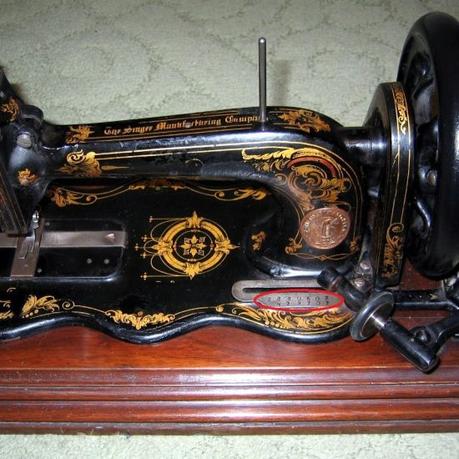
Find info on your Singer sewing machine
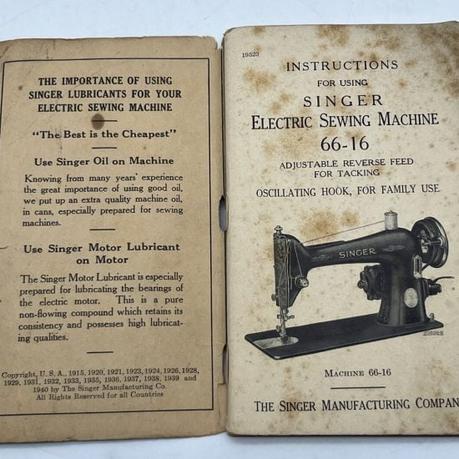
Manuals and lists of parts for vintage Singer sewing machines
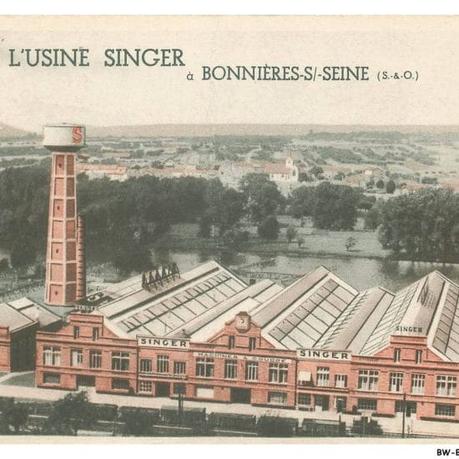
The Singer sewing machines produced in the factory of Bonnières Sur Seine (France)
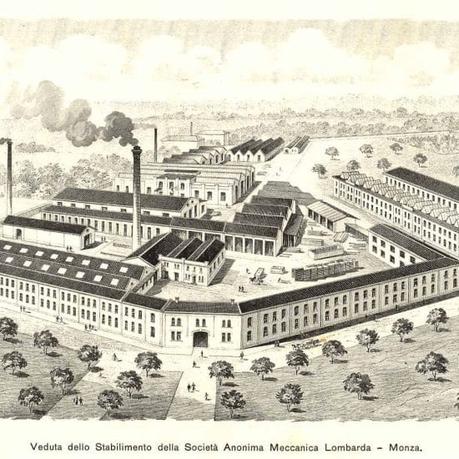
The sewing machines produced in the Singer factory in Monza (Italy)
More on our vintage sewing machines
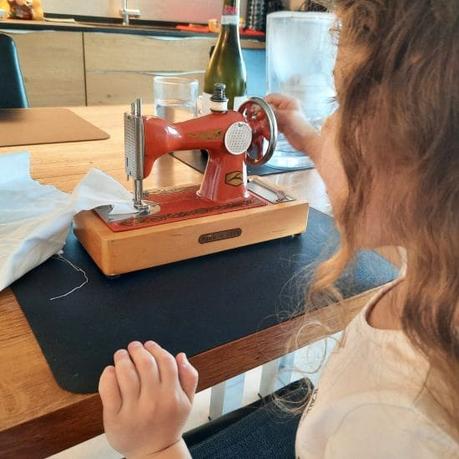
The Orsha vintage toy sewing machine I chose for my daughter
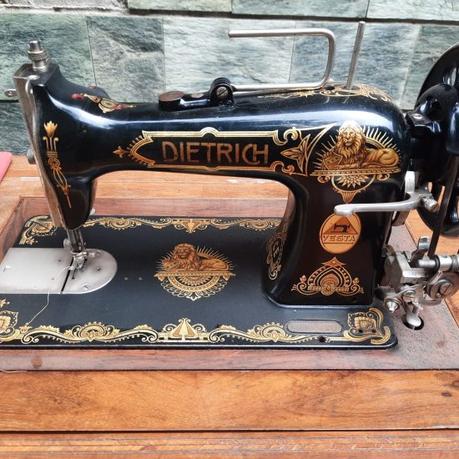
Found a vintage Vesta Dietrich sewing machine: discovering a piece of history
Vintage Singer sewing machine welcomed in the family
Singer 31K15 industrial sewing machine looking for a new home
by Rici86.