


Grace Thoughts
The Old Testament Prophets: Introduction
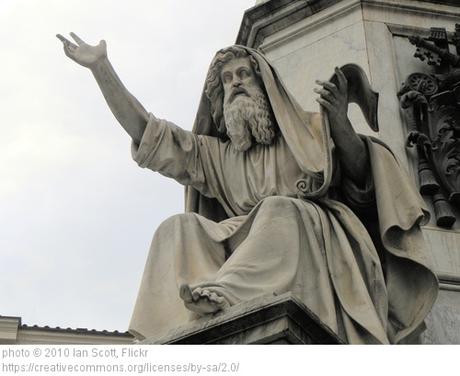
We begin a new GraceLife series in this new year about the Old Testament prophets. Here’s why it’s important to know who they were and what they did.
Prophets of God
God, who at various times and in various ways spoke in time past to the fathers by the prophets. Hebrews 1:1
Surely the Lord God does nothing, Unless He reveals His secret to His servants the prophets. Amos 3:7
God, “the High and Lofty One Who inhabits eternity,” chose to speak to humans through prophets.
The first time we find the use of the word “prophet” in the Old Testament is in Genesis 20. God told Abimelech, the king of Gerar, that Abraham was “a prophet” and that Abraham would pray for the king and he would live.
The Hebrew word translated “prophet” is nabi and means “spokesman, speaker.” It comes from the word naba (to prophesy). The ancient meaning included religious instructions with occasional predictions (Brown-Driver-Briggs). The word is used more than 300 times in the Old Testament.
An even older term was “seer” — “Formerly in Israel, when a man went to inquire of God, he spoke thus: “Come, let us go to the seer”; for he who is now called a prophet was formerly called a seer.” (1 Samuel 9:9) The Hebrew word is ro’eh and was used six times in the Old Testament. The Hebrew word chozeh is also translated “seer, prophet, agreement” 21 times in the Old Testament.
Though most prophets in the Old Testament were male, several female prophets (prophetess) are mentioned: (Miriam, Deborah, Huldah, Noadiah).
False Prophets
Not all people who claimed to “speak” for God actually spoke for God. They were known as “false prophets.”
The prophets prophesy falsely, And the priests rule by their own power; And My people love to have it so. But what will you do in the end? Jeremiah 5:31
God knew that people would speak falsely in His Name and warned Israel about them centuries before Jeremiah uttered his well-known words. God spoke to Israel through His prophet Moses:
If there arises among you a prophet or a dreamer of dreams, and he gives you a sign or a wonder, and the sign or the wonder comes to pass, of which he spoke to you, saying, ‘Let us go after other gods’—which you have not known—‘and let us serve them,’ you shall not listen to the words of that prophet or that dreamer of dreams, for the Lord your God is testing you to know whether you love the Lord your God with all your heart and with all your soul. Deuteronomy 13:1-3
But the prophet who presumes to speak a word in My name, which I have not commanded him to speak, or who speaks in the name of other gods, that prophet shall die.’ And if you say in your heart, ‘How shall we know the word which the Lord has not spoken?’— when a prophet speaks in the name of the Lord, if the thing does not happen or come to pass, that is the thing which the Lordhas not spoken; the prophet has spoken it presumptuously; you shall not be afraid of him. Deuteronomy 18:20-22
A true prophet of God does one thing: say what God tells them to say. A false prophet speaks in the name of other gods. Either what they say will not come to pass or they will attempt to lead people to go after other gods. We will meet many false prophets during our study of Old Testament prophets. As the Apostle Peter reminded Christians, false prophets are destructive and still among us.
But there were also false prophets among the people, even as there will be false teachers among you, who will secretly bring in destructive heresies, even denying the Lord who bought them, and bring on themselves swift destruction. And many will follow their destructive ways, because of whom the way of truth will be blasphemed. 2 Peter 2:1-2
Life of the Prophet
Woe to you! For you build the tombs of the prophets, and your fathers killed them. Luke 11:47
Jesus reminded the Jews that their forefathers killed many of the prophets God had sent to speak His words to them. Prophets were not popular with people because they spoke God’s true words to them. As we will see in our study, God often sent His prophets with messages of woe and doom. God loved His people and would not be silent about their sinfulness in following after other gods. God communicated His displeasure to them through the prophets He sent them.
We will discover together in this series of studies that accepting God’s call to speak for Him often carries with it much suffering, in addition to being misunderstood, ridiculed, rejected, and even hated by their own people. We will also see prophets persecuted, threatened with imprisonment, actually imprisoned, kept in chains, and some even put to death.
Why? Because the people of Israel really rejected God:
And the Lord said to Samuel, ‘Heed the voice of the people in all that they say to you; for they have not rejected you, but they have rejected Me, that I should not reign over them. 1 Samuel 8:7
God knew when He freed the people of Israel from Israel that they would reject and disobey Him, and turn to follow after other gods. God knows everything. He sent His prophets to both instruct the Israelites and warn them. Here’s one of the early warnings from the prophet Moses:
See, I have set before you today life and good, death and evil, in that I command you today to love the Lord your God, to walk in His ways, and to keep His commandments, His statutes, and His judgments, that you may live and multiply; and the Lord your God will bless you in the land which you go to possess. But if your heart turns away so that you do not hear, and are drawn away, and worship other gods and serve them, I announce to you today that you shall surely perish; you shall not prolong your days in the land which you cross over the Jordan to go in and possess. I call heaven and earth as witnesses today against you, that I have set before you life and death, blessing and cursing; therefore choose life, that both you and your descendants may live; that you may love the Lord your God, that you may obey His voice, and that you may cling to Him, for He is your life and the length of your days; and that you may dwell in the land which the Lord swore to your fathers, to Abraham, Isaac, and Jacob, to give them. Deuteronomy 30:15-20
History of the Prophets
Abraham was the first mentioned prophet in the Bible (Genesis 20:7), though he was not the first in history. I believe there were at least three or four prophets of God before Abraham.
The Bible does not say that Adam was a “prophet,” though he did worship God and taught his children how to worship. In that sense we might say that Adam was the first one to “proclaim” God’s Word. We also know that Adam talked with God, walked with God, and taught his wife about God.
The Bible also does not say that Abel was a “prophet,” but does say he was “righteous” (e.g. Matthew 23:35; Hebrews 11:4).
Abel’s younger brother Seth may have been the next prophet, though Eve prophesied concerning the future lineage of the “seed” God had promised her. According to Luke’s Gospel, the human lineage of Jesus the promised Seed, reached back to Seth (Luke 3:38).
And Adam knew his wife again, and she bore a son and named him Seth, ‘For God has appointed another seed for me instead of Abel, whom Cain killed.’ And as for Seth, to him also a son was born; and he named him Enosh. Then men began to call on the name of the Lord. Genesis 4:26
The Hebrew word for “to call” is qara and means “to proclaim.” Proclamation is one of the duties of a prophet. Enosh was the son of Seth and one of Adam and Eve’s grandsons. Adam was 130 years old when he fathered Seth. Seth was 105 years old when he fathered Enosh. Since Adam’s age was based on God’s making him in Eden, more than 235 years elapsed between Adam and Enosh.
Cain’s killing of his brother tore the first family apart, but God continued to reveal His eternal plan when another son of Adam and Eve was born who proclaimed the Word of God.
It would appear from both Genesis 5, Hebrews 11, and Jude 1 that the next prophet of God may have been Enoch. Enoch was a great-great-great grandson of Seth. Because of the extended ages of people living during that time, Enoch most likely knew Adam and Eve, Seth, Enosh, and other family members who had proceeded him.
Enoch lived sixty-five years, and begot Methuselah. After he begot Methuselah, Enoch walked with God three hundred years, and had sons and daughters. So all the days of Enoch were three hundred and sixty-five years. And Enoch walked with God; and he was not, for God took him. Genesis 5:21-24
By faith Enoch was taken away so that he did not see death, ‘and was not found, because God had taken him’; for before he was taken he had this testimony, that he pleased God. Hebrews 11:5
Now Enoch, the seventh from Adam, prophesied about these men also, saying, ‘Behold, the Lord comes with ten thousands of His saints, to execute judgment on all, to convict all who are ungodly among them of all their ungodly deeds which they have committed in an ungodly way, and of all the harsh things which ungodly sinners have spoken against Him. Jude 1:14-15
Jude tells us that Enoch “prophesied.” Hebrews says that Enoch “pleased God.” Genesis says that Enoch “walked with God.” All of those characteristics are similar to other Old Testament prophets.
Noah was most likely the next prophet, though Noah’s father Lamech had some spiritual insight when he named Noah.
Lamech lived one hundred and eighty-two years, and had a son. And he called his name Noah, saying, ‘This one will comfort us concerning our work and the toil of our hands, because of the ground which the Lord has cursed. Genesis 5:28-29
God chose Noah to continue the human race through the great Flood that would destroy all other families in the world. Noah was 500 years old when he and his wife began to have children. Noah, his wife, their three sons and their wives, were rescued from the Flood through a large Ark God instructed them to make.
The Bible says that Noah was, “a just man, perfect in his generations,” was “righteous” before God in that generation, and that he walked and talked with God (Genesis 6-9; Hebrews 11). We also know that Noah was a “preacher of righteousness” (2 Peter 2:5). The Greek word translated “preacher” is kérux, which means “proclaimer.” Even as Noah and his sons built the Ark, Noah proclaimed God’s warnings to the people living in the pre-Flood world.
The next prophet we find in Scripture is Abraham, though Job may have lived about the same time as Abraham. Job is not called a “prophet” in the Bible, but we know that he worshipped God and that God spoke of Job as being “blameless and upright..one who fears God and shuns evil” (Job 1:8). Job also spoke with God (e.g. Job 38-42), and God called Job His “servant,” and called on Job to pray for his friends as they made offerings to God for forgiveness.
The Prophet
Moses, prophet and Law giver, prophesied to Israel about THE Prophet who God would raise up for them in the future.
The Lord your God will raise up for you a Prophet like me from your midst, from your brethren. Him you shall hear, according to all you desired of the Lord your God in Horeb in the day of the assembly, saying, ‘Let me not hear again the voice of the Lord my God, nor let me see this great fire anymore, lest I die.’ Deuteronomy 18:15-16
That “Prophet” is Jesus Christ!
In the days following the physical death, burial, resurrection, appearances, and ascension of Christ back to Heaven, the Apostle Peter quoted the famous words of Moses to tell the children of Israel that Jesus Christ, who they killed, is the great Prophet Moses told them about centuries earlier.
But those things which God foretold by the mouth of all His prophets, that the Christ would suffer, He has thus fulfilled. Repent therefore and be converted, that your sins may be blotted out, so that times of refreshing may come from the presence of the Lord, and that He may send Jesus Christ, who was preached to you before, whom heaven must receive until the times of restoration of all things, which God has spoken by the mouth of all His holy prophets since the world began. For Moses truly said to the fathers, ‘The Lord your God will raise up for you a Prophet like me from your brethren. Him you shall hear in all things, whatever He says to you. And it shall be that every soul who will not hear that Prophet shall be utterly destroyed from among the people.’ Yes, and all the prophets, from Samuel and those who follow, as many as have spoken, have also foretold these days. You are sons of the prophets, and of the covenant which God made with our fathers, saying to Abraham, ‘And in your seed all the families of the earth shall be blessed.’ To you first, God, having raised up His Servant Jesus, sent Him to bless you, in turning away every one of you from your iniquities. Acts 3:18-26
Stephen also quoted the same Scripture to the Jews who opposed the Gospel of Christ:
This is that Moses who said to the children of Israel, ‘The Lord your God will raise up for you a Prophet like me from your brethren. Him you shall hear’ (Acts 7:37).
We will meet many Old Testament prophets in this series and every one of them pointed to the same “Prophet” that Moses spoke about in his farewell address to the children of Israel. Jesus Christ is that great Prophet. He is the One.
Then He said to them, ‘These are the words which I spoke to you while I was still with you, that all things must be fulfilled which were written in the Law of Moses and the Prophets and the Psalms concerning Me.’ And He opened their understanding, that they might comprehend the Scriptures. Luke 24:44-45
Next
Join us next time as we begin to look at the prophets of the Old Testament who followed Abraham. Many of them had writings that were included as Holy Scripture. Some did not have writings, but were written about in God’s Word. We want to know who they were, what they said, and what God would have us understand from their words and their lives.
Copyright © 1982 by Thomas Nelson. Used by permission. All rights reserved.
GraceLife © 1990-2025
 Bible Studyfalse prophetsGod's ProphetsJesus ChristOld TestamentOld Testament Prophets

Published by gracelifethoughts
Founder & Director of GraceLife Ministries View all posts by gracelifethoughts






