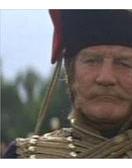
Guy Green's The Magus (1968) is an honorable but doomed attempt to adapt John Fowles's "unfilmable" novel. Many involved in the film, including star Michael Caine, admitted that they didn't understand what it was about; audiences stayed home while critics blasted it as a massive flop, which remains its reputation today. It's not unwatchable, but the filmmakers never figure out how to streamline the dense source into a satisfactory narrative.
English schoolteacher Nicholas Urfe (Michael Caine) takes a job on a small Greek island to escape a messy break-up with stewardess Anne (Anna Karina) and general ennui. He stumbles across the estate of Maurice Conchis (Anthony Quinn), an eccentric millionaire with a checkered past - locals accuse him of collaborating with the Nazis, and suspect that he's tied to the death of Nicholas's predecessor. Initially Nicholas enjoys philosophical discussions with Maurice, but their relationship takes a turn for the strange when a woman claiming to be the ghost of his long dead fiancee Lily (Candace Bergen) appears. Nicholas can't decide if Conchis is a mystic, a psychiatrist, a filmmaker or just a rich eccentric - and his "God game" leads Nicholas to question both his choices in life, and reality itself.
There's no easy way to summarize The Magus, a book I quite enjoyed while recognizing that it has no discernible narrative: only themes of generational disconnect, psychological gamesmanship and bizarre images from the shocking to the absurd. Fowles adapted the script, yet he and Green seem at a loss how to dramatize it. They remove several plot layers, excise subplots that take up dozens of pages (nothing about Conchis's World War I experiences, for instance), rewrite characters (Bergen's Lily is two characters in the novel) and telescope numerous other points. Enough is adapted to "suggest" the novel without grasping its contents; the result plays like a Reader's Digest condensed book.
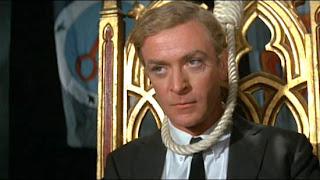
Certainly Green can't be accused of laziness: he and cinematographer Billy Williams make handsome use of Mallorca's scenery, creating a film filled with beautiful vistas and splashes of striking imagery. The Magus comes to life when the filmmakers embrace the strangeness of Fowles's book: Lily appears dressed as Diane to shoot a satyr with a bow, or Nicholas spots some animal figures spying on him from a distance. But the film also botches key scenes like the climactic "trial," where Nicholas is heckled by a mixture of actors, figures from his past and Conchis's minions, filmed by Green through a druggy haze. A director more grounded in surrealism, an Antonioni or Ken Russell, might have wrought something more consistently effective than Green, a workmanlike genre director who's in over his head.
Indeed, large portions of The Magus leave viewers adrift, because Green never manages to merge the mundane and mindbending. For much of the runtime, we're treated to long, pseudo-Socratic dialogues between Nicholas and Conchis. These scenes range from passable to deadly dull, only made confusing when Conchis's fantasies start bleeding in.The tonal whiplash continues to the key flashback, where Conchis relives a traumatic wartime atrocity: these scenes are played straight, and jar drastically with the surrounding material. What should ground the film, Nicholas grappling with his emptiness and inability to connect (with Anne, with his fellow teachers), doesn't register either; rather than an exploration of psychological ennui, it becomes the story of a jerk who's tortured by a rich creep for two hours, learning nothing.
The cast tries to make The Magus work, though Fowles's script does them no favors. Michael Caine gives a forceful performance that seems detached from the material; rather than confused and lost, Nicholas comes off like a churl. Candice Bergen, never a brilliant actress, seems equally adrift, with a comical Edwardian British accent. Anthony Quinn's natural ebullience is compelling enough, though it works against Conchis seeming like a man of mystery. Anna Karina makes Anne human enough to ground the film for a few precious minutes. Julian Glover (as a film director) and Corin Redgrave (as a Nazi in flashback) are effective in smaller parts.
As a best-selling novel and literary conversation piece, The Magus must have seemed an irresistible property for adaptation; but a good film requires more than a recognizable title. Maybe it could have been adapted a few years later, when New Hollywood learned how to blend art and commerce in a way that engaged mainstream audiences. Or maybe there is no way The Magus could be made into a satisfactory movie. A novel that's all themes, internal dialogues and psychology rarely translates to the literal medium of film; we're left with a residue of strangeness without discernible form.