


Remember Trump ordering a temporary waiver of the Jones Act, to get help to Puerto Rico? What was that all about?
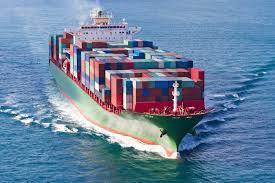 The Jones Act, passed in 1920, limits shipping between U.S. ports to American built, owned, and crewed vessels. This was to shield the U.S. shipping industry from foreign competition. A textbook example of protectionism. Though usually protectionism isn’t so blatant, telling foreign business to get lost altogether.
Railroads also lobbied for the Jones Act, fearing that foreign ships would undercut them too in the business of transporting goods. And railroads did benefit, because ships built and crewed by Americans are so much costlier that all other forms of transport are cheaper in comparison. Thus, whereas 40% of Europe’s domestic freight goes by sea, just 2% does in America (despite our 12,383-mile coastline).
The Jones Act not only inflates the cost of U.S. sea transport, above what it would be with open competition; it inflates land transport costs too, by eliminating some of its competition. All those higher costs go into the prices for things we buy. Protectionism protects businesses — well, certain favored ones — at the cost of screwing consumers — and other businesses — here, ones that ship their products. Competition always benefits consumers, and the economy as a whole.
 And protectionism doesn’t save jobs — because a business that isn’t competitive without it isn’t a good long term bet anyway. The Jones Act shows this. It could protect U.S. ships against foreign ones, but not against trains, trucks, and planes. In fact, the Act sank the U.S. shipping fleet. As recently as 1960 it was 17% of the world total; today just 0.4%.
That’s why the Jones Act had to be waived for Puerto Rico — there just weren’t enough U.S. ships for the job. Indeed, while the collapse of merchant shipping leaves most of the country with reasonable non-water alternatives, that of course is not true of places like Puerto Rico, Hawaii, or Alaska.  (Hawaiian cattle ranchers regularly fly animals to the mainland!) In such places the impact on consumer prices and the cost of living is severe — yet one more reason why Puerto Rico’s economy was so dire even before the storm.
The Jones Act should surely be repealed — but lobbyists from the sailors’ unions and ship owners — the few that are left — are probably still politically powerful enough to prevent it.
Advertisements






