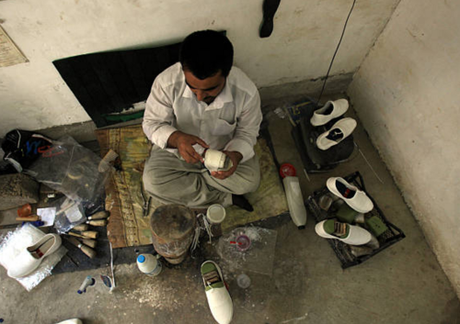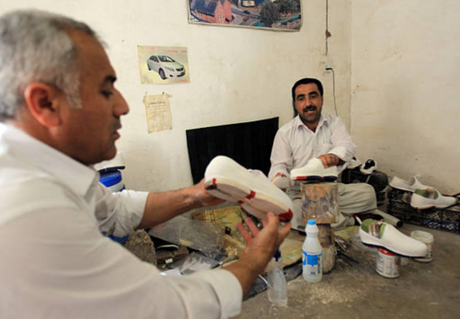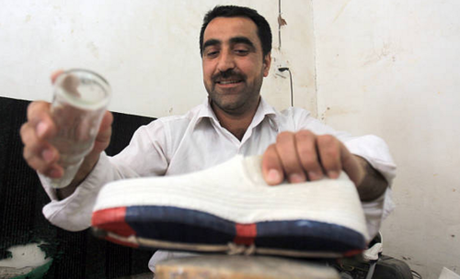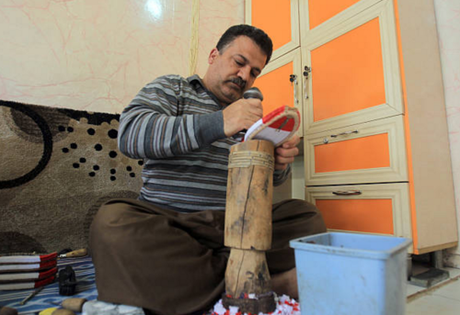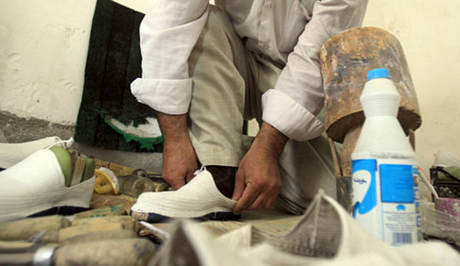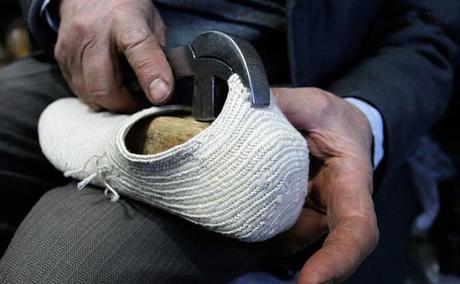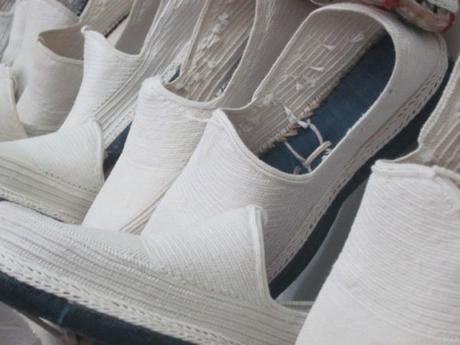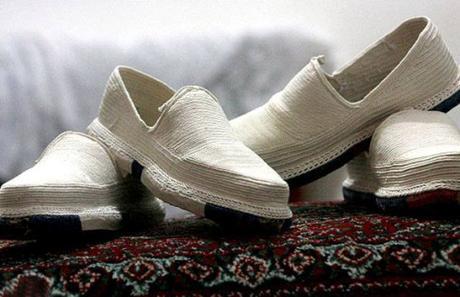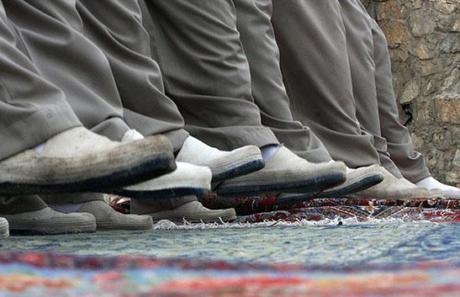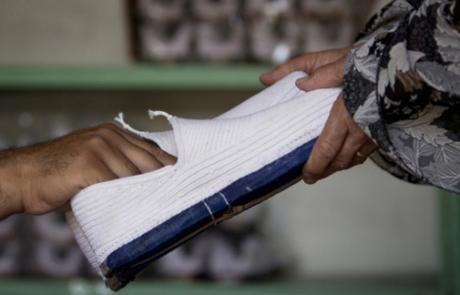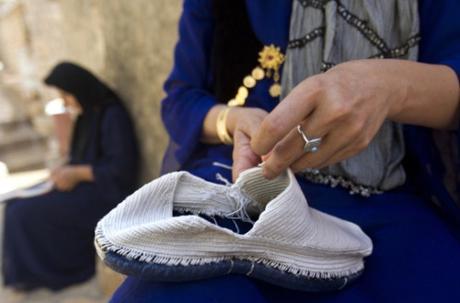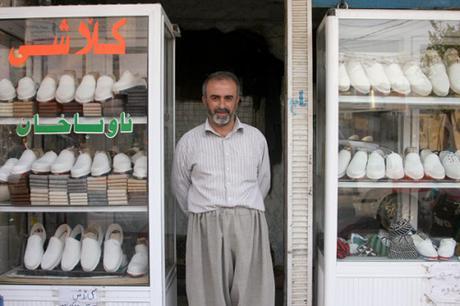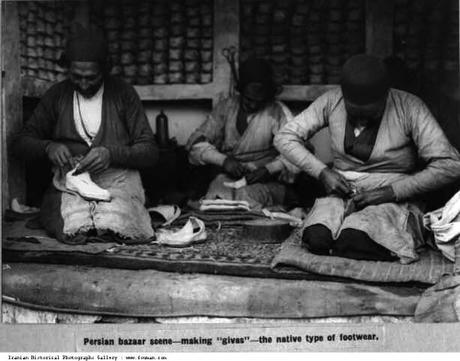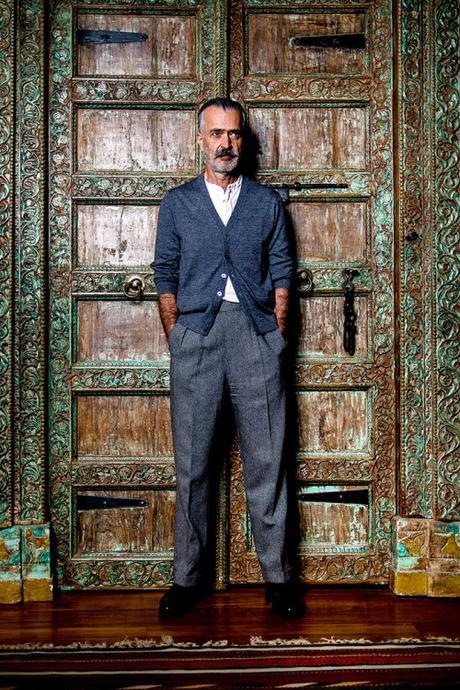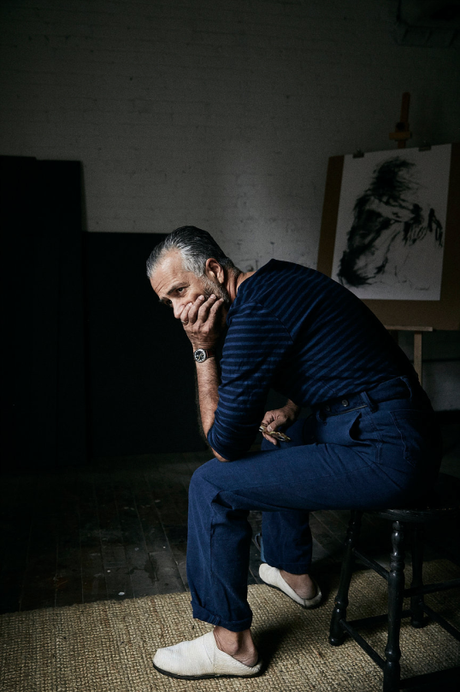
Everyone knows about espadrilles – the ropey soled, canvas slip-on made in France and Spain, and often associated with the leisurely lifestyle of vacationers on the French Riviera. Apparently, there’s an Iranian equivalent. When I was digging up photos for Wednesday’s post on Eidos, I spotted the white slippers you see above on Iranian-American journalist Hooman Majd. Antonio, the designer behind Eidos, tells me they’re Hooman’s personal shoes, which he brought with him to the photo shoot. “Those are Giveh, a type of knitted cotton shoe from Iran,” he says. “They’re nearly impossible to get outside of Iran because of US economic sanctions. Super cool though, aren’t they?”
I’ve been looking for a pair of slip-ons all summer to wear with what I call a studio artist look – a sort of looser cut, slightly sloppy, casual style involving camp collar shirts, linen pants, and lightweight chore coats. Hooman’s slippers look perfect for this sort of thing. Simple, relaxed, and made to be breathable on hot days. Apparently, their story isn’t too different from what’s happened to huaraches in Latin America. Once a traditional footwear style worn by people in the countryside, they’ve mostly disappeared as young people have adopted Nikes. They still exist, albeit through a small cottage industry.
Their constructions aren’t too different either. Whereas their Western European counterparts are typically made with jute rope soles, huaraches and Givehs rely on leather or rubber bottoms (the later being a relatively modern invention, and seemingly done for cost reasons). The uppers are also woven or knitted – huaraches with strips of leather; espadrilles and Givehs with cotton yarns. Iranian men apparently mostly wear the plain white ones, as you see above, although women sometimes wear them with beautifully decorated cotton or silk uppers.
In a 2012 GQ feature about his ten favorite things, Hooman said of them: “Still made by hand in Iran, these shoes […] are probably the most comfortable things I’ve ever put on my feet. I wear mine in the summer with suits. They last forever and they are so much more original than wearing sneakers.”
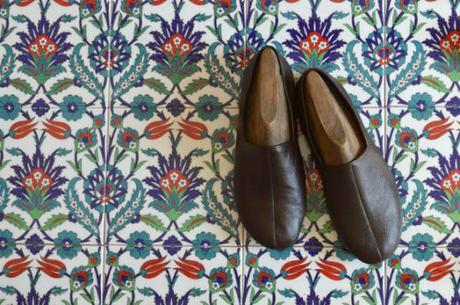
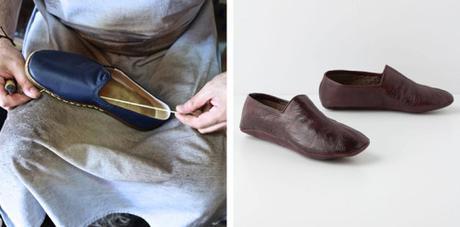
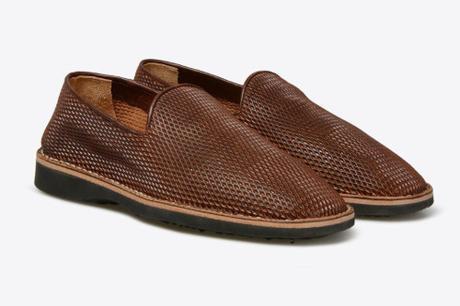

Unfortunately, as Antonio mentioned, they’re hard to find outside of Iran. I spotted a few pairs on eBay, although the auction photos aren’t great and sizing is murky (the ones with pointier toes also look hard to wear).
Alternatively, you could try Kelim or Dervish slippers, which have their roots in Turkey (not Iran, but regionally close). The cheaper leather versions don’t have proper soles, so they might be better for ambling around the house. That said, companies such as Sabah and Vayarta make “upscale” versions, which you could use outside.
I also recently bought a pair of Margiela’s slip-ons, which you can see above on my friend Kyle (who’s pictured there with his lovely wife). Margiela calls them babouches, which is a simple slip-on style from Morocco (again, not Iran, but stylistically an alternative if you’re looking for something in this category). Theirs is less pointy than the originals, which I find makes them easier to wear. They go just as easily with chinos and a work shirt as they do with slimmer, more casual suits (Kyle’s above is from Camoshita). They’re available this season in black and brown. Just a forewarning: like many designer shoes, the quality leaves something to be desired. Maybe a bit overpriced at $250, but you’re paying for design.
None of those are as cool as Hooman’s shoes though. You can get styling ideas in this post about studio artists or Eidos’ lookbooks from fall 2016 and spring 2017. Also, some extra photos of Hooman below, just cause the guy always looks great.