


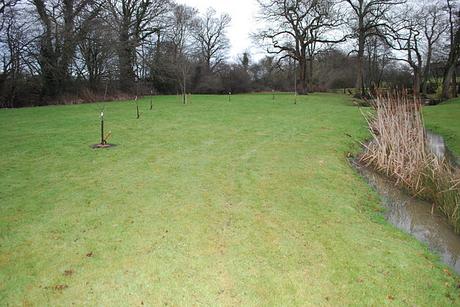
The ‘meadow’ January 2009 – the fruit trees haven’t long been planted. The ditch on the right runs between the east and west ponds and is as full as it ever is
I was asked to plant ten fruit trees in a figure ‘S’, which I did two years ago. They are slow growing and we now wish we’d bought larger specimens. As I mentioned recently (see “I’m So Excited…”) some were damaged by deer which have obviously held them up even more.
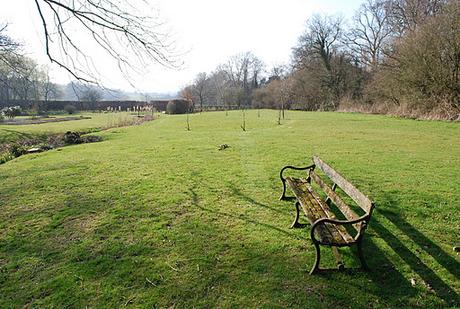
April 2009
But even in their diminutive/bonsai state they do add some sense and structure to an otherwise big expanse of ground. I can’t wait to see them as mature, graceful (and bountiful) trees. Hopefully before I’m too gnarled, wizened and cantankerous to appreciate them.I spent a great deal of time researching the growing of a flower meadow. It seemed that to achieve the best results, I ought to have got a digger in and scraped off the top four or five inches of topsoil. This would suitably impoverish the soil and so encourage flowers and discourage grasses.
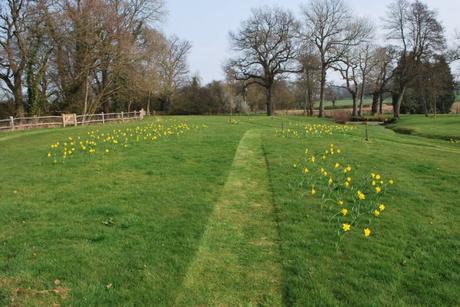
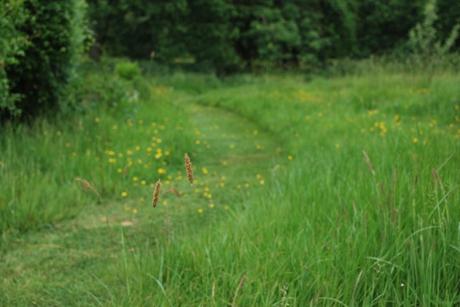
The paths are mown into the meadow early so as to deter great, fat, galumphing feet (eg mine) from stomping on emerging bulbs. April 2011
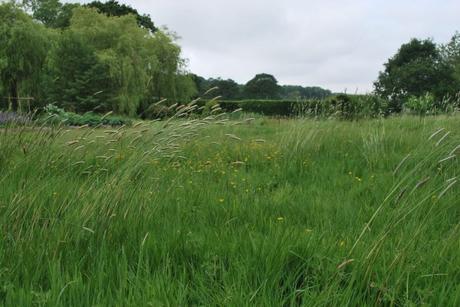
I could then sow with a wildflower seed mix and hey, alakazam. But this seemed to be enormously expensive in terms of time, effort and money. And what was I to do with a mound of topsoil the size of one of the lesser Lakeland peaks (Loughrigg perhaps)? Instead I opted for an easier, cheaper method. It’s called the stop-mowing-and-wait-and-see-what-happens method.
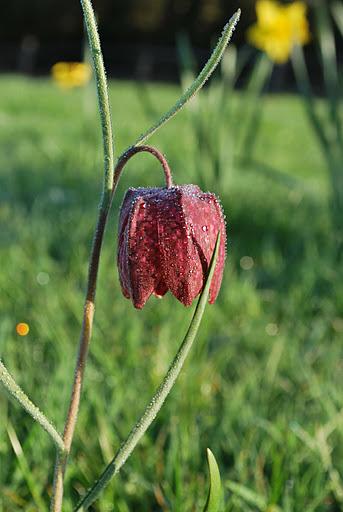
My Most Favourite (Fritillaria meleagris) – April 2011
Of course, I’ve given it a little nudge and, every now and again, a gentle shove. Since the autumn of 2008, I have planted bulbs here including 800 of my most favourite; the snakeshead fritillary. And last autumn I started planting
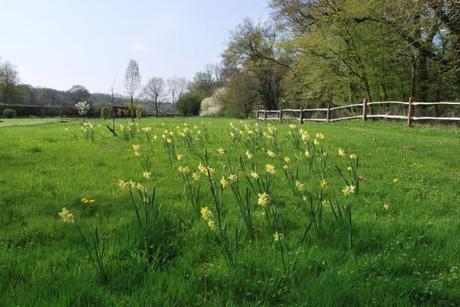
Daffodil Pipit – April 2011
several hundred daffodils.
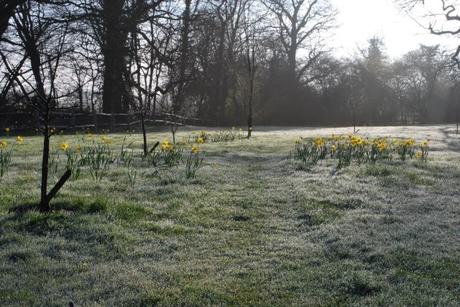
Daffodil Dutch Master – April 2011
I’m hoping that in the years to come (as I grow increasingly gnarled, wizened and cantankerous) the daffs will settle in and increase and increase. One day there should be a crowd, a host.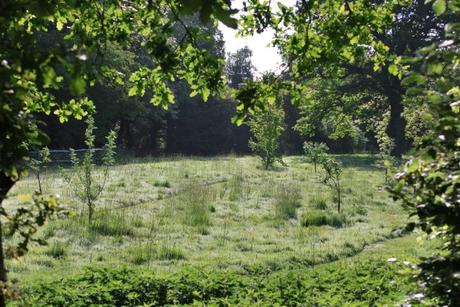
And there are so many different varieties,
sizes,
shapes,
forms,
and colours.
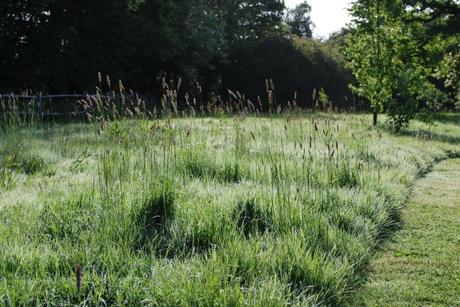
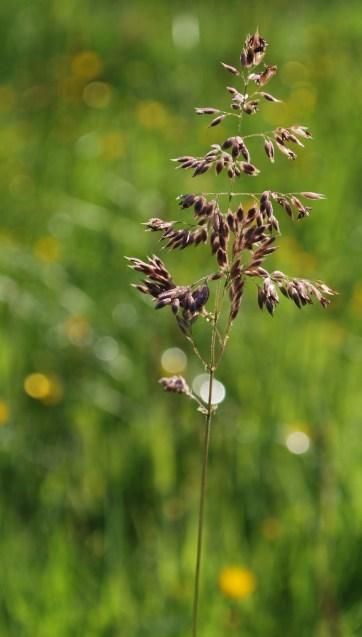
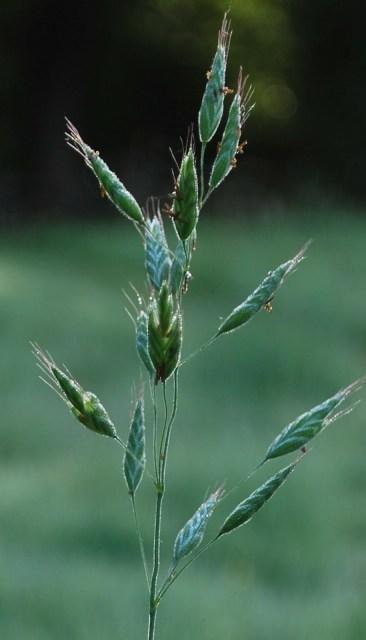
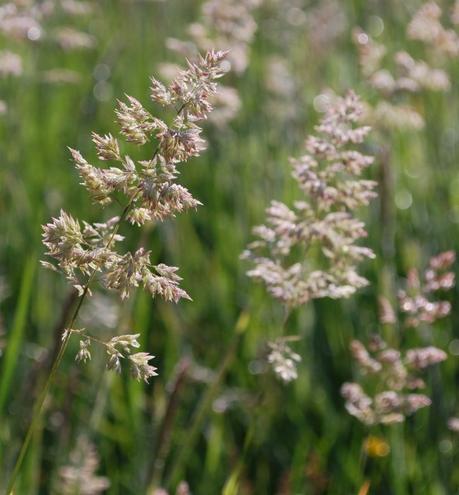
The cuttings are removed (and generally dumped in Margaret’s neighbouring field – her cow’s appreciate them) so that hopefully over the coming years (as I grow ever more gnarled, wizened and cantankerous) the soil will be impoverished to the detriment of the grass and the encouragement of flowers. Though to be frank, I love the grasses as they are.
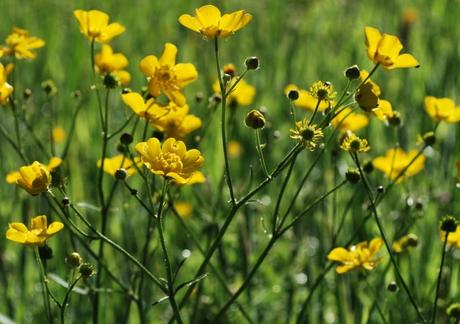
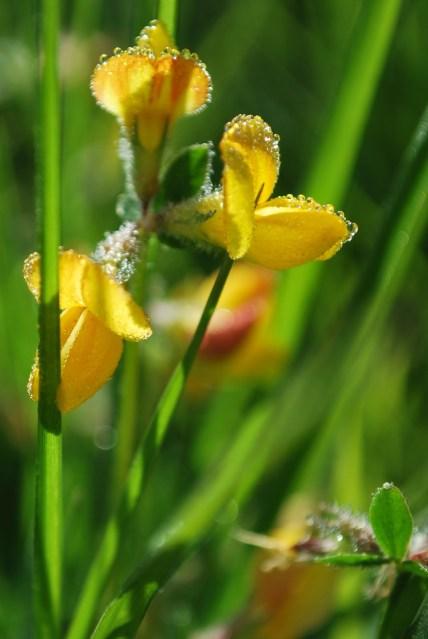
Birds Foot Trefoil (also known as Bacon & Eggs)
In addition there are vetches galore, clovers, selfheal,
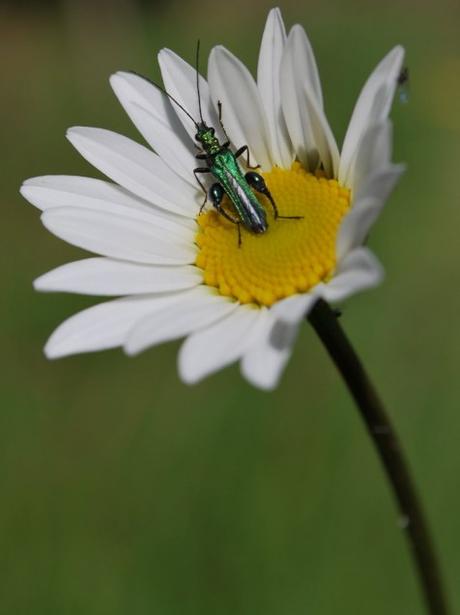
Ox Eye Daisy
cranesbill, and increasingly ox-eye daisys. Not nearly enough of the latter yet. But there will be. There will be. (There are other wild flower species later in the season and I’ve been adding to them by planting plugs raised from seed).
So generally I’m pretty pleased with how the meadow is developing though it is still very early days. This is only its third season after all.
And then a couple of weeks ago to my absolute amazement and joy, I saw this:
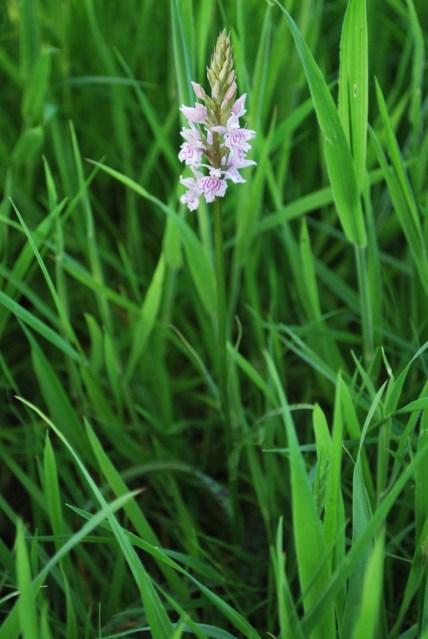
Common Spotted Orchid
Oh, be still my beating heart. How fantastic is that? I had such a huge grin on my face. Within a couple of years of “Just say no to mow” we had spotted orchids. Well, just one but hey, a spotted orchid! I had supposed that I might eventually get them in a few years time and indeed had banked on it. But so soon?Huge grin.






