


Introduction
Embarking on Te Araroa is to embark on a journey through the heart of New Zealand’s natural beauty and cultural heritage. Stretching approximately 3,000 kilometers from the subtropical north at Cape Reinga to the rugged southern cliffs of Bluff, this trail weaves through a tapestry of environments, offering a comprehensive exploration of New Zealand’s varied landscapes.
If you’re seeking a specific piece of information to aid your Te Araroa plan, here is the contents of this article that you can use to skip to the info you need.
- Introduction
- Understanding Te Araroa
- Regional Breakdown of Te Araroa
- Northland:
- Auckland:
- Waikato:
- Manawatū-Whanganui:
- Wellington:
- Marlborough & Tasman:
- Canterbury:
- Otago:
- Southland:
- Climate and Weather on Te Araroa
- North Island:
- South Island:
- General Tips:
- Best Time of Year to Hike Te Araroa
- Gear and Equipment for Te Araroa
- Accessing the Te Araroa Trailheads
- Northern Trailhead – Cape Reinga:
- Southern Trailhead – Bluff:
- General Tips:
- Navigating Te Araroa – Maps, apps and Guidebooks
- HiiKER:
- Paper Maps:
- Guidebook:
- Physical and Mental Preparation for Te Araroa
- Cultural Experiences and Local Interaction
- Land Acknowledgement for Te Araroa
Understanding Te Araroa
Te Araroa, meaning “The Long Pathway,” is more than a hiking trail; it’s a journey through New Zealand’s history, culture, and ever-changing geography. The trail traverses secluded beaches, dense forests, volcanic landscapes, bustling cities, and alpine passes, each segment offering its unique experiences and challenges.
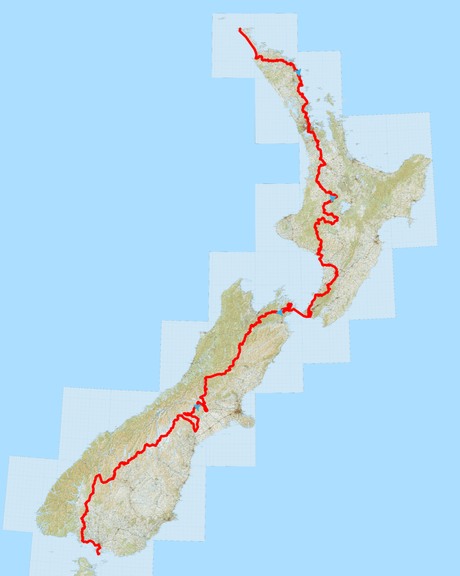
Regional Breakdown of Te Araroa
Once described by Lord of the Rings Actor Bruce Hopkins as an “Odyssey”, Te Araroa runs through a tapestry of landscapes and cultures. Each region of the trail offers something uniquely different.
While you can find a detailed list of all 161 stages of the trail on HiiKER, I will provide a brief overview of each of the regions along the trail.
Northland:
- The trail begins at Cape Reinga, offering dramatic coastal scenery where the Tasman Sea meets the Pacific Ocean. The landscape is defined by sandy beaches and dunes, notably along Ninety Mile Beach.
- Flora and Fauna: Coastal forests featuring pohutukawa trees, and habitats for native birds like tui and kiwi.
- Geological Note: This region’s coastlines are shaped by volcanic activity and oceanic processes.
Auckland:
- The trail navigates through Auckland’s regional parks, showcasing volcanic landscapes. The Waitakere Ranges and the Hunua Ranges offer lush native rainforests and cascading waterfalls.
- Flora and Fauna: Kauri forests and diverse birdlife, including the native kereru (wood pigeon).
- Geological Note: The area’s topography is influenced by volcanic activity, creating unique cone-shaped hills and fertile soil.
Waikato:
- Te Araroa traverses through the rolling hills and farmlands of Waikato, leading into the forested and mountainous terrain of the King Country.
- Flora and Fauna: Native bush, including rimu and totara trees, and habitats for birds like the North Island robin.
- Geological Note: Limestone formations are prevalent, notably in the Waitomo area known for its caves and glowworms.
- A highlight is the historic town of Matamata, the filming location for Hobbiton in “The Lord of the Rings.”
Manawatū-Whanganui:
- The trail takes hikers along river valleys, through native bush, and into the hill country, offering diverse walking experiences.
- Flora and Fauna: Ferns, podocarp forests, and a range of birdlife, including the fantail and morepork.
- Geological Note: The region features river terraces and sedimentary formations.
Wellington:
- Te Araroa in Wellington includes coastal walks and ascends through forested areas, culminating in a panoramic city view.
- Flora and Fauna: Coastal vegetation and birdlife such as gulls and oystercatchers.
- Geological Note: The landscape is shaped by tectonic uplift and erosion, creating rugged coastlines.
Marlborough & Tasman:
- This region includes the picturesque Marlborough Sounds and the coastal tracks of the Abel Tasman National Park.
- Flora and Fauna: Beach forests, ferns, and marine life, including dolphins and seals.
- Geological Note: The Sounds were formed by drowned river valleys due to rising sea levels.
Canterbury:
- Hikers will traverse the wide Canterbury Plains, followed by the challenge of the Southern Alps.
- Flora and Fauna: Tussock grasslands, beech forests, and alpine species. Kea, the world’s only alpine parrot, can be spotted.
- Geological Note: The Southern Alps are formed by tectonic plate collision, constantly reshaped by seismic activity.
Otago:
- Otago is characterized by its gold mining history, unique landscapes, and wildlife.
- The trail passes through Queenstown, a hub for adventure sports, and the historic city of Dunedin.
- The region includes the Central Otago Rail Trail and parts of the Southern Alps.
Southland:
- Marking the final stretch of Te Araroa, Southland is known for its rugged coastlines and remote wilderness.
- The trail concludes in Bluff, with Invercargill as the major urban center.
- Stewart Island, accessible from Bluff, offers a serene and pristine environment, completing the Te Araroa experience.
Climate and Weather on Te Araroa
The Te Araroa trail, encounters a wide range of climate zones, from the subtropical north to the more temperate south. Understanding these varying conditions is crucial for a successful trek.
North Island:
- In the northernmost parts, hikers can expect subtropical weather, particularly in the summer months (December to February), with higher humidity and occasional rain showers.
- As you move southward towards Wellington, the climate becomes more temperate, with cooler temperatures and more frequent rainfall.
South Island:
- The northern regions, like Marlborough and Tasman, often have drier and sunnier conditions compared to the North Island.
- The Southern Alps, traversing through Canterbury and Otago, present an alpine climate. Hikers should be prepared for colder temperatures, snow (even in summer at higher elevations), and rapidly changing weather conditions.
- Southland, towards the end of the trail, experiences cooler temperatures with frequent rainfall, especially in the Fiordland region.
General Tips:
- The weather on the trail can be unpredictable, and it’s common to experience ‘four seasons in a day’, especially in mountainous areas.
- Adequate preparation involves packing layers, waterproof clothing, and sun protection.
- Always check local weather forecasts and be prepared for sudden changes in conditions, particularly in alpine areas where weather can change rapidly.
Best Time of Year to Hike Te Araroa
Determining the best time to embark on Te Araroa is crucial for an enjoyable and safe trekking experience. Given New Zealand’s varied climates from north to south, here are key considerations:
- Ideal Season: The most favorable time for hiking Te Araroa is during the Southern Hemisphere’s summer, from late spring (October) through to early autumn (April). This period typically offers more stable weather conditions, with warmer temperatures and longer daylight hours.
- Summer Months (December to February): This is when the trail experiences the warmest weather, making it a popular choice for many hikers. However, it also coincides with the busiest period, so expect more company on popular sections of the trail.
- Shoulder Seasons (October-November and March-April): These months can be ideal for those looking to avoid the peak season crowds. The weather is generally still favorable, though conditions can be more variable, especially in alpine areas where snow can linger or arrive early.
- Weather Considerations: As mentioned in the previous section, New Zealand’s weather can be unpredictable, with conditions changing rapidly, especially in mountainous regions. Hikers should be prepared for a range of weather scenarios.
- Trail Length: Completing the entire trail can take 4 to 6 months, so hikers need to plan their start and end times carefully to make the most of the optimal weather windows.
- Regional Differences: While general patterns hold true, weather can vary significantly between the far north and the deep south. Hikers should stay informed about local conditions and forecasts, particularly in remote or higher elevation areas.
Gear and Equipment for Te Araroa
Preparation is key to enjoying Te Araroa, and selecting the right gear is crucial. Packing lightweight, waterproof clothing is a necessity in the unpredictable (but almost certainly wet) New Zealand weather. A good pair of trail runners can make a significant difference to comfort. While there are sections of the trail where boots are probably the wiser choice, using footwear that is both lightweight and quick-drying, will help in the long run (walk).
Here is a list of the items we recommend while hiking Te Araroa.
- Backpack: Atom Packs 30-litre ultra-light bag – provides comfort and sufficient storage without unnecessary weight.
- Tent: MSR Elixir 3 – offers reliable shelter in various weather conditions.
- Sleeping Bag: The Vango Cobra 200 – ensures warmth and comfort during rest.
- Sleeping Pad: A simple foam pad – for insulation from the cold ground.
- Trail Runners: Brooks Cascadias – offer excellent grip and support across different terrains.
- Trekking Poles: Leki Vertical K poles – aid in stability, especially on steep ascents and descents.
- Cooking System: The MSR pocket stove – compact and efficient for meal preparation.
- Water Filter: Sawyer system is preferable, for ease of use and versatility.
Wild Camping on Te Araroa
Wild camping along Te Araroa requires understanding and adhering to New Zealand’s specific camping regulations. Unlike some countries with a “right to roam,” New Zealand has more defined rules about where camping is permissible, particularly to protect its unique and sensitive environments.
- Designated Camping Areas: Much of Te Araroa passes through or near conservation land, where camping is typically allowed in designated areas. The Department of Conservation (DOC) manages numerous backcountry huts and campsites along the trail, which provide basic amenities.
- Wild Camping Restrictions: In many parts of New Zealand, especially near urban areas, national parks, and on private land, wild camping is restricted or not allowed. It’s crucial to plan your stages to align with designated camping spots or arrange accommodation where necessary.
- Leave No Trace: When camping, the principle of “Leave No Trace” is paramount. Hikers should ensure they carry out all waste, minimize their impact on the surrounding flora and fauna, and adhere to any fire bans or restrictions.
- Private Land: Te Araroa does traverse some private lands, where access has been granted specifically for trail users. Respecting the boundaries and rules of these areas is crucial, as is staying on the marked trail.
- Safety Considerations: When planning to camp, especially in remote areas, be well-prepared with the appropriate gear, including a durable tent, sleeping bag, and cooking equipment. Understanding weather patterns and having access to enough food and water is essential.
- Etiquette in Shared Spaces: In popular camping areas or huts, being considerate of other campers by maintaining cleanliness and keeping noise levels down is important for everyone’s enjoyment.
Accessing the Te Araroa Trailheads
Te Araroa’s journey begins at Cape Reinga in the North and concludes in Bluff in the South. Accessing these trailheads involves some planning, especially considering New Zealand’s geography. Here’s how to get to each end of the trail:
Northern Trailhead – Cape Reinga:
- Nearest Airport: The nearest major airport is Kerikeri Airport in the Bay of Islands. It is well-served by domestic flights from major cities in New Zealand.
- Driving to Cape Reinga: From Kerikeri, it’s about a three-hour drive to Cape Reinga via State Highway 10 and then State Highway 1. The drive takes you through some picturesque Northland scenery.
- Public Transport: There are bus services available from Kerikeri to Kaitaia. From Kaitaia, you can arrange transport services to Cape Reinga. Be aware that public transport options may be limited and require advance planning.
Southern Trailhead – Bluff:
- Nearest Airport: The closest airport is Invercargill Airport, offering domestic flights, including connections from Christchurch and Wellington.
- Driving to Bluff: Bluff is about a 30-minute drive from Invercargill, following State Highway 1 straight to the town. The southern journey through Southland offers views of the rolling countryside and the coast.
- Public Transport: Regular bus services run between Invercargill and Bluff. The journey is short and convenient, making Bluff easily accessible for hikers completing their journey.
General Tips:
- Car Rentals: Available at both Kerikeri and Invercargill airports for those who prefer a flexible schedule.
- Shuttle Services: Some companies offer shuttle services directly to the trailheads, which can be convenient for hikers with large packs or those wanting a direct route.
- Planning: Especially during peak hiking seasons, it’s wise to book transport well in advance to ensure availability.
Navigating Te Araroa – Maps, apps and Guidebooks
Navigating the extensive and diverse Te Araroa trail requires reliable tools and meticulous planning. HiiKER app emerges as a primary navigation aid, offering comprehensive support for trekkers:
HiiKER:
- Stages Feature: HiiKER’s stages feature allows hikers to break down the trail into manageable segments. This functionality is essential for planning daily treks, accommodation stops, and identifying resupply points along the route.
- Accommodation and Resupply Planning: The app provides detailed information on camping spots and accommodation options, making it easier to plan where to stay each night. It also highlights towns and locations where hikers can resupply, crucial for long-distance trekking.
- NZ Topo50 Topographical Maps: HiiKER includes the local NZ Topo50 topographical maps, offering an in-depth view of the landscape. These maps are invaluable for understanding the terrain and preparing for the trail’s various challenges.
- Offline Maps: Understanding the remote nature of much of Te Araroa, HiiKER’s offline maps are a crucial feature. They enable reliable navigation without the need for cell service, ensuring hikers can always find their way. And most importantly, they are free!
Paper Maps:
- Printing Maps from HiiKER: For those who prefer a physical map, HiiKER offers the option to print paper versions of each stage. With 161 stages in total, carrying all at once is impractical; instead, hikers can carry a select number of stage maps.
- Resupply Box Strategy: To manage the weight and space of carrying paper maps, hikers can include future stage maps in their resupply boxes. This approach allows access to physical maps when needed without the burden of carrying all stages at once.
Guidebook:
“A Walking Guide to New Zealand’s Long Trail: Te Araroa”: This guidebook, written by the founder of Te Araroa – Geoff Chapple, is an excellent supplementary resource. It provides detailed insights into each segment of the trail, including historical and cultural context, which can enrich the trekking experience.
Physical and Mental Preparation for Te Araroa
Tackling Te Araroa is as much a mental challenge as it is a physical one. Proper preparation is crucial for a successful and enjoyable experience:
- Physical Fitness: The trail demands a good level of fitness, given its length and varied terrain. Start training several months in advance, focusing on cardio for endurance, strength training for carrying your backpack, and hiking to accustom your body to long walks. Incorporate terrain similar to what you’ll encounter on the trail, including beach walks, forest trails, and hill climbs.
- Mental Preparedness: Mental resilience is key, especially for solo trekkers. Practice mindfulness and develop strategies to deal with isolation, fatigue, and setbacks. Familiarize yourself with the trail’s challenges and mentally prepare for them. Building a strong mindset will help you enjoy the journey, despite its difficulties.
- Nutrition and Hydration: Plan your diet carefully. You’ll need high-energy, nutritious food that is also lightweight. Learn about the locations where you can resupply along the trail. Hydration is equally important, so understand where you can access water and consider carrying a reliable water filter.
- Training Hikes: Before attempting Te Araroa, go on several multi-day hikes. This will not only test your physical readiness but also give you a chance to try out your gear, including your backpack, sleeping system, and cooking setup.
- Emergency Preparedness: Familiarize yourself with basic first aid and carry an emergency kit. Learn about the emergency procedures on the trail, including how to contact rescue services in New Zealand’s remote areas.
- Local Knowledge: Gain an understanding of New Zealand’s unique environments. Knowing about the local flora and fauna, weather patterns, and cultural norms will enhance your experience and ensure a respectful journey.
Cultural Experiences and Local Interaction
Te Araroa offers more than just a physical journey; it’s a cultural immersion into the heart of New Zealand. Engaging with local communities and understanding the country’s heritage greatly enriches the experience:
- Maori Culture: The trail passes through many areas of significance to the Maori people. Taking the time to learn about local iwi (tribes) and their customs, history, and relationship with the land adds depth to the trek. Respectful engagement with Maori culture, such as understanding the importance of marae (meeting grounds) and the concept of kaitiakitanga (guardianship of the land), is important.
- Small Town Charm: Te Araroa winds through numerous small towns, each with its unique character and stories. Interacting with locals, visiting community markets, and attending local events can provide a warm and genuine insight into Kiwi life.
- Local Cuisine: New Zealand’s culinary offerings are diverse. Trying local specialties, particularly seafood in coastal towns, dairy products in rural areas, and traditional Maori hangi (food cooked in an earth oven) where available, is a must.
- Historical Sites: The trail is dotted with historical landmarks, from early European settlements to significant Maori sites. Visiting these sites, often accompanied by information boards or guided tours, enriches the understanding of New Zealand’s past.
- Conservation Efforts: New Zealand is at the forefront of conservation. Engaging with conservation projects, whether through volunteering or visiting conservation centers, can offer insights into the efforts to preserve the country’s unique ecosystems and wildlife.
- Local Art and Craft: In many towns, local art and craft are on display, showcasing the creativity of New Zealanders. Art galleries, craft markets, and even casual street art exhibits are great for appreciating local talent.
Land Acknowledgement for Te Araroa
As we share information and stories about Te Araroa, we acknowledge that this remarkable trail traverses the ancestral lands of the Māori iwi (tribes) across Aotearoa New Zealand. From the northern tip of Cape Reinga (Te Rerenga Wairua) in Ngāpuhi territory, through the Waikato lands of the Tainui, across the ancestral lands of numerous iwi including Ngāti Tūwharetoa in the central North Island, down to the southern reaches of Ngāi Tahu in the South Island, each step on this path is a step through lands that hold deep historical, cultural, and spiritual significance to their traditional custodians.
We recognize and respect the enduring relationship that exists between these lands and their indigenous peoples and pay respects to elders past, present, and emerging.
Our journey through Te Araroa is made possible by the guardianship and stewardship of these lands by the Māori people, and we are grateful for the opportunity to travel through these diverse and sacred landscapes.
What do you think of this article? Did we miss anything? Or have you any unanswered questions about Te Araroa? Let us know in the comments.
Main Image Credit: Arapaoa Moffat






