The Taj Mahal is one of the most iconic monuments in the world and is considered to be the jewel of Muslim art in India. It is a white marble mausoleum located in the city of Agra, India and was commissioned in the mid-17th century by the Mughal emperor Shah Jahan in memory of his beloved wife, Mumtaz Mahal. The construction of the Taj Mahal took over 20 years and involved the work of thousands of artisans and craftsmen from across the Mughal empire. The monument’s exquisite beauty and its historical significance have made it a symbol of India’s rich cultural heritage and a popular tourist destination. The Taj Mahal has also been recognized as a UNESCO World Heritage Site and is considered to be one of the seven wonders of the modern world.
Taj Mahal History.
This story comes from a love cut short, a heart inconsolable, and grief. It was a gesture of love and everlasting memory. This is the Taj Mahal. India is a vast peninsula with an extensive history. It is diverse in religion, culture, and language. India has seen many empires throughout its lengthy history. The Mughal Empire brought with them an Indo-Persian culture that is evident in the magnificent forts and the tombs. The Mughal Empire was founded in the mid-16th century by its first emperor Babu. He was the descendant of Taur on his father’s side and Shah Jahan on his mother’s side.
At its height, the Mughal empire spanned almost the entire Indian peninsula and what is today Pakistan, Bangladesh, and Afghanistan unable to retain any territory in his home of what is today Uba Isan Babu began his ambitions by establishing himself in Kabul and eventually pushing further south into the Indian continent. Babu died in 1530 and was succeeded by his son and second emperor of the Mughal Empire.
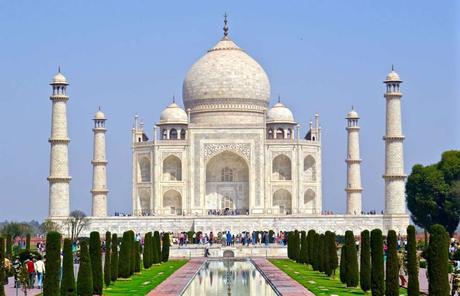
Who Built Taj Mahal?
Have you ever wondered who built the Taj Mahal and what inspired its creation? The construction of the Taj Mahal began in 1632 and took over 20 years to complete. The entire project involved the work of thousands of skilled artisans and craftsmen from across the Mughal empire. It also involved skilled artisans from Persia, Turkey, and other regions.
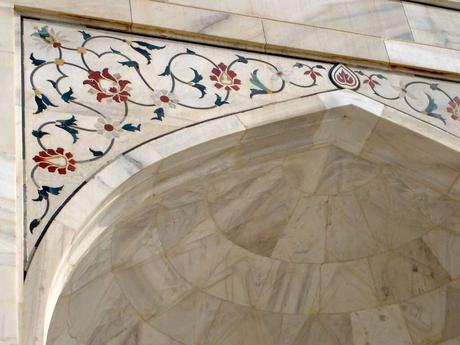
The construction of the Taj Mahal was a massive undertaking and required a vast amount of resources. They brought the marble for the structure from the quarries in Rajasthan. They also brought precious stones and gems from all over the world. The intricate carvings and designs on the walls of the Taj Mahal were created using a technique called Pietra Dura. This technique involves inlaying colored stones into marble.
They finally completed the Taj Mahal in 1653. It remains one of the most beautiful and awe-inspiring structures in the world. Its beauty and historical significance have made it a symbol of India’s rich cultural heritage and a popular tourist destination.
Why Was the Taj Mahal Built?
Mughal Emperor Shah Jahan built the Taj Mahal in memory of his beloved wife, Mumtaz Mahal, who died during childbirth in 1631. Shah Jahan was deeply grief-stricken by her death, and he wanted to create a monument that would not only honor her memory but also serve as a testament to their love.
According to historical accounts, Mumtaz Mahal’s death devastated Shah Jahan that he withdrew from public life for a period of time. When he emerged from his seclusion, he resolved to build a monument to her memory that would be as beautiful and magnificent as she was.
The construction of the Taj Mahal began in 1632, and it took over 20 years to complete. Shah Jahan spared no expense in the construction of the building, using the finest materials and hiring the most skilled artisans and craftsmen.
The Taj Mahal is not only a symbol of love and devotion but also a testament to the power and wealth of the Mughal Empire. The palace regarded as one of the most beautiful and iconic buildings in the world and has become a symbol of India’s rich cultural heritage.

Mughal Empire’s Influence on the Establishment of Taj Mahal
Here we expand our focus on the first five Mughal emperors, Babu, ABAR, Johan, and Cha Johan. Their tombs are scattered across three countries, Babo in Kabul Afghanistan, New Delhi India, Lahore Pakistan, and Shah Jahan in India. As lessons learned and each emperor wanted the grandest of all mausoleums, we can clearly notice the enhancements in growth and rise in complexity of each emperor’s final resting place. When we compare the structures, we begin to see more complex designs with bigger mints and larger assertive domes.
Distinctive 5th Mausoleum
However, the fifth mausoleum stands out. It is distinctive. They used red sandstone predominantly in all the tombs but they kept this one in much more prestigious and beautiful ivory-white marble. They covered the red sandstone. This is the epitome of the Muslim tomb design. Love and sorrow built the Taj Mahal. Shah Jahan built it for the woman he loved. Though many of his marriages were political by nature, this one was different. This one was out of love. And this love the fifth Emperor of the Mughal Empire was a Persian woman by the name of Mumtaz Mahal.
Shah Jahan’s Beloved Wife
She bore Shah Jahan with 14 children and also played a political role alongside her husband having a say in political matters. He was so in love with her. He never indulged in any emotional or sexual relationships with his other wives. His life was all about her and he truly loved her. During the childbirth of their 14th child, Shah Jahan’s beloved died. He was devastated by an understanding of the brief history of how the Taj Mahal came to be. Let us get into the details of the Taj Mahal. Join us on our drive and with the help of a tour guide, we will get a more comprehensive understanding of fascinating details about the Taj Mahal you probably never knew before.
Taj Mahal Architect
Ustad Ahmad Lahauri was a renowned architect who served as the chief architect and supervisor of the construction of the Taj Mahal. He was born in Lahore, which was then a part of the Mughal Empire, and was trained in the art of Islamic architecture by his father, Mir Abdul Karim. Lahauri was known for his expertise in marble carving, and he brought his skills to bear on the construction of the Taj Mahal. He was responsible for designing the overall layout of the monument, as well as the intricate carvings and inlay work that adorn its walls. The design of the Taj Mahal incorporates elements of Mughal, Persian, and Islamic architecture. The central dome of the mausoleum is a prime example of Lahauri’s mastery of architecture, as it appears to be floating above the structure without any visible support.
Architect’s Brief Background
Hs legacy lives on through the magnificent structures that he designed, including the Taj Mahal, which continues to captivate and inspire people from all over the world. Ustad Ahmad Lahauri was the chief architect and supervisor of the construction of the Taj Mahal. He was a skilled and accomplished architect who was responsible for designing the layout of the monument and the intricate carvings and inlay work that adorn its walls. Lahauri’s legacy lives on through the magnificent structures he designed, and the Taj Mahal stands as a testament to his skill and expertise in the field of architecture.
Taj Mahal Architecture Style
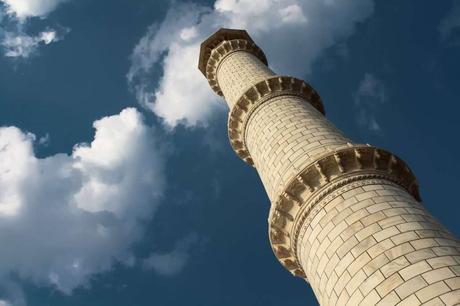
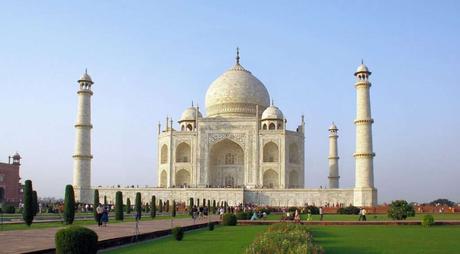
The construction of the mausoleum began in 1632 and took over 20 years to complete. The main architect of the Taj Mahal was Ustad Ahmad Lahauri, who worked closely with Shah Jahan to create the design for the monument. The architecture of the Taj Mahal is a fusion of Islamic, Persian, and Indian styles. The overall layout of the monument is based on Islamic garden design, which emphasizes symmetry and order. The white marble covers the main building and four minarets surround it. The central dome of the Taj Mahal is the most prominent feature of the monument. Four smaller domes surround it that are 73 meters high. The dome appears to be floating above the structure without any visible support, which is a testament to the skill of the architects and engineers who designed and built the monument.
Materials Used to Build the Taj Mahal
The walls of the Taj Mahal remains adorned with intricate carvings and inlay work. Mughal Empire created it using a technique called Pietra Dura. This technique involves inlaying colored stones into marble to create beautiful and intricate designs. The carvings and inlay work depict floral patterns, calligraphy, and other decorative motifs, which are typical of Islamic art. The interior of the Taj Mahal is just as breathtaking as the exterior. The main chamber of the mausoleum contains the tombs of Shah Jahan and Mumtaz Mahal. The interior walls remains decorated with intricate carvings and inscriptions from the Quran.
The Taj Mahal is a masterpiece of Islamic architecture that combines elements of Persian and Indian styles. Its overall layout is based on Islamic garden design, and the intricate carvings and inlay work on its walls depict floral patterns, calligraphy, and other decorative motifs. The central dome is a marvel of engineering and appears to be floating above the structure without any visible support. The Taj Mahal is a testament to the skill and expertise of the architects and artisans who designed and built this magnificent structure, and it remains a symbol of India’s rich cultural heritage.
Taj Mahal Architecture Analysis
Design and Layout:
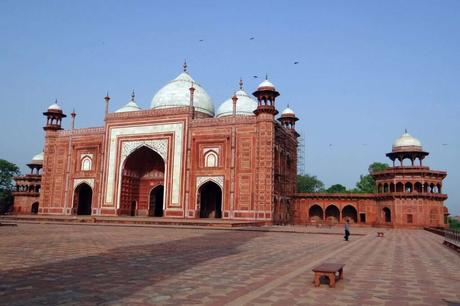
The Taj Mahal is built on a raised platform, which measures approximately 300 meters by 580 meters. The main gateway to the complex is a large red sandstone structure. It is decorated with intricate carvings and inlaid with white marble. As visitors enter through the gateway, they are greeted with a stunning view of the Taj Mahal. The gate way is located at the end of a long reflecting pool.
The Taj Mahal itself is a white marble mausoleum that is situated in the center of the complex. Mausoleum is square in shape and is topped with a large dome that reaches a height of approximately 73 meters. The dome is surrounded by four smaller domes, which are positioned at each corner of the building.
Interior:
The interior of the Taj Mahal is equally impressive, with intricate carvings and inlaid decorations covering every surface. The central chamber of the mausoleum contains the tombs of Shah Jahan and Mumtaz Mahal. The Tombs are located on a raised platform in the center of the room. The tombs are surrounded by a marble screen that is decorated with delicate carvings.
The interior of the dome is also decorated with intricate carvings and inlaid with precious stones. The design of the dome is particularly impressive, as it appears to be floating above the mausoleum, creating a sense of weightlessness and ethereal beauty.
Exterior:
The exterior of the Taj Mahal is decorated with intricate carvings and inlaid with precious and semi-precious stones, including jasper, jade, and turquoise. The intricate carvings on the marble surface of the building include floral motifs, calligraphy, and geometric patterns.
Symbolism:
The Taj Mahal is not only a stunning work of architecture, but it is also rich in symbolism. The white marble used in the construction of the building is said to represent purity, while the intricate carvings and inlaid decorations symbolize the wealth and power of the Mughal Empire.
The four minarets that surround the Taj Mahal are said to represent the four corners of the earth, and the reflecting pool in front of the building is said to represent the Garden of Paradise. The overall design of the building is meant to evoke a sense of harmony and balance, with the symmetrical layout and careful use of decorative elements creating a sense of peace and tranquility.
The Taj Mahal is a masterpiece of architecture that has captured the imaginations of people around the world for centuries. Its intricate design and rich symbolism make it a truly unique and impressive work of art. The beauty of the Taj Mahal is not just in its exterior, but also in its interior, which is filled with intricate carvings and inlaid decorations that are truly breathtaking. If you ever have the opportunity to visit the Taj Mahal, it is an experience that you will never forget.

Taj Mahal Facts
- Construction of the Taj Mahal began in 1632 and was completed in 1653. It took over 20 years to build and employed around 20,000 workers.
- The Taj Mahal was built by the Mughal Emperor Shah Jahan in memory of his wife Mumtaz Mahal, who died giving birth to their 14th child.
- The Taj Mahal is made entirely of white marble, which was brought to the construction site from all over India and Central Asia.
- The monument is surrounded by four minarets, which were designed to lean slightly away from the Taj Mahal so that they would not collapse on the monument in the event of an earthquake.
- The central dome of the Taj Mahal is 73 meters high and is surrounded by four smaller domes.
- The Taj Mahal is located on the right bank of the Yamuna River and is surrounded by a beautiful garden, which was designed in the Persian style.
- The monument is decorated with intricate carvings and inlay work, which were created using a technique called Pietra Dura.
- The Taj Mahal is visited by millions of tourists every year, and it is estimated that around 70,000 people visit the monument every day.
- The Taj Mahal has been designated as a UNESCO World Heritage Site, and it is widely regarded as one of the most beautiful buildings in the world.
- Despite its status as one of the most iconic structures in the world, the Taj Mahal is facing several environmental and conservation challenges, including pollution from nearby industries and the degradation of its marble due to weathering.
Let’s Witness the Palace with Our own Eyes
Now imagine the time, skill, and finesse that is required to cut these stones without cracking them and inlaying them perfectly. The simplest mistake would crack and ruin the whole plate. Now, this is just one plate. Imagine having the responsibility of inlaying these gemstones on this unfathomable and immense scale. Imagine having to do all of this without a single mistake. The thought of that is, to say the least. Mindboggling and jaw-dropping 28 different stones are utilized for inlaying such as carnelian, turquoise lap, lazuli, coral, onyx, Kasai, jade, and bloodstone. These stones were imported from several places such as Tibet, Raan, Punjab, China, Afghanistan, Sri Lanka, and Arabia. One more thing. You can’t see later, bottom to a top size of the letter font. It looks the same, but it is not the same. They are in the V shape like that.
Let’s Explore the Center Line of the Heritage
If the same size letter, you can’t read easily the top. That’s why architects make it in the V shape ship. So, this is the center line of the Taj Mahal. This line starts from here and goes to the straight montage grave. In the symmetrical. Not only is the main Mali symmetrical, but the whole Taj Mahal complex gardens and even the trees are also symmetrical as well. It adds another level of appeal in its simplicity. While ironically adding another level of complexity, the explicit nature of having everything on either side of the center line symmetrical is an engineering feat in itself that takes time and more importantly, absolute proficiency and impeccable technique. The level of this faultless design is apparent when you realize that following this insignificant line will lead you through the absolute center of the entire Taj Mahal.
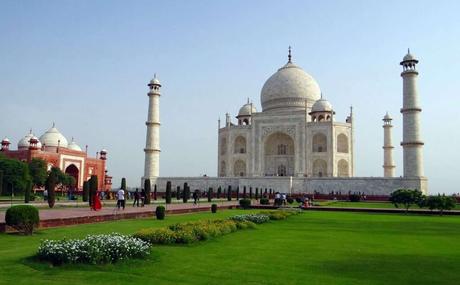
Main Gates of the Palace?
As you advance through the main gate, tunnel vision strikes you. An optical illusion is setting to make the Taj Mahal seem as if it is moving away from you. As you walk through this main gate. Before long, you enter main Mali in all its glory and you will find yourself at the gardens containing pavilions. More symmetry is visible here as the main gate from the inside looks identical and symmetrical. The symmetry does have some inconsistencies as we see here.
Why Stones Were Used to Build the Palace?
King Jahan made this memory of his wife’s mom and she’s not Indian. She’s a person from Iran. She died in 1630. After one year. Taha started in 1631 and completed 1653, 22 years. White coming from in place, which is the, you have to find this is from red, this is stone. Why? They have a reason. Most reason Ara is the capital and this is going with the marble reason color. This is white. The Same stone, white marble. Now you have to find yellow no’s. Not a hundred percent white. The bottom side is clean. Oh, but before five years, they are all marble. No use of any color with this marble. No use of any chemicals.
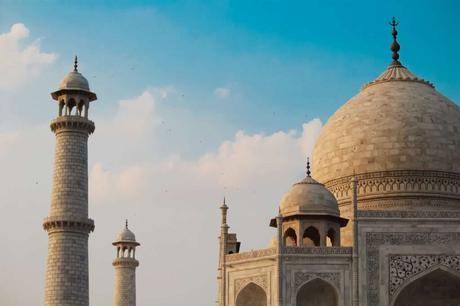
How Do Towers (Minarets) Look Like?
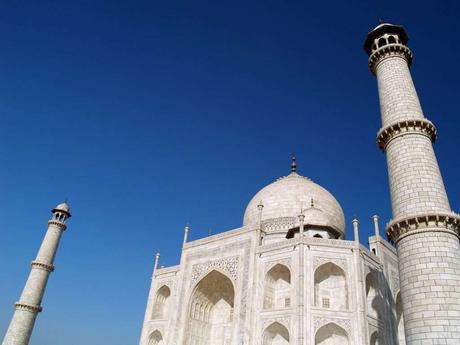
Now the plausibility of this story is still under debate. There took place in fact multiple thefts of precious items from the Taj Mahal. . Some say yes and others say no and I suppose we will never be certain. One more thing. See the tower from here? Yes. Two in the white, the left tower. Okay, the tower looks like straight like that. However, they are not straight because in the future brown glass really they have to spread architecture slightly. It was very, very smart. The towers, the four minarets that are on all four corners of main Mali.
How Tall Are the Towers (Minarets)?
Each one towers at about 43 meters or 141 feet high. It is quite challenging to see the minuscule tilt of these mints with the naked eye. Look at this picture. Compare the straight lines of the main mausoleum with the minarets. And if you look at the entire picture, you will notice that they are indeed leaning outwards and away from the main structure. While here in the garden area, you will notice an insignificant building right at the edge. This is a water palace. It is unique because they built the dome out of marble, but the rest of the building they built out of red sandstone. It’s quite interesting to view the contrast between the two different materials in one building. Pursuing the perfect symmetry, you will again discover an identical water palace on the adjacent side as well.
Mosques Around the Palace
Walking further north, you reach the most northerly part of the entire complex. The riverfront terrace, although the main mausoleum is the center of attention. There are in fact two more buildings on either side. A mosque and a guest house
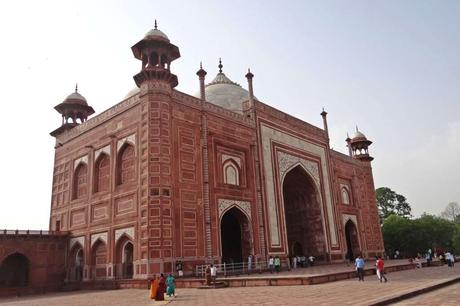
Constructed from the familiar red sandstone. This building is the mosque. It is a little more than 20 meters high or 66 feet due to it being a mosque. It is located on the west side of Taj Mahal in the direction of Mecca where Muslims face when praying. Here’s a cute monkey we saw climbing the mosque while on the east side sits the guest house. It is the Joab, which means answer in Arabic.
Exterior of the Mosque
Arguably the only structure here that most people who come to visit the palace are familiar with it? It demands your attention and respect. It captivates you with its completely white exterior. Its scale is indefinable, its craftsmanship is unmatched. It is 68 meters or 200 to 23 feet high and standing more than 350 years, it still affirms prestige.
As I got closer, I was really able to take in the fine points of almost every marble slab. It is unthinkable to comprehend the man-hours it took to meticulously complete this building piece by piece and inch by inch. And although impossible, I would like to share with you this experience as much as I can with the following footage. I want you to appreciate the fine details present on almost every surface of this marvel. The Taj Mahal, the entrance to Mali brings you to the rather modest octagon-shaped inner chamber.
Tombs
You will not find decorations or extravagant jewelry as in Muslim tradition. For bits elaborate decorations of graves. There are two tombs here. Theometrically centered tomb belongs to montage Mahal, while the larger off-center tomb to the west belongs to her husband. This is the only element in this entire complex that is not symmetrical. These tombs are in fact replicas of the real ones found in the lower chamber observing Muslim tradition. You can notice how comparatively modest and simple the walls are compared with the replicas. So if everything painstakingly engineered to be symmetrical, why is Shah Jahan’s tomb so offset? Why is it the only thing that defies this crucial element of symmetry? We stumble on a long disputed legend. North of the entire complex is the Diam River.
As you cross it, something quite peculiar is perched. Here it is called the Moonlight Garden. It may well just be a garden north of the Taj Mahal. This garden, however, is flawlessly aligned with the Taj Mahal. The foundation of Shah Jahan’s ambition to erect his own tomb identical to his wives. Black identical Taj Mahal for himself on the other side of the river, perhaps to be in proportional love with his beloved for eternity. His plans, however, never came to fruition.

How Much is it Worth Today?
The Taj Mahal costs around 1 billion US dollars in today’s money. In 1657, Shah Jahan became ill, which intensified the war of succession between his four sons. The main contest of power took place between Shah Jahan’s oldest and favored son Dara Shikoh and his third son, Aurangzeb. Many battles ensued, which saw Dara Shikoh fleeing to the west from his brother Aurangzeb. Ultimately, one of Dara’s generals betrayed him and handed him over to Aurangzeb crowned himself emperor. In July of 1658. In August 1659, Aurangzeb had his brother Dara and favored successor to the Mughal empire executed Aurangzeb deemed his frail. Because of Shah Jahan’s incompetency to rule, Aurangzeb imprisoned him. Shah Jahan lived out his years and never again visited beloved wife’s grave.
The End of Shah Jahan’s Ruling
The Taj Mahal Shah Jahan died in 1666 after eight years of imprisonment, perhaps never able to realize his black Taj Mahal fact or fiction. We will never know. We would like to think of it as truth because the only thing better than the Taj Mahal would have been a pair of Taj Mahals peering at each other from opposite sides of the river. And there is nothing wrong with these ambitions of our imagination. We are fortunate to have the Taj Mahal because of the ambitions and imaginations of Shah Jahan. After his death, Shah Jahan was moved and buried in the Taj Mahal. So even though he spent the last eight years of his life incapable of visiting his wife’s grave, he would surely rest in peace buried next to his montage for eternity.
Messy Situation Around the Palace’s Garden Nowadays
Everywhere we looked, people would throw garbage and empty bottles in the gardens and under benches. I found these very ill-mannered and even more disgraceful and embarrassing garbage bins plentiful, yet some people deemed it acceptable to toss their trash everywhere. If your life of adventure ever brings you to this marvel or any other place, I implore you to be humble and dispose of your trash responsibly and uphold the work many have perfected just so you may have the opportunity to experience it.
Our voyage to the Taj Mahal and India, in general, was exceptional. We tend to be bold and love to experience various countries. You regularly hear cynical stigmas about India, but I give credit where it is due. I have a philosophy of never accepting what people say about anything and would rather experience it myself. India was one of the most compelling, fascinating, and culturally rich countries I have visited. The food is incredible and the hospitality of the various people surprised us. We hardly got to experience this vast country and only touched on what it has to offer. One thing is certain India, you have won a place in our hearts and we will be back to relish what else this country has to offer. And for that, thank you India. And until next time.
If you have questions, you can always contact us. You can also search for hotels, flights, car rental, and motorcycles, and bikes rentals all over the world on our homepage.