


I haven’t been in the mood to write reviews, and I’m conscious that what I am interested in writing – essays and memoir – aren’t a great fit for a WordPress blog. I keep thinking I’ll start something on Substack and then wonder how I’m going to juggle two blogs when I’m barely keeping up with one. Oh well, it will sort itself out eventually. In the meantime, I’ve done quite a lot of reading and I don’t want to forget it all. I’ll tackle fiction in this post and nonfiction in another.
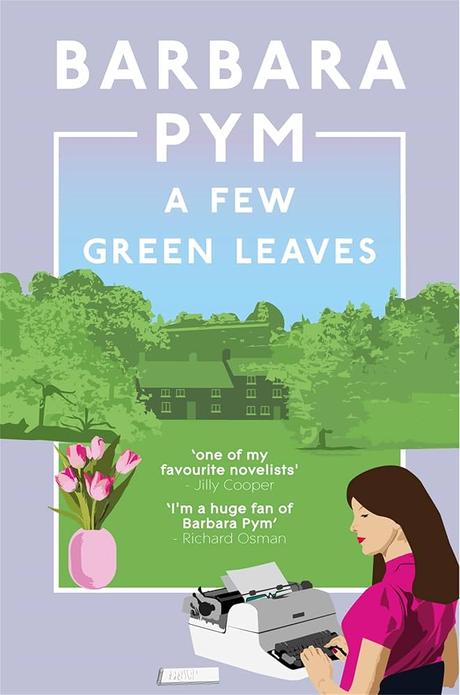
My heart belongs to 50s and 60s Barbara – Excellent Women, Jane and Prudence, No Fond Return of Love and so on – but I’ve read them all now and only have later Pym to turn to. This was her last novel, which explains why it ended a bit abruptly. Emma, an anthropologist, moves into a small backwater village and becomes immersed in the life there, forming friendships with the widowed Rector, Tom, and his spinster sister, Daphne, the local doctor (with a grimly enthusiastic taste for geriatrics), a snobby food critic, gossipy old village ladies, and a bohemian young couple. She’s also having one of those classic Pym non-relationships with a telly-friendly academic ex who’s popped up to write a book in the cottage in the woods. It’s a delicate comedy with Pym’s comic eye for the everyday absurdities of English behavior bulked out here by the awkwardness caused by changing ideologies and the clash between old and new ways of living. I love Pym and enjoyed this, though it didn’t steal a place in the top tier of her novels. I was actually reading it because I’m interested in novels that concern rest – proper rest, not the nonsense of divorced/bereaved women going to Greek islands where they start a business and begin a passionate new love affair. I mean books in which the protagonists choose not to do things. I can only think of some Elizabeth von Arnim in this category, so recommendations warmly welcomed.

Talking of authors who’ve written better books, but whose lower ranking ones are still immensely enjoyable…. I listened to this novella in about three days, powering through thanks to the silky softness of Tyler’s consumable prose and her simple but charming plot. Gail is a recognisable Tyler type – a gruff introvert with an abrupt manner and a drily judging eye, who takes it badly when the principal at her school tells her she has no people skills. This is why she’s being passed over for a promotion, and Gail harrumphs her way out her office and goes home, only to find her ex-husband, Max, on the doorstep with what she insists is an unwelcome cat in a carrier. Their daughter, Debbie, is about to be married and Max can’t stay with her because her soon-to-be husband is severely allergic. There’s an issue, too, with the soon-to-be husband, but don’t worry about this because it’s a sub-plot that never really gets going. The real story here is the one that concerns Gail and Max and their failed marriage; stepping back into their past to discover what went wrong is pure Tyler pleasure. That woman couldn’t write an unpleasant character if she tried, and in no time at all, Gail is succumbing to the lure of the cat and revealing her vulnerabilities, and showing the intense love she has for her daughter and, well, this is all recognisable Tyler too. Last year I read Katherine Heiny’s Early Morning Risers which has a story line about a reluctant bride that blows Debbie’s story out of the water, but no one does late life second chances like Tyler, and the end was perfect. Quite brought a tear to my eye.

I read this book for the first time when I was about fifteen or sixteen and I loved it then. On the hunt for pure comfort fiction, I picked it up again and guess what? You really can read a book for the first time twice. I had absolutely no memory of what happened after all those years, with so many subsequent books squashing the old memory banks to mush. But what I remembered and remained unchanged was my love for our detective: Brother Cadfael, the Welsh Benedictine monk who runs the herb garden in the monastery in Shrewsbury in the middle of the 12th century. He is wisdom, kindness and compassion. He understands human nature with all its flaws and fallibility, and his spirituality is pure and joyful. The other characters were good and admirable people, or people who learned to be better, or people whose awfulness was amusing. Even the villain was dashing. And the story was great, full of twists and turns. I read two more Cadfael novels in quick succession after this one, but this was the best.
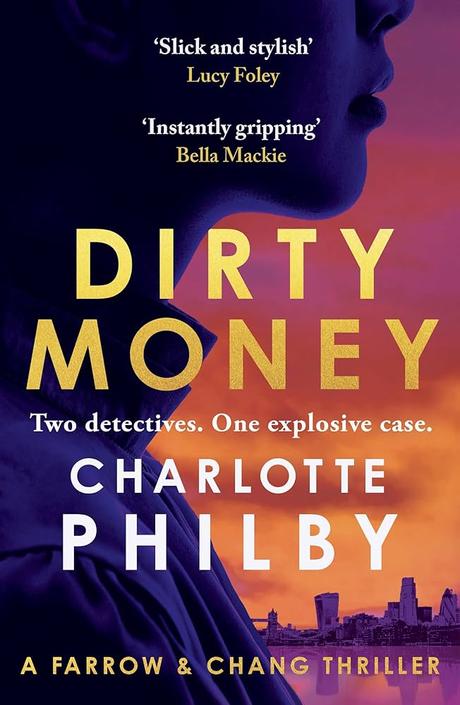
Alas! This was not good. After Ellis Peters made crime fiction writing look easy, Charlotte Philby came along to remind us how hard it is. I liked the premise very much. Two female protagonists from opposite ends of the economic divide. One a high-powered investigator from the Serious Crimes Investigation Division whose inherited wealth doesn’t quite make up for the trauma she usually deals with. And the other a former journalist turned private eye who’s had to change her identity after being the prime witness in the case of a dangerous drug lord. They both have problems to solve – the official one about money laundering by Kazakhstans in London, the other about a scam website that invites female students to earn money as escorts. You’d think that was enough plot to see you to the end of a book, wouldn’t you? And yet the story was repeatedly weighed down by back stories and life issues with family and friends that cluster around the two women. Philby is determined to cram extra information into every sentence she writes, giving the prose a stodgy feel. I am so tired of contemporary crime fiction like this, where the women are all feelings and no minds. The ending finds them both being blindsided by bad things they didn’t see coming. Can’t we let women be smart and savvy and work things out? Can’t they be wise and intuitive and use their experiences for good? I got through this because of the sunk cost in reading time I’d invested when I realised it wasn’t going to be satisfying. But I can’t recommend it.
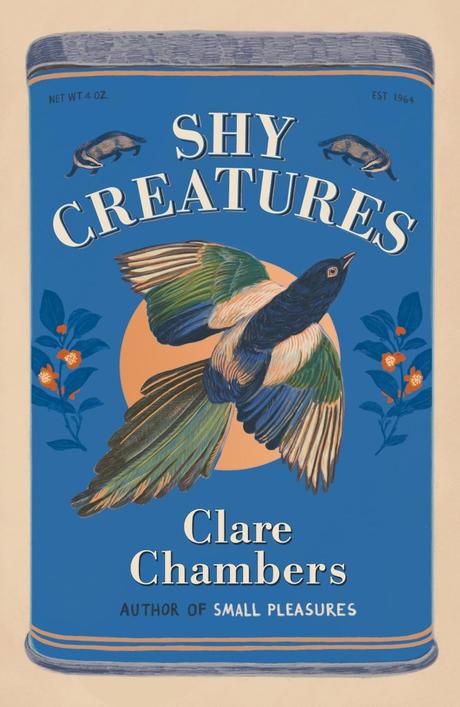
Happily, this is a novel I can warmly recommend. A huge hit with me because Clare Chambers is talented storyteller, who knows how to hold a reader’s attention from start to finish. Helen is an art therapist at a psychiatric hospital in Croydon. It’s the 1964 and her work is viewed as rather wildly experimental by some psychiatrists there, but not by Gil Rudden, the most charismatic and charming of the doctors, with whom she is having an affair. Helen is with Gil when a new and extraordinary patient is admitted. William Tapping is 37 years old, mute and unkempt, having lived an elective prisoner in his house for the past quarter of a century, cared for by an eccentric band of aunts. The last aunt is admitted to hospital with him, and quietly expires that night. Helen is intrigued by the new arrival, particularly when she discovers his talents as an artist, and begins to investigate the circumstances of his life. William’s story is then told in a series of tragic incidents that stretch back through time to the final revelation of 1938, when the trouble all began. As Helen delves deeper into the past, her affair with Gil flounders in the present. But the ending offers hope and happiness for both of them in poignant and tender ways. Cue more happy tears. This isn’t a book to talk about, really. It’s direct and unpretentious and just gets on with the business of giving you a good story, excellently told.

I’ve saved the best until last. This was my first Tessa Hadley and I am so grateful to Jacqui for suggesting that The Past was the best introduction to her work. The writing! Oh my goodness, the writing of this book is extraordinary. I was going to post some quotes, but it became impossible to choose. Every page sings with beautiful, astute, original sentences. Hadley is brilliant on nature description, succinctly spot on in her psychological observations, dreamily provocative in her philosophical musings. The story concerns four siblings spending three weeks together at the old family home, which is curling at the edges with decrepitude but full of haunting memories that are hard to let go. There are three sisters – perfectly edgy portraits of a certain kind of English woman: Harriet, whose severe and serious facade hides unbearable vulnerability and a kind of humiliating silliness; Alice, the romantic, whose upfront silliness hides generous gifts of perception, and Fran, a woman at the embattled stage of motherhood, practical and pragmatic but prone to warring with her unsatisfactory husband (who she leaves at home). Her children, Ivy and Arthur are excellent portrayals of the swoop and dive of childhood madness, the weird power relations kids have to one another and their nearest family. And then there’s the brother, Roland, a popularising academic, who brings his third wife, the haughty, beautiful Pilar with him, and his teenage daughter, Molly. As the family settles in and starts to take delicate chunks out of one another, and old stresses and strains join with new ones brought in by the outsiders, the story takes a long break in the middle to return to the actual past of the family. In this section, Jill, the siblings’ mother, brings her small children home to her parents when she’s on the brink of leaving their father, Tom, who’s all caught up with May ’68 and the lures of other women. It’s all beautifully understated and fascinating to watch the family DNA in these earlier iterations. By the end of the three weeks, everyone is altered and changed and yet still the same. But oh, the writing! Tessa Hadley, I’ll be back.







