The post Spanish Easy Lesson Insects and Bugs Bilingual Activities was originally published on Spanish4Kiddos - Educational Resources and Bilingual Content.
Are your curious little ones fascinated by all things that fly, crawl, and buzz? Bugs and insects are amazing creatures that inspire wonder and spark curiosity about the natural world.
But did you know there’s a difference between a bug and an insect? Let’s turn this science mystery into an exciting bilingual adventure, complete with Spanish vocabulary and easy-to-remember tips for exploring nature together.
Below, you’ll find a helpful guide to teach kids about insects and bugs, fun Spanish terms for different creatures, and creative ideas to make learning engaging and meaningful.
Understanding the Difference Between Insects and Bugs
Before diving into vocabulary, let’s clear up the common mix-up: every insect is part of the Animal Kingdom, but not every small critter crawling around is technically an insect. True bugs are a specific type of insect, but there are also non-insect creatures (like spiders and worms) that kids often call “bugs.” This distinction makes learning even more fascinating!
Key Features of Insects (Insectos)
Here’s how kids can spot insects in their backyard:
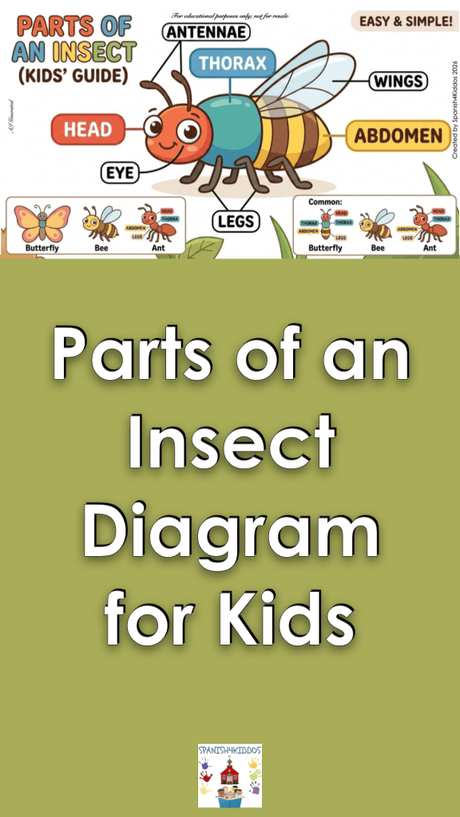
- Three main body parts: Cabeza (head), tórax (thorax), abdomen (abdomen).
- Six legs (seis patas): Always attached to the thorax. Compare this to arachnids, which are not insects and have eight legs.
- Wings or wingless (alas o sin ellas): Some insects have two pairs of wings! Bugs may also have wings, but their wing arrangement is unique!
- Eyes: Explore how insects have compound eyes made up of thousands of tiny parts, giving them a unique way to see the world. Compare this with simpler bug eyes through magnified images.
- Compelling cycles (ciclos de vida): Most insects go through metamorphosis, like caterpillars (orugas) turning into butterflies (mariposas).
What Makes Bugs Unique?
- True bugs (Hemípteros):
- Have piercing, sucking mouthparts (boca perforante), perfect for drinking plant sap or liquids.
- Often feature half wings or hard outer shells.
- Wings vs. Shells: True bugs often have hard shells (half wings) that form a triangle shape—great for spotting beetles versus butterflies.
List of Common Insects to Learn in Spanish
Start with insects your kids are likely to spot near home or school! Help them build vocabulary by observing and describing their features in both English and Spanish.
Insects (Insectos)
 Ant – La hormiga: Strong and hardworking! Hormigas fuertes.
 Butterfly – La mariposa: Colorful and elegant pollinators.
 Bee – La abeja: Busy helpers for flowering plants!
 Grasshopper – El saltamontes: Jumping champions of nature.
 Ladybug – La mariquita: Spot their bright red shells.
 Dragonfly – La libélula: Amazing flyers with transparent wings.
 Caterpillar – La oruga: Watch them crawl and transform into butterflies!
 Cricket – El grillo: Known for their nighttime chirps.
 Firefly – La luciérnaga: Magical lights in summer skies.
 Fly – La mosca: Small but speedy—a classic household visitor!
Fun Tip: Practice bilingual phrases during outdoor play! Say, ”Look at the ants carrying food! Mira las hormigas llevando comida.”
List of Creatures That Are Not Insects (But Kids Often Call These Bugs)
These critters often get grouped with insects but belong in their own categories. Fascination doesn’t stop here—these animals play vital roles in their environments, just like insects!
Bugs (animales que no son insectos)
 Spider – La araña: Eight-legged arachnids that weave beautiful webs.
 Scorpion – El escorpión: With claws and a stinging tail!
 Worm – El gusano: Earthworms help the soil grow rich for plants.
 Snail – El caracol: Gastropods with spiral-shaped shells.
 Roly-Poly/Pill Bug – El bicho bolita: Crustaceans that roll into tiny balls!
 Slug – La babosa: Slow-moving, slimy relatives of snails.
 Tick – La garrapata: Tiny hitchhikers often found in grassy areas.
 Mite – El ácaro: Microscopic critters hiding on plants or soil.
Fun Tip: Use observation language: ”Look closely: Does this bug have six legs or more? Mira de cerca: ¿Tiene seis patas o más?”
Are Praying Mantises, Dragonflies, and Fireflies Insects? Let’s Explore!
First of all—great question! This is one of those curious topics that sparks not only scientific discovery but also bilingual learning opportunities.
Let’s break it down with a warm and approachable touch that’ll help you understand and enjoy learning about these fascinating creatures in both English and Spanish.
Praying Mantises – La Mantis Religiosa
Yes, praying mantises are insects! Here’s why:
- Body Structure: Like other insects, they have three main body parts: cabeza (head), tórax (thorax), and abdomen.
- Legs and Wings: They have six legs, with their two front legs adapted for catching prey. They’re often called “praying” mantises because of the way those front legs fold, as if in prayer! (Parece que están rezando.)
- Fun Spanish Fact: The name mantis religiosa comes from their folded posture, which looks “religious.” You can tell kids, “La mantis religiosa es una experta cazadora con patas que parecen brazos en oración.”
Dragonflies – Las Libélulas
Dragonflies are insects too—and pretty dazzling ones at that!
- Body Structure: Like typical insects, dragonflies have three body parts and six legs.
- Unique Features: They are famous for their long, slender bodies (cuerpos largos y delgados) and transparent wings (alas transparentes). Plus, they can fly in all directions—up, down, backward, and even hover!
- Did You Know? Dragonflies have been around for more than 300 million years. Talk about ancient explorers! You can say: Las libélulas son insectos que viven cerca del agua y son increíbles voladoras.
Fireflies – Las Luciérnagas
Fireflies? Also insects—oh, and magical ones, too!
- Body Structure: Fireflies are beetles (sí, son escarabajos), and like all true insects, they have three body parts, six legs, and two wings (dos alas).
- Glow Power: The glowing magic? That’s called bioluminescence (bioluminiscencia), which they use to communicate and attract mates. You might say, “Las luciérnagas iluminan las noches de verano, como pequeñas estrellas terrestres.”
- Bilingual Connection: When watching fireflies at dusk, encourage kids to count the lights: ¡Mira cuántas luces hay! ¿Cuántas puedes contar?
Why Are These Insects So Special?
Praying mantises, dragonflies, and fireflies are awesome examples of how insects come in all shapes, sizes, and unique abilities. Each one serves an important role in the ecosystem, from helping control pests to pollination (polinización) or even inspiring wonder with their glowing light.
Discover more fun FREE Spanish worksheets for the summer. These printables include summer learning ideas and activities to learn about insects and so much more.
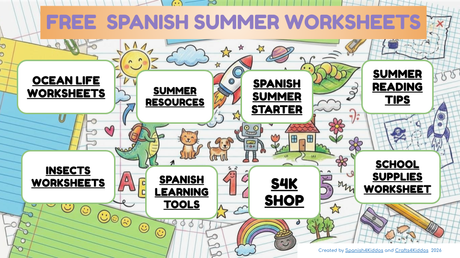 FREE Spanish Summer Worksheets
Activities to Build Spanish Vocabulary and Explore Nature
Ready to practice insect and bug vocabulary while exploring the outdoors? These bilingual-friendly ideas will make it easy and fun for kids to learn!
Insect Count and Description Game
- Head outside and find insects in the garden, on the sidewalk, or at the park. Count them aloud in Spanish!
- Uno, dos, tres, ¡mira cuántos saltamontes hay! (One, two, three, look how many grasshoppers there are!).
Craft and Create Your Own Bugs
- Use crafting supplies to make models of spiders (las arañas), caterpillars (las orugas), or roly-polies (bichos bolita).
- Label their parts in Spanish and English!
Compare Bugs and Insects During a Nature Walk
- Bring a notebook and magnifying glass. Spot spiders (arañas) weaving webs versus butterflies (mariposas) fluttering around flowers.
- Have kids write or draw what they see!
Sing an Insect Song in Spanish
- Create a simple rhyme about fireflies (luciérnagas) or bees (abejas) to reinforce learning through music.
- For example:
- “Abeja, abeja, vuela feliz, poliniza flores para el jardín.”


Wrap-Up: Building Connections Between Science and Language Learning
Exploring the world of bugs and insects goes hand-in-hand with growing bilingual vocabulary and curiosity. Whether your child is learning about mariposas in the backyard or arañas in the park, these interactive and supportive activities blend science, art, and language for an adventure they’ll love.
By encouraging kids to describe what they see in Spanish and English, you’re helping them become better observers, communicators, and stewards of nature. As parents and educators, let’s embrace the joy of seeing them thrive in their bilingual journey—one bug at a time.
What insects or bugs will you explore today? Share your favorites below!
FOR MEMBERS ONLY:
Make sure to visit your respective member area for special lessons, printables, ebooks, and videos about insects and summer learning. Visit the Thriving Bloom or Young Sapling.
FREE MEMBER TRIAL available here.