


Why Your Site Structure Determines Success or Failure
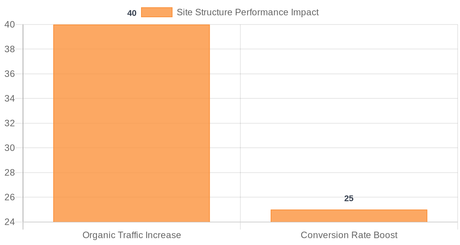 Site Structure Performance Impact

Your ecommerce site structure isn’t just about organization—it’s your conversion engine. A well-architected site can increase organic traffic by 40% and boost conversion rates by 25%, while poor structure kills both user experience and search rankings.
This guide delivers the exact frameworks used by $100M+ ecommerce brands to structure sites that search engines love and customers convert on. You’ll learn the specific hierarchy models, URL patterns, and navigation systems that drive results in competitive markets.
Prerequisites: What You Need Before Starting

Before restructuring your site, gather these essentials:
- Analytics access: Google Analytics 4 and Search Console data for the past 6 months
- Current site audit: Use Screaming Frog or Sitebulb to crawl your existing structure
- Keyword research: Primary and secondary keywords for each product category
- Competitor analysis: Site structures of your top 3-5 direct competitors
- Technical access: Ability to implement redirects and modify navigation
- Content inventory: Complete list of all pages, products, and categories
Budget 2-4 weeks for implementation on sites with 500+ products, or 1-2 weeks for smaller catalogs.
Step 1: Design Your Site Hierarchy Foundation
Site Structure Implementation Process Identify Categories Map 5-9 core categories → Create Subcategories Group 10-50 related products → Design Collections Plan seasonal/promotional pages → Plan Filter Hierarchy Mirror category structure
Start with the pyramid model: Homepage at the top, main categories below, subcategories next, then product pages. This creates clear authority flow and logical user paths.
Map your category structure using the “3-click rule”—users should reach any product within 3 clicks from the homepage. Here’s how:
Example hierarchy for apparel brand:
“`
Homepage
├── Men’s Clothing
│ ├── Shirts
│ │ ├── Dress Shirts
│ │ ├── Casual Shirts
│ │ └── T-Shirts
│ ├── Pants
│ └── Outerwear
├── Women’s Clothing
└── Accessories
“`
Validate with data: Use Google Analytics to identify your highest-traffic categories and prioritize them in your navigation. Categories driving 20% or more of traffic deserve prominent placement.
Step 2: Optimize URL Structure for SEO and Usability
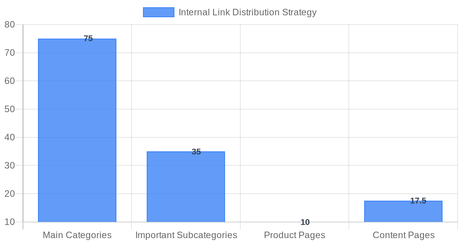 Internal Link Distribution Strategy

Follow the breadcrumb pattern for URLs that mirror your site hierarchy. This helps both search engines and users understand page relationships.
Best practices for ecommerce URLs:
- Keep URLs under 75 characters total
- Use hyphens, not underscores
- Include primary keywords in category URLs
- Avoid deep nesting (maximum 5 levels)
- Use consistent naming conventions
Winning URL patterns:
Category `/category-name/` `/mens-shoes/`
Subcategory `/category/subcategory/` `/mens-shoes/running-shoes/`
Product `/category/product-name/` `/mens-shoes/nike-air-max-90/`
Collection `/collections/collection-name/` `/collections/summer-sale/`
Brand `/brands/brand-name/` `/brands/nike/`
Avoid these URL mistakes:
- Session IDs or tracking parameters in URLs
- Product SKUs or internal codes
- Duplicate content across multiple URL paths
- Dynamic parameters for core navigation
Implementation tip: Use Shopify’s built-in URL handles or WooCommerce’s permalink settings to maintain clean URLs automatically.
Step 3: Build Strategic Internal Linking Architecture
Create linking hierarchies that distribute page authority effectively. Your homepage should link to main categories, categories to subcategories, and related products to each other.
Internal linking framework:
Link distribution strategy:
- Main categories: 50-100 internal links each
- Important subcategories: 20-50 internal links each
- Product pages: 5-15 internal links each
- Content pages: 10-25 internal links each
Use descriptive anchor text that includes target keywords naturally. Instead of “click here,” use “shop men’s running shoes” or “browse summer dresses.”
Track link equity flow using tools like Ahrefs or SEMrush to identify pages that need more internal links to rank better.
Step 4: Design Conversion-Optimized Navigation Systems
Primary navigation should feature your most profitable categories prominently. Use heat mapping tools like Hotjar to identify where users click most frequently.
Navigation best practices:
- Limit main menu to 7±2 items (psychological limit)
- Use clear, descriptive labels (not creative names)
- Include search functionality prominently
- Add account/cart access in top right
- Implement breadcrumb navigation on all pages
Mega menu strategy for large catalogs:
- Group subcategories logically
- Include popular products or brands
- Add promotional banners for seasonal items
- Use high-quality category images
- Implement lazy loading for performance
Mobile navigation considerations:
- Use hamburger menu for secondary items
- Prioritize search and account access
- Implement swipeable category carousels
- Add sticky navigation for easy access
- Test thumb-friendly button sizing (44px minimum)
Filter and faceted navigation:
- Allow multiple filter selections
- Show result counts for each filter option
- Implement filter persistence across sessions
- Use SEO-friendly URLs for filtered results
- Add “clear all filters” option
Step 5: Optimize for Search Engine Discovery
Create XML sitemaps that reflect your site hierarchy. Submit separate sitemaps for different content types:
- Products sitemap (updated daily)
- Categories sitemap (updated weekly)
- Blog/content sitemap (updated as published)
- Images sitemap (for visual search optimization)
Implement structured data using JSON-LD format:
- Product schema on product pages
- BreadcrumbList schema on all pages
- Organization schema on homepage
- Review/rating schema where applicable
Site architecture signals for SEO:
- Logical URL hierarchy that mirrors navigation
- Clear category/subcategory relationships
- Internal linking that reinforces topic clusters
- Page depth (most important pages 1-2 clicks from homepage)
- Loading speed optimization for all structural elements
Technical implementation checklist:
- Implement hreflang tags for international sites
- Use canonical tags to prevent duplicate content
- Optimize robots.txt for crawler efficiency
- Set up proper 301 redirects for restructured URLs
- Monitor Core Web Vitals impact during changes
Pro Tips for Advanced Site Structure Optimization
Cluster content by search intent: Group products and content that serve similar user needs. This creates topical authority and improves rankings across related keywords.
Use data to guide decisions: Analyze user flow reports in Google Analytics to identify drop-off points. Pages with high exit rates need structural improvements or better internal linking.
Implement faceted navigation correctly: Use robots.txt or noindex tags for filter combinations that create thin content. Allow indexing only for filter pages with substantial unique content.
Create hub pages for competitive keywords: Build comprehensive category pages that target broad keywords, then support them with specific product pages targeting long-tail variations.
Monitor site architecture performance: Track these metrics monthly:
- Organic traffic by category
- Average pages per session
- Time on site by traffic source
- Conversion rates by landing page category
- Internal link click-through rates
Common Site Structure Mistakes That Kill Performance
Orphaned pages: Products or categories with no internal links lose search visibility. Audit quarterly to identify and fix orphaned content.
Duplicate category structures: Having both `/products/shoes/` and `/footwear/` creates confusion and splits authority. Choose one primary path per product group.
Over-categorization: Creating categories with fewer than 8-10 products dilutes authority and creates thin content. Consolidate small categories or use tags instead.
Ignoring seasonal patterns: Static navigation doesn’t account for seasonal demand shifts. Use dynamic elements to promote relevant categories during peak seasons.
Poor mobile structure: Desktop-first navigation often breaks on mobile. Design mobile-first, then enhance for larger screens.
FAQ
Q: How deep should my site structure go?
A: Limit depth to 4 levels maximum (Homepage → Category → Subcategory → Product). Deeper structures dilute page authority and hurt user experience. If you need more organization, use filters or tags rather than additional category levels.
Q: Should I restructure my entire site at once or gradually?
A: Gradual restructuring reduces risk and allows performance monitoring. Restructure one main category per week, implementing proper 301 redirects and monitoring traffic/rankings. Complete overhauls can cause temporary ranking drops.
Q: How many products should each category contain?
A: Aim for 10-50 products per subcategory. Categories with fewer than 8 products appear thin to search engines, while categories with 100+ products become difficult to navigate. Use pagination or infinite scroll for larger categories.
Q: What’s the best way to handle discontinued products in my site structure?
A: Don’t delete discontinued product pages—redirect them to similar active products or the parent category. This preserves any accumulated search authority and prevents 404 errors from external links.
Q: How often should I audit and update my site structure?
A: Conduct comprehensive structure audits quarterly, with monthly reviews of new product categorization. Major restructuring should happen annually or when launching significant new product lines. Monitor performance continuously using Search Console and Analytics.
Transform Your Site Architecture Into a Growth Engine
Optimal site structure isn’t a one-time setup—it’s an ongoing competitive advantage. The frameworks outlined here have helped ecommerce brands achieve 40%+ organic traffic increases and 25%+ conversion improvements within 6 months.
Start with your highest-traffic categories and implement changes systematically. Monitor performance closely and iterate based on user behavior data.
Ready to dive deeper into advanced ecommerce optimization strategies? Explore our comprehensive guides on technical SEO, conversion rate optimization, and growth marketing at e-commpartners.com—where ecommerce operators discover the tactics driving eight and nine-figure success stories.




Magazines
COMMUNITY MARKETING & ADVERTISING

-
 Ana Hoffman
873564 pt -
 Pro WebGuru
836301 pt -
trendmarketers
737838 pt -
 hpmurah2u
645001 pt