The classic Simien Mountains treks aren’t especially technical, but that doesn’t mean they’re easy.
Part of this is altitude. You’re often hiking above 3,000 metres, along exposed escarpments with huge valleys dropping away beside you.
What I remember most is the space.
At times, the trails felt almost empty. Just open ridges, geladas grazing nearby, and cliffs falling away into that strange, hazy distance you get in the Ethiopian highlands.
If you’re planning your first Simien Mountains trek, the main decisions are practical.
How long should you go for, how hard is it, what should you pack, and is it worth building into your Ethiopia itinerary?
Before making plans, check the latest travel advice for Amhara. The security situation in northern Ethiopia can change quickly, and this isn’t a region where you want to wing it.
Need help planning your next trip? Hire me as your Personal Travel Planner!
Is Trekking in the Simien Mountains Worth It?
Yes, if you like walking and want to see a side of Ethiopia that’s mostly about landscape and wildlife.
The Simiens were one of the most striking places I visited in the country. Not because the walking was dramatic every second, but because the setting is so vast.
For long stretches, you’re not climbing a neat little summit or following a forest path.
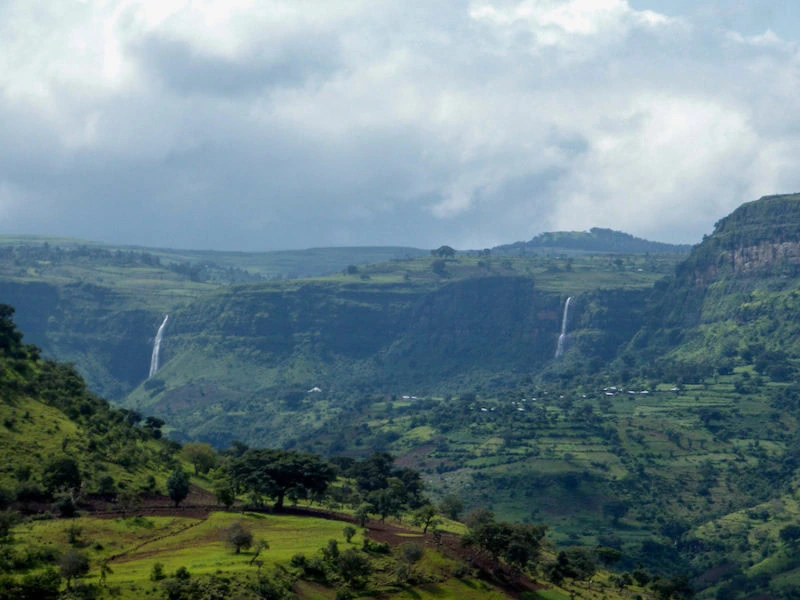
You’re moving along the edge of a huge escarpment, with valleys falling away beneath you and layers of mountains disappearing into the distance.
Seeing troops of geladas in their natural habitat made it even better.
I wouldn’t recommend it to everyone though.
If you’re short on time, don’t especially like hiking, or are mainly visiting Ethiopia for its churches, cities, food and history, I’d put that time elsewhere.
But if you want a proper highland trek without needing technical mountaineering skills, the Simiens are absolutely worth considering.
What Trekking in the Simien Mountains is Really Like
On the classic escarpment routes, the walking itself usually isn’t technical. The drama comes from where you’re walking.
Much of the trek follows open highland paths near the edge of huge cliffs, with valleys dropping away below and layers of mountains stretching into the distance.
It doesn’t feel like a neat mountain hike with one obvious summit as the goal.
It feels wider, emptier, and more exposed than that.
The landscape changes more than I expected too.
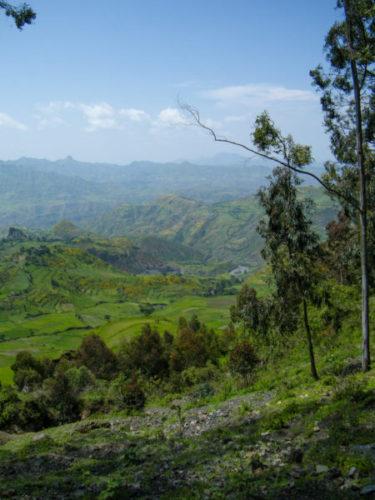
You move between open escarpments, grassy plateaus, ridgelines, small settlements, and viewpoints where the cliffs seem to fall away forever.
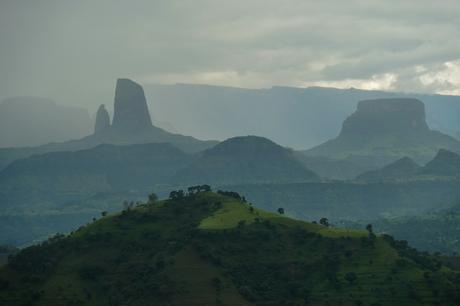
That variety keeps the walking interesting, even when the trail itself is fairly straightforward.
It also felt much quieter than I’d expected.
There were times when the views felt almost completely empty, which made the Simiens feel far wilder than many of the better-known hiking areas I’ve visited.
Wildlife is a huge part of the experience.
Geladas are the animals you’re most likely to remember. Seeing them grazing on the high plateaus, often surprisingly close to the trail, is one of the things that makes trekking here feel so different.
You might also see Walia ibex or Ethiopian wolves, although I wouldn’t build the whole trip around spotting them.
Even without rare wildlife sightings, the scenery is more than enough reason to come.
The challenge on the standard routes is mostly steady walking at altitude, not scrambling or technical terrain.
That’s important to understand before you go.
The Simien Mountains aren’t difficult in a mountaineering sense, but they can still be tiring, especially if you’re not used to hiking above 3,000 metres.
How Many Days Do You Need in the Simien Mountains
You can visit the Simien Mountains in a day, but I wouldn’t call that the full experience.
A day trip gives you the views. A multi-day trek gives you the feeling of actually being out in the mountains.
For most first-time visitors, I think two to four days is the best range.
One day is fine if your itinerary is tight. Two days is much better.
Three or four days is where the Simiens start to feel like a proper trek rather than a scenic detour from Gondar.
One Day
A one-day visit works if you’re short on time.
You’ll still get big escarpment views, a decent walk, and a good chance of seeing geladas.
That’s enough to understand why the Simien Mountains are special.
But it does feel like a snapshot.
You spend a fair amount of the day getting there and back, and just as the landscape starts to open up properly, you’re already thinking about the return journey.
If you only have one spare day, I’d still go.
Just go in knowing that it’s more of an introduction than a proper trek.
A guided day trek from Gondar is the simplest option if you want to keep the logistics easy.
Two Days
Adding an overnight changes things quite a lot.
You get more time on the trail, more time at viewpoints, and a night in or near the mountains rather than arriving and leaving in the same breath.
For many people, this is the best compromise.
It gives you a much better sense of the Simiens without turning the trek into the main focus of your Ethiopia itinerary.
You still won’t see everything, but you’ll come away with a stronger sense of the place.
If I were short on time but wanted the trip to feel like more than a day out from Gondar, this is the option I’d choose.
For a guided two-day trek, check exactly what’s included before booking, especially transport, park fees, scout fees, food, camping gear, and sleeping bags.
Three or Four Days
Three or four days is where the Simien Mountains really start to make sense.
The route will feel less rushed, the landscape has more time to change, and the whole experience becomes less about ticking off views and more about being in the mountains.
This is the option I’d lean towards if you have enough time and the security situation allows it.
Longer Treks and Ras Dashen
Longer treks are for people who want the Simien Mountains to be a major part of the trip, not an add-on to Gondar.
That can be brilliant if you’re a keen hiker, but it’s a different level of commitment.
You’ll spend more time at altitude, deal with more logistics, and need to be more realistic about fatigue, weather, and comfort.
Ras Dashen (or Ras Dejen) is the highest mountain in Ethiopia and the 10th highest in Africa.
Routes to the summit are not technically difficult, and don’t require mountaineering gear, but are very physically demanding.
For most travellers, the escarpment scenery, geladas, and highland walking are the real highlights.
If you’re considering a longer guided trek, look carefully at the route, daily distances, sleeping arrangements, and what happens if conditions change.
How Hard is Trekking in the Simien Mountains
Trekking in the Simien Mountains isn’t technical, but I wouldn’t call it easy either.
On the standard escarpment routes, the difficulty comes from three things. Altitude, time on your feet, and changing mountain weather.
You don’t need mountaineering skills for the classic routes.
You do need to be comfortable walking for several hours at a time, sometimes on uneven ground, while your body is working harder than usual because of the elevation.
That’s the bit people can underestimate.
A walk that feels straightforward at home can feel surprisingly tiring once you’re above 3,000 metres.
Fitness and Trail Difficulty
If you’re reasonably fit and used to regular walking, the standard Simien Mountains trekking routes are manageable.
The paths themselves are not usually the problem.
You’re mostly dealing with steady walking, long views, exposed sections, and enough distance to make the day feel like a proper hike.
You don’t need to be an elite trekker.
But you should have a decent base level of fitness, especially if you’re planning more than one day.
If your usual walking is limited to city strolls and the occasional viewpoint, I’d train a little before going.
Even a few longer walks before your trip will make the trek much more enjoyable.
Altitude
Altitude is the biggest factor.
Much of the trekking happens above 3,000 metres, and some routes go significantly higher.
Go slower than you think you need to, drink plenty of water, and avoid treating the first day like a fitness test.
If you can, spend a couple of days in the highlands before starting the trek.
Gondar can help a little with acclimatisation, but the mountains are higher, so don’t assume you’ll feel exactly the same once you’re on the trail.
Headaches, tiredness, shortness of breath, and poor sleep can all happen at altitude.
Most people are fine if they pace themselves properly, but it’s worth being sensible rather than trying to power through.
Cold Nights and Changing Conditions
The Simien Mountains can be much colder than many people expect from Ethiopia.
Daytime walking is often warm in the sun, but mornings, evenings, and nights are a different story.
If you’re camping, you’ll want proper warm layers, not just a thin fleece.
A warm jacket, hat, gloves, thermal layers, and a decent sleeping bag can make the difference between a memorable trek and a grim one.
The weather can change quickly too.
Sun, wind, cloud, rain, and cold temperatures can all be part of the same trip, especially outside the driest months.
Pack for mountain conditions, not for the weather you had in Addis Ababa or Gondar.
Best Time to Hike in the Simien Mountains
In general, October to March or April is the best time for trekking in the Simien Mountains.
The trails are usually easier, the weather is more reliable, and the logistics tend to be simpler.
Clear Views and Easier Trails
If this is your first trek in the Simien Mountains, I’d prioritise easier trail conditions.
Dry weather makes the walking simpler and reduces the chance of mud, slippery paths, and cloud spoiling the views.
The early dry season, especially around October and November, can be a particularly good time.
The landscape is still greener after the rains, but the weather is often more settled.
Later in the dry season, conditions can be excellent for walking, although the scenery may look drier and the views can be hazier.
That wouldn’t put me off.
For a first trek, I’d still rather have reliable walking conditions than dramatic green scenery with a higher chance of rain and mud.
Greener Scenery After the Rains
The Simien Mountains can look beautiful after the rains.
The highlands are greener, the colours are stronger, and the landscape feels less dry.
But there’s a trade-off.
Trails can be muddier, cloud can hang around the escarpments, and the walking can feel more unpredictable.
That doesn’t make it a bad time to go.
It just means you need to be more flexible and better prepared.
If photography is a big reason for your trip, the greener months can be tempting.
If this is your first high-altitude trek in Ethiopia, I’d still lean towards drier conditions unless you’re comfortable with a bit of uncertainty.
When I’d Go
Personally, I’d aim for the early dry season.
October or November would probably be my first choice.
You’ve got a better chance of settled weather, but the landscape shouldn’t be as dry as it can look later in the season.
December to February could also be a good time, especially if you want drier, more predictable trekking conditions.
I’d be more cautious about the rainy season for a first visit.
You can still trek then, but I wouldn’t choose it unless your wider Ethiopia itinerary made it unavoidable or you actively wanted greener scenery and didn’t mind less reliable conditions.
How to Plan a Simien Mountains Trek
Planning a Simien Mountains trek is mostly about getting three things right.
First, check whether the region is safe enough to visit.
Second, choose a trek length that matches your fitness, time, and interest.
Third, make sure the logistics are sorted before you lose half a day faffing around in Debark.
I wouldn’t treat this as the kind of place where you just turn up and improvise everything.
That might work elsewhere, but the Simiens involve park permits, scout arrangements, transport, altitude, cold nights, and changing conditions.
If you’re short on time, book through a reputable local operator or arrange things properly from Gondar.
Starting from Gondar and Debark
Most travellers reach the Simien Mountains through Gondar.
Gondar is the easier base, especially if you’re combining the trek with Ethiopia’s northern historical route.
It has more accommodation, better transport links, and more options for arranging a guide or tour.
From Gondar, you travel north to Debark, the main gateway town for the national park.
Debark is where the park admin usually happens.
This is where permits, scouts, guides, and other practical arrangements come together before you continue into the mountains.
Some treks start with a drive from Debark into the park before the walking begins, so don’t assume you’ll step straight onto the trail the moment you arrive.
For a one-day or two-day visit, I’d probably keep things simple and arrange transport from Gondar.
For a longer trek, staying in Debark the night before can make sense if you want an earlier start and less driving on the first day.
Do You Need a Guide?
I wouldn’t plan on trekking independently.
At the very least, you should expect to arrange park permits and an official scout. In practice, most visitors also use a guide, especially for multi-day treks.
A good guide makes the logistics much easier, helps with route choices, and can explain far more about the wildlife, landscape, and local communities than you’d pick up on your own.
It’s also one less thing to worry about when you’re dealing with altitude, weather, and basic camping conditions.
You can arrange guides and tours from Gondar or Debark.
If you’re short on time, I’d arrange things before you arrive rather than hoping it all works smoothly on the day.
If you do organize it in Debark, use the official park office and be clear about what you’re paying for.
Ask what’s included, who is coming with you, where you’ll sleep, what food is provided, what gear is supplied, and what happens if plans change.
What Overnight Trekking Involves
Most classic overnight routes involve basic camping or simple lodge-style accommodation, depending on the itinerary.
Don’t expect luxury.
Check whether tents, mats, sleeping bags, meals, drinking water, transport, park fees, scout fees, and guide fees are included.
A trek can look cheap at first glance, then become more expensive once the essentials are added separately.
The same applies to food.
Some trips include a cook and meals, while others are more basic.
If you care about decent snacks, coffee, or anything specific, bring it with you rather than assuming you’ll find it in Debark.
What Affects the Cost?
The cost mostly depends on how long you go for and how you organize the trek.
A one-day trip from Gondar will usually be the cheapest and simplest option. A multi-day trek costs more.
The size of your group will also affect the cost you each pay. Sharing transport, guide fees, and other fixed costs can make a big difference.
Private treks are easier and more flexible, but they’ll usually cost more.
Before booking anything, remember to compare what’s actually included for the different options.
A slightly more expensive trek can be better value if it includes proper transport, a reliable guide, decent food, camping gear, park fees, and clear arrangements from the start.
What to Pack and Wear
You don’t need to overpack.
But you do need to pack for altitude, wind, and cold nights.
The easiest packing mistake is treating the Simien Mountains like the rest of Ethiopia.
Don’t.
The mountains are colder, windier, and more exposed than many people expect.
You’ll need layers, even if the rest of your trip will be warm.
For most treks, I’d pack a warm jacket, fleece or mid-layer, lightweight waterproof, hiking trousers, warm hat, gloves, decent socks, and proper hiking shoes or boots.
For overnight treks, a warm sleeping bag is a must. Ask in advance whether one is provided, and don’t assume the quality will be brilliant.
I never head into the mountains without sun cream, sunglasses, lip balm, water bottles, snacks, and any personal medication.
A head torch is useful, especially around camp.
I’d also bring a power bank, because charging options can be limited once you’re out of town.
Common Mistakes to Avoid
Most problems in the Simien Mountains come from underestimating simple things.
You’re not doing technical mountaineering on the classic routes, but this is still high-altitude hiking in exposed mountain terrain.
Underestimating the Altitude
This is the easiest mistake to make.
On paper, the distances don’t always look that intimidating. Once you’re walking above 3,000 metres, they can feel very different.
Walk slower than usual, drink plenty of water, and give yourself time to adjust.
If you feel tired, light-headed, unusually breathless, or headachy, take it seriously rather than trying to push through.
Choosing Too Short a Trek
A day trip is better than not going at all.
You’ll still get big views, fresh air, and a good chance of seeing geladas.
But it’s a very compressed version of the Simiens.
If your itinerary allows it, I’d try to spend at least one night in or near the park.
That gives the trip more breathing room and makes it feel less like a long excursion from Gondar.
Three or four days is even better if you enjoy hiking and want the mountains to feel like a proper part of your Ethiopia trip.
Treating It Like a Casual Hike
The standard escarpment routes are not usually technical, but that doesn’t make them casual.
You’re walking at altitude, often in exposed conditions, with long stretches on your feet.
The weather can change quickly too.
Bring proper layers, carry enough water, pack snacks, and don’t assume you can just wander in as if you’re going for a short countryside walk.
Packing for Heat Instead of Cold
Ethiopia can be hot, but the Simien Mountains are a different story.
Mornings, evenings, and nights can be properly cold, especially if you’re camping.
This catches people out.
A warm jacket, hat, gloves, thermal layer, waterproof, and decent sleeping bag are all essentials.
Would I Trek in the Simien Mountains Again?
Yes, assuming the security situation made it sensible.
The Simien Mountains were one of the highlights of my Ethiopia trip.
You get huge escarpment views, highland walking, geladas, cold mountain air, and a sense of space that’s hard to find elsewhere in the country.
I wouldn’t force it into every itinerary though.
If you’re short on time, there are plenty of other excellent places to focus on.
But if conditions allow and you can give the Simiens at least two days, I think they’re worth the effort.
Just don’t treat them like a quick scenic stop.