


Last Updated on 27 October, 2025
Welcome, adventurer, to Aces & Adventures. This game brilliantly combines the strategic depth of a deckbuilder RPG with the familiar luck and skill of poker. You will not find mana curves or energy costs here. Instead, you power your abilities by building the best possible poker hands from a standard 52-card deck. This unique system creates a dynamic and thrilling combat puzzle where every hand matters.
You will journey through 13 story-driven campaigns inspired by Norse mythology, unlocking five unique characters along the way. After you master the stories, you can dive into the infinitely replayable procedural mode. This guide will walk you through the core mechanics, explain how to unlock and master all five heroes, and provide the advanced strategies you need to conquer the most difficult encounters.
Quick Fact: The game was created by Triple-B-Titles, which is primarily a solo developer. This developer was also one of the lead designers for the digital TCG Hex: Shards of Fate, which explains Aces & Adventures‘ deep and polished card-game mechanics.- The Core Deal: How Aces & Adventures Works
- Your Hero’s Journey: Unlocking All 5 Characters
- Character Guide: The Warrior (Tarik)
- Character Guide: The Rogue (Eris)
- Character Guide: The Mage (Elm)
- Character Guide: The Enchantress (Lyra)
- Character Guide: The Marksman (Kai)
- The Procedural Adventure: The True Endgame
- Advanced Strategy: How to Win the Hand
- Conclusion: Your Legend Awaits
The Core Deal: How Aces & Adventures Works
Before you play your first hand, you must understand the game’s fundamental rules. This is not your typical deckbuilder.

The Two-Deck System
You manage two different decks simultaneously:
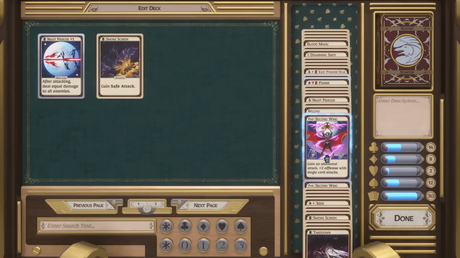
- The Ability Deck: This is your small, character-specific deck of 10-20 “skill” cards. These are your attacks, defenses, and utility spells. You build this deck before a run.
- The Poker Deck: This is a standard 52-card (or 54-card with Jokers) playing deck. You use these cards to pay for the abilities in your hand. This deck is also your health.
Potency: The Poker-Powered Engine
This is the most important concept. Every ability card in your hand has a “Potency” requirement, shown as a poker hand (e.g., “Pair,” “Three of a Kind,” “Flush”).
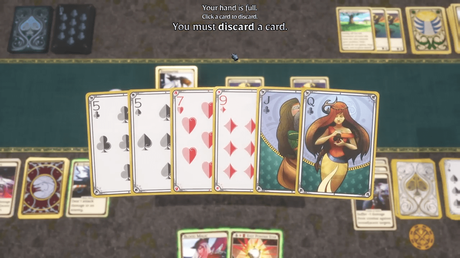
To play an ability, you must discard cards from your 5-card poker hand that meet or exceed that Potency.
- Example: You want to play Bash, an ability that requires a Pair.
- You can play a Pair (like two 7s).
- You can play Two Pair (like two 7s and two Kings).
- You can play a Three of a Kind (like three Jacks).
- You can play a Straight, a Flush, a Full House, etc.
A higher-potency hand always satisfies a lower-potency requirement. This creates a rich strategic choice: do you use your powerful Full House to activate a simple “Pair” ability now, or do you save it for a “Full House” ability that could win the fight?
You can also use a Joker as a wild card to complete any hand.
Health, Stamina, and Fatigue
Your 52-card Poker Deck is your lifeblood. You do not have a traditional HP pool. Instead, you manage “Stamina.”
- Drawing Cards: You draw up to a 5-card poker hand at the start of your turn.
- Taking Damage: When an enemy attacks you, you “take damage” by discarding cards from the top of your deck. If an attack deals 5 damage, you discard 5 cards, sight unseen.
- Fatigue: When you try to draw from an empty deck, you Fatigue. You shuffle your discard pile to create a new deck, but your Max Stamina (your effective max health) permanently decreases by 1.
- Bust: If your Max Stamina reaches zero, your run ends.
This means that drawing extra cards is a powerful tool, but it also burns through your “health” faster.
The Attack and Defense Phases
Combat is turn-based. You and your enemy alternate turns.
- Your Turn (Attack Phase): You can play red-bordered (Attack) and blue-bordered (Utility) abilities. You cannot play defensive cards.
- Enemy’s Turn (Defense Phase): After the enemy attacks, you get a chance to defend. You can only play green-bordered (Defense) abilities, like Guard or Dodge, to block the incoming damage.
Common Keywords
- Guard: Creates a temporary shield that absorbs damage. Guard does not stack; playing a new Guard ability replaces the old value.
- Sunder: Destroys enemy Guard before dealing damage. This is essential for breaking through tough defenses.
- Vulnerable: The target takes 50% more damage from all sources.
- Rage (Warrior): A resource you build and spend to power massive attacks.
- Mana (Mage): A resource you “Channel” and spend to cast powerful spells.
- Stamina (Rogue): A resource you spend to fuel multi-hit attacks and dodges.
- Arrows (Marksman): A resource you “Fletch” and spend to fire ranged volleys.
Your Hero’s Journey: Unlocking All 5 Characters
The game’s 13 story campaigns serve as your main progression. You must complete them in a specific order to unlock all five playable characters.
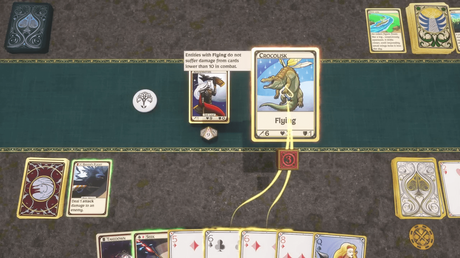
- Start with The Warrior (Tarik): You begin the game with only the Warrior available. You must play through his “Campaign A” story. This campaign acts as the game’s main tutorial, teaching you the concepts of Guard, Potency, and Rage.
- Unlock The Rogue (Eris) and The Mage (Elm): After you complete the Warrior’s first campaign, you unlock the Rogue and the Mage. Their “Campaign B” and “Campaign C” stories become available.
- Unlock The Enchantress (Lyra) and The Marksman (Kai):
- Complete the Rogue’s campaign to unlock the Enchantress.
- Complete the Mage’s campaign to unlock the Marksman.
Once you unlock all five characters, you can use any of them in any of the subsequent campaigns or in the procedural mode.
Character Guide: The Warrior (Tarik)
Playstyle: The Warrior is a straightforward and powerful brawler. He excels at building defense and unleashing devastating single-hit attacks. His core mechanic is Rage, which he builds by playing certain abilities and spends to power his finishers.

Core Mechanics:
- Build Rage: Abilities like Bash (Pair+) or Battle Shout (High Card+) will add to your Rage counter.
- Spend Rage: Finisher abilities like Smash (Pair+) or Execute (Two Pair+) consume all your Rage to deal massive bonus damage.
- High Defense: The Warrior has the best Guard abilities in the game, like Shield Block (High Card+), allowing him to easily soak enemy attacks.
Key Abilities to Unlock:
- Bash: Your bread-and-butter. It requires only a Pair, deals decent damage, and builds Rage.
- Shield Block: A High Card defensive skill. You will almost always have a card to play this, guaranteeing you can defend yourself.
- Smash: A simple Pair+ ability that spends all Rage for bonus damage. This is your primary damage-dealing tool.
- Sunder: A Two Pair+ ability that breaks enemy Guard. You must include a Sunder ability in your deck for shielded enemies.
Strategy:
You should play a patient, defensive game. Use your turn to Bash or Sunder. Build up your Rage. When the enemy attacks, use Shield Block to negate the damage. Once your Rage is high (10+) and you have a good hand, unleash Smash for a massive hit. Prioritize abilities that draw cards, as this helps you find your key combos and build poker hands.
Character Guide: The Rogue (Eris)
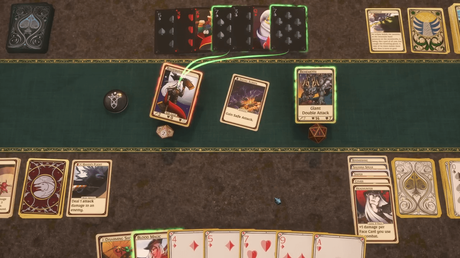
Playstyle: The Rogue is a high-speed, high-risk combo artist. She relies on her unique Stamina resource to fuel multi-hit attacks and evade damage entirely. She excels at drawing many cards and manipulating her hand.
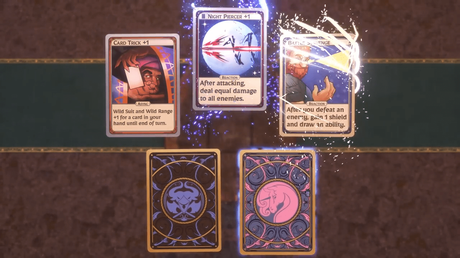
Core Mechanics:
- Stamina: The Rogue spends Stamina (a separate resource, not your deck) to power abilities like Shiv. She regains Stamina by playing specific cards or certain poker hands.
- Card Draw: The Rogue has many abilities like Quick Draw (Pair+) that draw more poker cards, helping her “dig” for the perfect hand.
- Dodge: Unlike the Warrior’s Guard, the Rogue’s Dodge (Pair+) ability makes her completely avoid the next instance of damage.
Key Abilities to Unlock:
- Shiv: Your main attack. It costs Stamina, deals damage, and often has bonus effects like drawing a card if it is the first card you played.
- Quick Draw: A Pair+ ability that draws two cards. This is essential for finding your Straights and Flushes.
- Dodge: Your primary defense. A Pair+ is easy to get, and negating all damage from a giant boss attack is incredibly powerful.
- Backstab: A high-potency (Straight+) ability that deals huge damage, especially to Vulnerable targets.
Strategy:
You must be aggressive. Use Quick Draw and other card-draw abilities to cycle through your deck quickly. This burns your “health” (your deck) but gives you the powerful hands you need. Your goal is to build a high-potency hand (Straight, Flush, Full House) to power a devastating finisher like Backstab. Use Dodge to avoid big hits. You will live on the edge, but your damage output is unmatched.
Character Guide: The Mage (Elm)
Playstyle: The Mage is a strategic, setup-based caster. He uses Mana to cast spells that often require high-potency hands. His abilities are slow to “charge” but have devastating effects, like hitting all enemies or inflicting powerful debuffs.
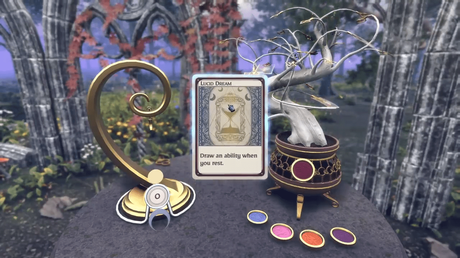
Core Mechanics:
- Mana: The Mage must use abilities like Channel (Pair+) to build his Mana resource.
- Charging Spells: Many Mage spells, like Fireball, have a “Charge” time. You cast the spell, but it only takes effect after 1 or 2 turns. This requires you to plan ahead.
- High Potency: The Mage’s best spells often require a Flush or a Full House. His abilities are designed to help him find these hands.
Key Abilities to Unlock:
- Arcane Bolt: A simple High Card+ attack that helps you spend weak hands.
- Channel: A Pair+ ability that generates Mana. You will use this often.
- Fireball: A Three of a Kind+ spell that charges for a turn and then deals massive damage to one target.
- Arcane Shield: A defensive ability (Pair+) that creates a Guard and often grants bonus Mana.
Strategy:
Your first few turns are all about setup. Use Channel and Arcane Shield to build Mana and defend yourself. Your poker hands will feel weak at first. Your goal is to survive long enough to cast your big spells. Use card-draw abilities to assemble a Flush or Full House. Then, unleash a charged-up Fireball or Meteor to end the fight. The Mage is difficult to master but very rewarding.
Character Guide: The Enchantress (Lyra)
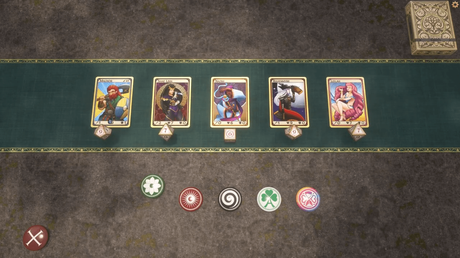
Playstyle: The Enchantress is a master of control and manipulation. She does not focus on direct damage. Instead, she uses Charms to debuff enemies, heals herself, and even manipulates the poker deck itself.
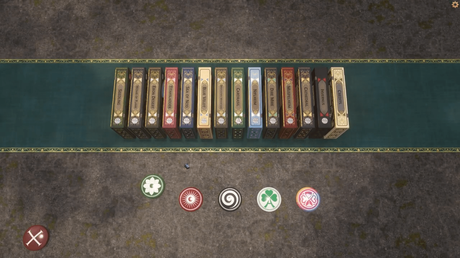
Core Mechanics:
- Charm: Her core mechanic. Applying Charm to an enemy causes them to deal less damage or even skip their turn.
- Healing: The Enchantress is the only character with reliable self-healing, using abilities like Soothe (Two Pair+). This restores cards to her deck, extending her “health.”
- Rewrite: A unique ability (Pair+) that lets you change the suit or rank of a card in your hand, helping you build impossible Flushes or Quads.
Key Abilities to Unlock:
- Charm: A simple High Card+ ability that applies the Charm debuff. You will use this every turn.
- Soothe: A Two Pair+ ability that heals you (adds cards back to your deck). This is incredibly powerful for survival.
- Rewrite: The ultimate hand-fixing tool. This lets you turn a junk hand into a Royal Flush.
- Mind Blast: One of her few direct-damage abilities, often powered by a Straight+.
Strategy:
Play the long game. Your goal is to lock down the enemy. Start every fight by applying Charm. Use your defensive abilities to block any damage that gets through. Use Rewrite to build powerful hands, then use those hands to power Soothe to heal, or Mind Blast to deal damage. You win by outlasting your opponent, not by overpowering them.
Character Guide: The Marksman (Kai)
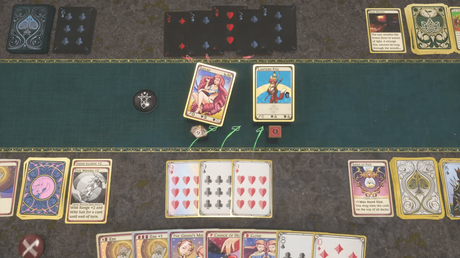
Playstyle: The Marksman is a ranged damage dealer who manages a unique Arrow resource. He builds up a quiver of arrows and then unleashes them in powerful volleys, with his poker hands determining the number of arrows fired.
Core Mechanics:
- Arrows: The Marksman must use abilities like Fletch (Pair+) to create Arrows, a resource he spends on his attacks.
- Volley: His primary attacks, like Volley (Pair+), spend Arrows. The potency of the poker hand you use determines the number of arrows fired (e.g., a Pair fires 2 arrows, a Full House fires 5).
- Card Draw: Like the Rogue, the Marksman has excellent card draw, like Eagle Eye (High Card+), to find the hands he needs.
Key Abilities to Unlock:
-
- Fletch: A Pair+ ability that creates Arrows. You must have this.
- Volley: A Pair+ attack that fires a number of arrows equal to the hand’s potency value. This is your main damage source.
- Precise Shot: A high-potency (Straight+) ability that fires a single, powerful arrow that often applies Vulnerable.
- Eagle Eye: A High Card+ skill that draws a card, helping you dig for better hands.
Strategy:
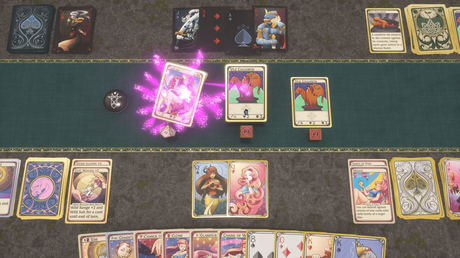
Your turns have a clear rhythm. Turn 1: Setup. Use Fletch to build Arrows and Eagle Eye to draw cards. Turn 2: Unleash. Use the strong hand you built to fire a massive Volley. Your defense is average, so you rely on killing enemies before they can launch major attacks. Prioritize abilities that grant Swift to combo Fletch and Volley in the same turn.
The Procedural Adventure: The True Endgame
After you complete the story campaigns, the Procedural Adventure mode unlocks. This is the true roguelite heart of the game.
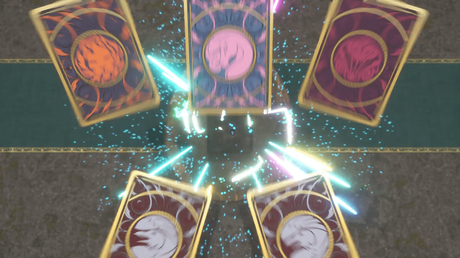
Here, you do not start with a pre-built deck. Instead, you go through a drafting process:
- Choose Your Hero: Select one of the five characters you unlocked.
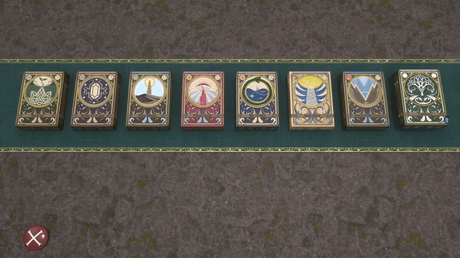
- Draft Abilities: You are presented with a series of choices to build your 10-card starting Ability Deck. You can pick powerful, high-potency cards, but you may not have the poker hands to support them. A balanced deck is key.
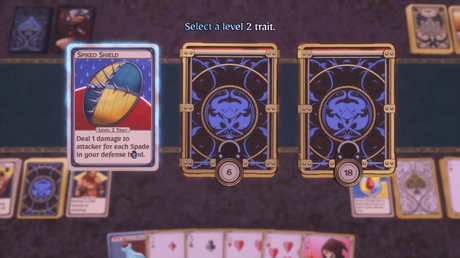
- Select a Trait: You pick a powerful, passive starting bonus for your run.
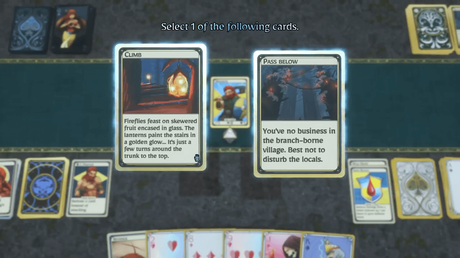
- Navigate the Map: You travel across a branching map, like in Slay the Spire. You choose your path, fighting standard battles, elite encounters, and bosses. You can also visit shops to buy new abilities and campsites to rest (heal your deck).
This mode tests your true mastery of the game. You must adapt your strategy based on the abilities and items you find.
Advanced Strategy: How to Win the Hand
Mastering the mechanics is one thing. Winning is another.
- Save Your Strong Hands: This is the number one rule. Do not use a Full House to power a “Pair” ability unless you are about to die. It is a waste of a powerful resource. Always try to match your hand’s potency to the ability’s requirement.
- Health is a Resource, But Deck-Out is Death: Drawing extra cards is powerful, but it accelerates Fatigue. Do not draw cards needlessly. If you have a good hand and a solid defense, save your draw abilities. Be aware of the “Fatigue Spiral,” where you have fewer cards in your deck each cycle, making you Fatigue faster and faster until you Bust.
- Know Your Enemy’s Intent: Pay attention to the icons above an enemy. A sword icon means a standard attack. A shield icon means they are about to Guard. A broken shield means a Sunder attack. Plan your defense around their offense.
- Defense Wins Runs: You cannot out-race every enemy. You must bring defensive abilities like Guard, Dodge, or Heal. An Ability Deck with 10 attack cards is a recipe for a quick death.
- Manage Your Hand: Your poker hand carries over between turns. If your hand is “dead” (e.g., 7-9-Q-K-2 of different suits), use your lowest-value “High Card” abilities to discard those cards and draw new ones. Do not let bad cards clog up your hand.
Conclusion: Your Legend Awaits
Aces & Adventures is a remarkable game that rewards careful planning, clever resource management, and a little bit of poker-faced luck. By understanding the core Potency system, mastering each character’s unique playstyle, and making smart choices in the heat of battle, you can overcome any challenge the game throws at you.
You have the foundations. You know the heroes, you know the mechanics, and you know the strategy. Now, shuffle your deck, draw your hand, and go forge your legend!






