


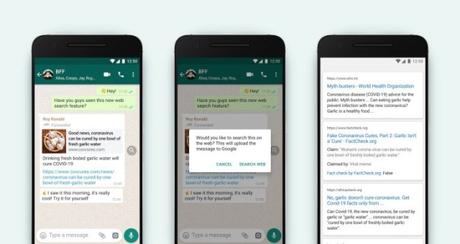
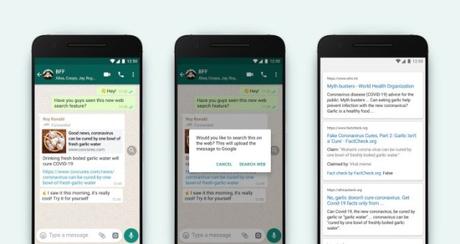
Whatsapp, one of the most popular instant messaging platforms in the world, has implemented a new feature in selected markets that simplifies users' verification of the claims made in the messages received on the app.
Facebook the proprietary service has allowed users in Brazil, Italy, Ireland, Mexico, Spain, the UK and the United States to click on a magnifying glass icon next to frequently forwarded messages - those that have been forwarded at least five times - to search the web for their content and verify it.
WhatsApp said that the new feature, called "search the web", allows users to upload the message, which could be text or an image, through their browser. This means that WhatsApp itself never sees the content of any message, he said in a blog post.
The feature, available on Android, iOS and WhatsApp's Web app, is in pilot phase, said the messaging platform. It is unclear how soon WhatsApp intends to implement this feature, which started testing several months ago, for users around the world.
But regardless, the new feature comes at a time when WhatsApp and other messaging platforms are being used more often than ever while people keep in touch with their friends, families and colleagues at the height of a global pandemic.
WhatsApp, which has been forced to deal with the spread of the disinformation challenge on its platform in recent years, has introduced several features and imposed restrictions to better control the flow in the last year.
In April, WhatsApp put further restrictions on the frequency with which a message can be shared on its platform. WhatsApp has stated that any message that has been forwarded five or more times will now face a new limit which will prevent a user from forwarding it to more than one chat (contact) at a time. A few weeks later, the volume of "highly forwarded" messages had already decreased by 70% globally, he said.
WhatsApp has also partnered with several fact-checking organizations around the world to help people verify claims made in viral messages.
Although WhatsApp has visibly hurried to take timely action in the past few quarters, the misinformation has not vanished from the app. Poorly informed explanations of some of the Indian government's recent decisions and Covid-19's "cures" were still circling the platform a few months ago in India, its largest market, for example.
There is only so much that a technology company can do to combat human stupidity.






