


As flagship phones disappear, the Galaxy S20 line has set a new standard - and it will stick around. The upcoming launch of the Galaxy Note 20 line will likely complement these phones, rather than replace them.
Samsung has packed the Galaxy S20 phones with a plethora of features, and it can be almost overwhelming when you take your first dive into the settings menu, wondering what to change. It's even worse if there's something you want to change, but don't know exactly how to do it. If this is a routine change, we have the help you need.
Cyber Monday related offers:
Here is our list of settings that you may want to change on your Galaxy S20, Galaxy S20 Plus, or Galaxy S20 Ultra.
Activate dark mode
Who doesn't want dark mode? It's good for your eyes, better for the battery, and cool too. To switch to dark mode on the Galaxy S20, go to Settings> Display, and at the top of the screen, tap the Dark option, and watch the lights go out. Below, tap Dark mode settings either to program a switch to dark mode, or to configure a blue light filter to activate automatically at night.
Upgrade to 120Hz refresh rate
Out of the box, your Galaxy S20 Ultra's screen refresh rate is 60Hz, which is great for battery life, but doesn't stretch the capacity of the AMOLED screen. . It can run at 120Hz which allows smoother scrolling on the web, in apps, and in some games as well. However, this will drain the battery faster, so use it wisely. Switch going to Settings> Display> Fluidity of movement. Tap on it and select High refresh rate, then press Apply.
Change screen resolution
Like the 60Hz refresh rate, the out-of-the-box screen resolution of the Galaxy S20 Ultra doesn't show off the phone's amazing capability. By default, the screen resolution is 2400 x 1080 pixels, but it can run at 3200 x 1400 pixels. To see this go to Settings> Display> Screen resolution. There are three options here, and you want to select the WQHD + option. Again, use this option sparingly as it will add extra strain to battery life and keep in mind that it cannot be used with the 120Hz refresh rate.
Personalize the on-board screen
In its most basic form, Samsung's Edge screen is a sliding shortcut panel, but it can be a lot more than that with a little customization. To find the edge screen, look at the bottom right side of the screen for a gray vertical bar probably next to the volume key. Drag it across the screen to reveal the edge of the screen. It will have some icons for some frequently used applications. Tap the Plus icon in the empty spaces to add more apps.
However, you can add new panels to the edge screen and also change the way the edges of the screen light up with notifications. To do this, go to Settings> Display, then scroll to Edge screen and press it. Here, touch either Dash panels or Edge lighting to add more panels, or to change notification lighting effects or related apps.
Access the Home screen without swiping after using Face Unlock
Samsung has chosen to slide the screen up for you after unlocking it with Face Unlock, but you can save time by skipping this step. It also makes it easier to use the phone with one hand. Face unlock is configured during the initial setup, but if you skipped this step, go to Settings> Biometrics and security> Face recognition to begin.
Otherwise, for those who are already using Face Unlock, look at this point for the option marked Stay on the lock screen and turn it off. The phone automatically unlocks when it recognizes your face.
Turn off your phone using the power button
It might sound strange, but when you long press the power button on the Galaxy S20, instead of bringing up the power menu, it wakes up Bixby, Samsung's virtual assistant. To turn off the phone, it's recommended to use the power menu in the notification shade, but many will just want to press the button like most other phones. To switch from Bixby to the power menu, go to Settings> Advanced features, then Side key. In this menu, select the Power off menu under actions for the Press and hold option.
Use gesture controls
When you first start using the Galaxy S20, it'll be with the standard back, home, and Android menu buttons at the bottom of the screen, but you can switch to another gesture-based control system if you prefer. Go to Settings> Display, then search Navigation bar. Here, select the option named Full screen gestures. This removes the Android buttons and increases the visible area of the screen.
Its use is the same as that of many other gesture control systems. Swipe up to go home, swipe up and hold to access the app menu, and swipe left or right on the screen to go back or forward.
Use Samsung Daily
Swipe right on your home screen and you're presented with Samsung Daily, which was known as Bixby Home until recently, and was a mostly useless cards page that couldn't be reconfigured at all . That changed with the rebranding to Samsung Daily, and it could potentially be a bit more useful.
To make sure the cards it shows are right for you, swipe right to go to Samsung Daily. If this is your first time doing this, you have the option to select which cards to display and in what order. If you ignored this, don't worry, you can always change it as you like. Tap the three-dot menu button at the top right, and then tap Cards. Now turn off the cards you don't want to see and press Reorganize to change the way they are presented.
Take 108-megapixel photos
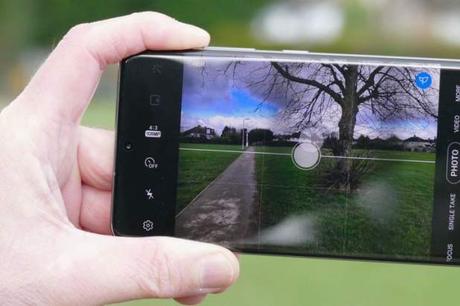

The Galaxy S20 Ultra has a 108-megapixel main camera, and under normal circumstances it defaults to 12-megapixel shots, which use special algorithms and pixel technology to enhance photos without using 108 megapixels every time. However, you can still take full resolution photos if you want.
Open the Camera app and look at the top row of icons labeled with aspect ratios. If you hold the phone in portrait orientation, look for the one that says 3: 4. If you hold it in landscape, it will say 4: 3. Tap the icon and select 108MP from the menu that appears. Photos taken at 108 megapixels are large, often at least 10MB, but they do not allow you to use the wide angle or zoom functions.
Shoot videos in 8K resolution


The Galaxy S30 Ultra is capable of shooting incredible 8K; you will just need to make sure 8K resolution is turned on. Just go to the camera app and select Video. You will need to look for the icon to change the aspect ratio. It looks like the icon we used to change the fixed resolution to 108 megapixels. Here it will be called 9:16 or 16: 9, depending on the orientation of your phone. Tap the icon and select 9: 16/16: 9 8K and start shooting amazing videos in 8K resolution.
You'll want to remember that 8K videos are going to eat up your device's storage space quickly. For reference, a single one-minute 8K video will be around 600MB.
By taking the time to check out these ten settings, you'll be on your way to getting the most out of your Galaxy S20. For more tips on this phone's camera, read our article on using the innovative single-shot mode.
Editor's recommendations






