


"People don't avoid healthcare because of the costs in Europe," said Reggie D. Williams II, international health policy specialist at the United States Commonwealth Fund. "Americans unfortunately face a double burden of worrying about access to care ... and then affordability."
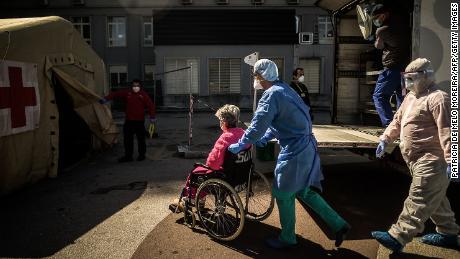
Health systems everywhere are stretched by the pandemic. Hundreds of thousands of people around the world suddenly need the same treatment. The problems are similar in all areas: insufficient testing capacity, high demand for hospital beds, lack of ventilators, personal protective equipment (PPE) and medical personnel.
Health experts say it is too early to make a final judgment on which countries have done well and which have failed because the pandemic is far from over. But there are already lessons to be learned.
Rifat Atun, professor of Global Health Systems at Harvard University in the United States, said the evidence so far suggests that more centralized, state-funded systems with universal coverage and a chain of command and solid controls have weathered the crisis better. They were able to expand the tests faster, coordinate the response, pool resources and reduce mortality rates.
"The chain is as strong as the weakest link," he said. "In the United States, there is not a single health system per se, but multiple systems in each state, and in each state, there are different subsystems, so it was very difficult to have an answer smart and coordinated - and that has implications because, you know, viruses don't recognize state-to-state borders. "
However, one place where the United States stands out from other countries is the cost of the pandemic for people infected with the virus.
Count the cost
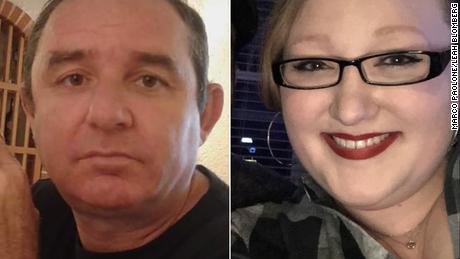
Paolone, who is 56 and lives in Monte Silvano in central-eastern Italy, called an ambulance last month after feeling persistent chest pain. He was sent to the emergency room and later diagnosed with Covid-19 - something he did not expect. He found himself in an isolation unit with nurses wrapped from head to toe in protective gear that reminded him of space suits watching him through a glass window.
"I had an oxygen mask, but I couldn't breathe ... there was a bell next to my bed and I rang the bell," he said. He woke up six days later at another hospital. "The doctors and nurses cheered when I woke up and told me that I had been brought [in] by a helicopter. "
Blomberg's Covid-19 trip seems strangely similar. Days of fatigue and pain, decision to call an ambulance, a medically induced coma and a ventilator.
Paolone and Blomberg both have a long recovery ahead of them. But unlike Blomberg, Paolone doesn't have to worry about the cost of the life-saving treatment. "I didn't pay anything. Not a penny," he said. He does not have private health insurance and is currently unemployed, but this does not affect his access to health care. The Italian system is financed by taxes; primary and hospital care is free at the point of use for all citizens and permanent residents.
Blomberg, 35, lives in Muskego, Wisconsin. She lost her job during the pandemic, but has medical insurance from her husband's employer - unlike the 28 million Americans who, according to the US Census Bureau, were uninsured in 2018. But even with insurance, the bill she is facing with her Covid-19 treatment is watering to the eyes.
"The ambulance trip alone was two big ones," she said.
So far, Blomberg has received invoices covering only some of its treatments and prescriptions. "They only covered doctors' visits the first days I was in the hospital and each visit cost me between $ 300 [and] $ 400. "
United Healthcare, Blomberg's insurer, told CNN it is forgoing cost-sharing Covid-19 treatments for its members in Medicare, Medicaid, the individual market and certain employer-sponsored health insurance plans. But others who have United Healthcare policies through their employment may have to pay for their care.
Blomberg has received no indication that his charges will be dropped.
She was too sick to worry about the cost of her treatment when she called the ambulance. "My concern was to stay alive, it was not the bills," she said. "I can take the rest of my life to pay it back."

But study after study, money is a major consideration for many Americans.
According to the Commonwealth Fund, even before the Covid-19 crisis, one in three adults in the United States ignored medical care because of the cost, compared to one in ten in the United Kingdom, Germany, the Netherlands and Sweden. When the foundation interviewed people in the United States about the coronavirus, two-thirds said cost would be a big factor in their decision to seek treatment for symptoms.
Even those with health insurance may not seek care as quickly, largely because they can face heavy deductibles and out-of-pocket expenses for doctor visits, emergency room trips and treatments. According to the Kaiser Family Foundation, the roughly 153 million Americans who benefit from coverage through their jobs must spend about $ 1,655 a year on average before their coverage materializes.
"I'm sure the cost has deterred many people from accessing services ... and in fact, if we look at the United States, the vast majority of those who die are those from disadvantaged groups," said Atun. "This suggests to me that these people generally do not access services, probably delaying their decisions and showing up late."
This is a dangerous approach, especially when it comes to a highly contagious virus. "It is very difficult to mitigate and control the pandemic ... if people are not going to get tested, we don't know if they are infected and that has policy implications," said Liina-Kaisa Tynkkynen, an assistant professor of health sciences at the University of Tampere in Finland.
Since the start of the epidemic, many large health insurers in the United States have said that they will waive the reimbursable expenses of many insureds for coronavirus care in hospitals. And the Trump administration has said it will reimburse hospitals for treating uninsured coronavirus patients and force hospitals receiving federal aid not to charge patients higher rates if the hospital or doctors were not part of their network of insurers. Blomberg said the move leaves people like her wondering if they would have been better off without insurance.

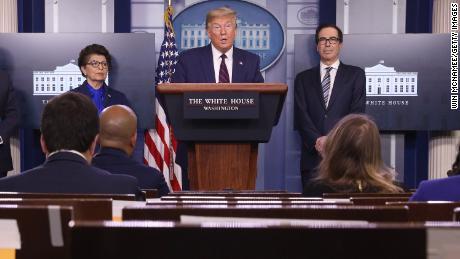
The United States also has other health conditions that could make it more difficult to fight the virus. It has fewer practicing physicians per 1,000 population than many developed countries, and is lagging behind other countries rich in hospitals per million people and hospital beds per capita, according to the Kaiser Family Foundation .
In addition to this, health insurance is often linked to the employment status of Americans - which means that some of the 26.5 million people who have applied for unemployment due to this pandemic are also at risk of losing their coverage .
"The crisis underscores the value of a universal public health system as well as a broader social security system," said Tynkkynen. "When this type of crisis occurs, it affects not only people's health but also their social well-being, their jobs, their economic situation," she added.
The system is not hungry for money. The United States spends almost 17% of its GDP on health care, about double the average of other developed countries. Yet despite all this money, the United States lags behind other countries in terms of performance. The Commonwealth Fund compares health care systems in high-income countries for two decades, examining quality of care, access, administrative efficiency, equity and health outcomes and healthy living . According to Roosa Tikkanen of the fund, the United States ranks last in each of the fund's comparison reports.

For many experts, the pandemic is exposing all the reasons for a major health reform in the United States.
"There are many resources within the healthcare system in the United States that can be channeled to achieve the goal of universal coverage," said Williams. "Yes, there are political barriers. Yes, there are barriers around taxation and government confidence, but I think this pandemic has shown that a lack of universal coverage really allows a lot of people to ending up between the cracks. "
Blomberg has said that she would prefer a universal coverage system to her private health insurance. "I think it would be much, much better for everyone," she said, quickly adding that she was almost certain that the system would not change anytime soon. "I don't think universal health care is currently a real option," she said.
"Part of the problem is, you know, the people who make these decisions, they don't have to worry about them. Because they're completely covered by government jobs. They're making a ridiculous amount of money. And if people aren't affected by something, then it's not going to change their opinions on things, "she said.






