The figure of the artist has always been accompanied by his own mythology. And the idea of temporarily suspending everyday life and its frenzy, to dive into oneself in an almost solipsist introspection, is certainly part of it. Solitude is undoubtedly a precious ally to achieve what Virginia Woolf calls "an experience of reality that would otherwise be unobtainable", but usually that of the artist is a voluntary isolation, in which the rest of the world continues to move forward as in the usual. And it is an isolation that does not permeate the fruition of the work of art itself, which instead comes to life when it becomes part of the community.
The Covid-19 pandemic, however, created an unexpected context in scale and scope, which forced us to rethink at least in part the meaning of solitude and the importance of social interaction - not only in art. Being isolated collectively and globally, forced into a suspended time while the world out there suddenly becomes something unknown and impossibly distant, is a radically new experience. Also accompanied, for a certain percentage of the world population, by the end of the illusion of having everything under control: the pandemic has made it all too evident how a whole series of rules and certainties we took for granted - and which we think are at the foundation of a certain idea of civilization - in reality they are much, much more fragile and arbitrary than we have ever dared to imagine. And they can fail in an instant.
It seems strange to speak of isolation in the era of hyperconnection. Thinking about it, already in pre-Covid everyday life most of our interactions were mediated by a screen. What changes then, when by force majeure they all become, or almost all? How does our way of living friendship, work change, how does the use of a work of art change when we can only live it online? And what changes in its production when insulation is no longer a choice?
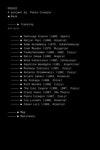
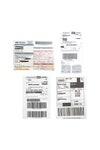
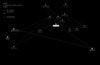
Starting from these questions and from a close criticism of the art system, which increasingly reduces the work to a commodity, at the beginning of the Italian quarantine the artist Paolo Ciregia conceived a project as simple as it was powerful. titled RG0022 (the tracking number of the first expedition), the project is developed around an analog camera, a 36-shot film and eighteen artists (including Paolo) scattered around the world: Santiago Sierra, Adrian Paci, Adam Broomberg, Ivan Moudov , Formafantasma, Délio Jasse, Anna Estarriola, Agustina Woodgate, Michele Sibiloni, Antonio Ottomanelli, Driant Zeneli, He Xiangyu, Ruth Beraha, The Cool Couple, Clara Ianni, Iva Lulashi, Edson Luli. Everyone has two shots available to tell this historic moment so elusive and confusing, the path of the camera is mapped in real time on the project site and the final result will be a choral work, in which the individuality of each artist dissolves in the collective of work.
How it was born RG0022?
I wanted to create something utopian in a sense: working with multiple hands during social distancing was impossible. The only opening left was, ironically, the circulation of the goods, of the parcels, which continued to travel all over the world. So I started thinking about how to build a collaborative work starting from this glimpse, something that then became usable for everyone, materially. Exhibitions, online fairs, are certainly important but seem to slightly empty the meaning of the work of art. It seems to me that only the capitalist idea of the object remains, its commercial value: you see it, you buy it. Participation, direct confrontation with the spectator and the artist are missing. Instead, I would like the end result of this project to be something a little out of our time and its speed.
It is also an interesting way to discuss the ego's dominance in contemporary art and the artist's personality.
We all start with this romantic idea of art as an exchange, but it seems to me to be increasingly reduced to an individualistic act, where the artist's ego prevails even if the work has a social or political purpose. I wanted to try to create something that would put me aside and spur common action. Actually I'm doing a more curatorial operation, in which basically I give the ignition key to the project and then I'm no longer in control. In fact, I thought a lot about whether or not to include my work, but in the end I decided yes: I didn't want it to seem that the idea was just piloting it. To be truly participatory I had to be part of it too.
What did you take?
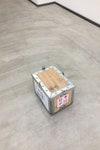
A pile of newspapers I collected during the quarantine, which I set fire to. I took 5 a day, for 40 days, for a total of about 200 newspapers. It was a way to counter the media bulimia of what we were experiencing, in which we read the opposite of everything, and then there was nothing left.
What did you miss most during the lockdown?
The fact of participating in the work of others. I was also struck by feeling completely illiterate in socializing with myself. It is almost absurd because I have always avoided socializing, but during the quarantine I understood how much my daily life was filled by the presence of others, and how different it was to be excluded from sociability by choice or by obligation.
How did you choose which artists to involve?
Being a global pandemic, I tried to expand the network as much as possible, and as a side effect in the project, the total unpredictability of this event is also shown. For example, when I contacted the artist who is in Brazil, he was one of the least affected countries. I thought it was also interesting to tell this aspect. Well now unfortunately Brazil is one of the hardest hit. Or for example, the package arrived in America during the BLM protests, so it took a different direction there. The pandemic is certainly the background noise of the project, but rg0022 also speaks of much more. For example, it is interesting that most of the artists involved live and work in a country other than the country of birth: therefore the cities on the map do not determine any origin. And then there is the huge part that plays the case: among all the airport scans, the passages through customs, it is not at all sure that the film survives intact. All it takes is an agent to open the car and expose it, and it would all be lost irreparably. But I think the value of the project would also remain in this case: it is an attempt to preserve something from a very specific moment, albeit dilated over time, a passage of witness and testimony that starts from social distancing but speaks in general of the unpredictability of life, of an increasingly suffocating system of art, and also of the need that we all have to be able to compare ourselves with others. And to be able to trust them.