This book is a detailed history of reality television, and Nussbaum begins the book by explaining that if you think reality television is a product of the 2000s, you’d be wrong. Reality television is as old as television itself, and is constantly redefining itself.
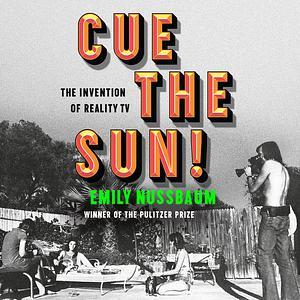
This book came highly recommended by the New York Times last year, but I was inspired to pick it up because of Allison Cochrun’s novel, The Charm Offensive, which takes place on a TV show like The Bachelor.
I was also interested in this book because Love Island is a guilty pleasure of mine, especially when life is stressful (it helps me to yell at the contestants and laugh at the ridiculous competitions). I wondered how much these shows are just a complete sham — whether they are scripted and how much a show’s producers influence the outcomes. I enjoy the psychology of it all, but I do wrestle with how these shows manipulate people’s emotions.
This book would be great for anyone who’s interested in the history of television, because Nussbaum points out the many ways that reality and non-reality TV intersect. From the beginning, there have been fictional shows and movies that satirize reality TV, like The Truman Show and The Office. And like nonfiction books, reality television has as many subgenres as fictional television, from game shows to dating shows to prank and stunt shows.
The author begins by focusing on Candid Camera, exploring the public’s love of seeing people pranked, as long as the pranks aren’t too serious. It then goes on to describe the dating shows of the 70s, including The Dating Game and The Newlywed Game. She also describes Queen for a Day, one I didn’t know anything about. Nussbaum interviews many people connected with the shows she’s discussing, and she also cites the biographies of celebrities like Allen Funt and Bob Eubanks.
She spends a lot of time on American Family, another show that was just before my time, but that I’m surprised I didn’t know anything about. In 1973, American Family was the first show to follow a real family, the Louds, over seven months. The show recorded, in real time, the divorce of the parents and issues related to the eldest son, Lance Loud, who was openly gay. It’s considered to be one of the first depictions on TV of a not-so-perfect family.
Fans of The Real World and Big Brother will be particularly interested in this book. Nussbaum shows how, as cameras improved, the idea of filming real people developed as well. Survivor was probably the first show she discusses that I actually watched, at least the first season. This book goes behind the scenes in great detail, from how the show was conceived to the day to day hardships of the cast and crew, to the ultimate conclusion where manipulation won out over strength or likeability. She spends less time on other competition shows like Amazing Race, Project Runway, and Top Chef.
I liked the way Nussbaum explored the positives and negatives of this industry. Of course there’s behind the scenes manipulation, and the shows are edited to suggest drama that isn’t there. But one of my takeaways from this book was that much of reality TV success comes from things you can’t manipulate, like the chemistry and personalities of the people on the air. I also have a greater appreciation for the creativity and work that goes into the production of these shows. She also described the way reality TV has brought very real discussions of race and sexuality to the public in ways that scripted television can’t.
I think the dating shows might be some of the most problematic, because people are placed in a secluded environment, manipulated emotionally (and sometimes with alcohol), and then the footage is edited to heighten that drama. There are plenty of stories of people who suffered from going on one of these shows — most of them make very little, expose a lot, and only a few become household names. On the other hand, most people going on a dating show expect that. Nussbaum spends most of the book on the first season of each show, because after that the contestants are savvier.
The book ends with a chapter on The Apprentice, focusing on the personality of Donald Trump and the impact of the show. I wouldn’t say this book is political, but whatever your politics, Trump is our first reality TV host turned president, so exploring the impact of the show was important to me. I never watched it, and maybe that’s why I’ve never been able to understand his appeal to so many.
There is a LOT covered in this book and the research felt very thorough, even though many shows weren’t even covered. At times it felt like too much detail about a subject that didn’t feel terribly important. But reality TV is about the psychology of real people doing real (if manipulated) things. Nussbaum reminds us that most of these shows are human experiments, filmed for our entertainment. I appreciated how this book explored both how the participants in these shows are impacted, and how we at home are impacted by what we watch.