


by Stuart H. Gray
In this series we have assessed the claim that the New Testament accounts of Jesus’ Resurrection are contradictory. The opposite is true. We have seen many ways that the accounts are very well aligned. We adopted three reasonable assumptions about the order in which events happened on Sunday morning. We saw the accounts clearly corroborate each other.
First, we laid out the New Testament resurrection accounts. We examined the locations being described, and made an argument for historical harmonization.
Second, we assessed who the main characters are, and where they were. I also argued against contradiction on the time of spice preparation.
Third, I argued the accounts are consistent on how many women visited the tomb on Sunday morning.
Fourth, I argued a key to understanding how Matthew’s account aligns with the others is in identifying his flashback scene. This scene describes the moving of the stone, and the earthquake.
Fifth, I argued the accounts are complementary on the number of angels at the tomb,
Sixth, I argued the accounts agree that Mary Magdalene was first to the tomb.
Seventh, we looked at how the resurrected Jesus spoke to Mary Magdalene. I posed two reasons why he might speak that way.
Eighth, we discovered that the New Testament gives two accounts of Jesus’ commissioning of his church. I argued the texts document two unique events.
I promised at the start of this series to respond to two common skeptical positions on the resurrection accounts. I’m ready to do that now.
Contradictions Mean Jesus’ Resurrection Cannot Be Known
Here’s a common skeptical position:
There are differences between the accounts because Jesus’ resurrection probably did not happen. There is no way to tell if it did. The accounts are simply contradictory. People who claim Jesus’ resurrection really happened just dogmatically state that it did. They close their eyes to the unreliability of the reports. Dan McClellan makes an argument for this.[1]
We have seen many reasons to think the accounts are not contradictory. Perhaps the dogmatism works the other way here. It is the skeptic who is clinging to the hope that the resurrection accounts contradict. They do so despite all the evidence to the contrary.
Perhaps the real issue here is that the skeptic has already decided that miracles cannot occur. Jesus could never rise from the dead. A naturalistic argument is always going to be preferred even if it doesn’t fit the data. Skeptics who argue this way have already decided the issue. But why should we believe them? How does the skeptic know that miracles cannot occur? Do they know everything? It sure sounds that they think they do.
This skeptical response also misses a key point about the Bible’s way of understanding miracles. The skeptic might claim that because they have never seen a miracle, and they know no one else who has, that miracles do not occur. But the Bible’s view of miracles is different. They are not intended to be things that occur in common experience. If they did, they would cease to do their job. What is the job of a miracle? To grab our attention. To highlight times where nature deviates from the path it normally takes when left to itself.[2] Rare instances of the miraculous – especially Jesus’ resurrection – demonstrate to us God’s choice to intervene in nature. They highlight times when God speaks to us.
Contradictions Show the Authors Invented Things to Make Jesus Seem More Important
Here’s one approach to this:
There are differences because each of the writers are probably adding fictional details to a historical core of data. Things grew in the telling over the years. The church was in the process of creating new Christian doctrine. The writers wanted to persuade people that Jesus is the Jewish Messiah. Or they elevated him to the level of a Greek hero. Keith Long introduces some of these ideas.[3]
Consistency of the Accounts If the gospel authors were inventing things to add into the mix, we would expect wildly divergent accounts. Noone is editorially checking the documents are “correct.” Instead, what we have found is that the accounts are very similar in the details they provide. They are matter of fact in their tone. They report what people experience, and they describe how they struggle to understand these experiences. This suggests the accounts line up because they are describing an event that really did happen. If the authors were adding invented details, I wouldn’t expect the accounts to line up as well as they do. I would expect them to diverge in major ways.
There is an ancient description of the resurrection that does diverge wildly. The Gospel of Peter is believed to have been written much later than the canonical gospels in the second century. It claims that the soldiers outside the tomb saw the stone roll aside. Three men walked out of the tomb together. They were followed by a giant talking cross. And the heads of the men reached up to heaven.[4]
The Gospel of Peter really does stick out from the canonical Gospel accounts. Given its later dating and its fantastical ideas, it is seen by many scholars as an attempt to add fiction to the events of the resurrection.
Yet the canonical gospels are not like the Gospel of Peter. Their consistency is an argument that the authors are simply recording what the people of the time actually experienced. They aren’t trying to elevate Jesus’ position. They are just saying it as it was.
Practice of the First Christians A second reason why I don’t think the writers are inventing things, is that the text aligns well with how the first Christians behaved. These Jewish monotheists worshipped God the Father, God the Son, and God the Holy Spirit. We see that in an early, 3rd century Christian hymn found on a scrap of papyrus in Oxyrhynchus, Egypt.[5] Lots of scholars have weighed in on this discovery and what it means for our understanding of Christianity. We would expect the first Christians to worship a Jesus who claimed to be God in how he spoke and acted. We would expect their songs to reflect the trinitarian belief expressed by the church fathers (Justin Martyr, Theophilus of Antioch, Tertullian, etc) in the 2nd century, and the canonical New Testament texts from the 1st. Particularly if Jesus had demonstrated his deity by beating death. This is in fact what we find.
No Evolution of Belief The Christian understanding of who Jesus is does not develop as the church engages with Hellinistic society. Greek ideas and the mystery cults exist, but they do not shape Christian belief in Jesus. Rather, Aramic and Greek speaking believers coexist together at once across Jerusalem, Caesarea, and Rome. They mutually influence and support each other based on a shared core belief in the divinity of Christ. So, “confession of Jesus as the divine Lord was not the result of faith in Christ encountering Greek religion and philosophy.”[6] Development does occur later in the development of the Christian creeds. But this work relates Jesus’ divinity to Jewish and Greek traditions. It does not create it from them.
So What?
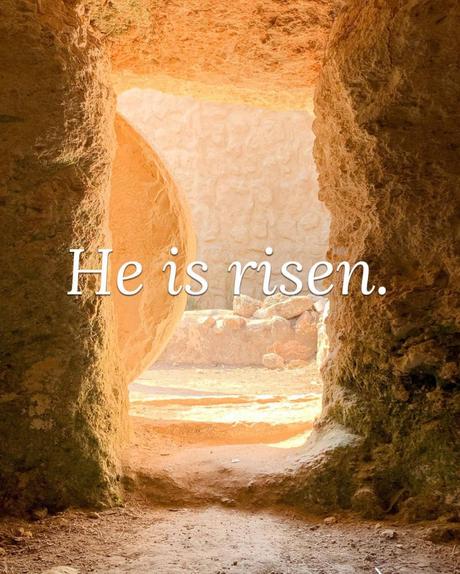
If the gospels are a reasonable account of the resurrection, then we can conclude that – He is risen. That’s a vitally important conclusion. But it leads forward to the next question. If its true, then who is this Jesus anyway?
The New Testament teaches our experience post-death will be determined by whether we accept and believe that Jesus is the Lord:
“If you declare with your mouth, “Jesus is Lord,” and believe in your heart that God raised him from the dead, you will be saved.” (Rom. 10:9, NIV)
“Do not be amazed at this, for a time is coming when all who are in their graves will hear his voice and come out – those who have done what is good will rise to live, and those who have done what is evil will rise to be condemned.” (John 5:28-29, NIV)
We’ve seen ways that the resurrection accounts complement each other. Perhaps, this carries throughout all the gospel texts themselves. I have argued elsewhere that it does. If that is the case, then I suggest the statements from Romans 10:9 and John 5 become urgent for us. Our future depends on who we say Jesus is.
He is risen. And our future depends on the decisions we make in the light of that historical fact.
[1] Dan McClellan, “Are there contradictions in the Bible?”, posted 8th March 2025, accessed 12th April, 2025, https://www.youtube.com/watch?v=vNUC1e8t3D4
[2] Jonathan McLatchie, “Do the Resurrection Narratives Contradict? A Reply to Dan McClennan”, March 10th, 2025, accessed April 13th, 2025, https://jonathanmclatchie.com/do-the-resurrection-narratives-contradict-a-reply-to-dan-mcclellan/
[3] Keith Long, “How Does the Resurrection Story Change In the Gospels?”, March 16th, 2022, accessed April 13th, 2025, https://www.bartehrman.com/how-does-the-resurrection-story-change-in-the-gospels/
[4] The Gospel of Peter, The Apocryphal New Testament (1924)/Passion Gospels/The Gospel of Peter, accessed 21st April, 2025, https://en.wikisource.org/wiki/The_Apocryphal_New_Testament_(1924)/Passion_Gospels/The_Gospel_of_Peter.
[5] https://www.thefirsthymnmovie.com
[6] Michael F Bird, Craig A Evans, et al, How God Became Jesus The Real Origins of Belief in Jesus’ Divine Nature, (Grand Rapids: Zondervan, 2014), 14.






