Robusta, Dwarf Cavendish, Rasthali, Poovan, Nendran, Karpooravalli, Monthan, Virupakshi, Sirumalai, Manoranjitham , Kathali ……. – simple – varieties of banana, that delicious fruit. Then there is the ‘green banana’ – in one way green is unripe …having starchy texture and inedible – but green banana is a variety – generally big in size …… modern technology is supplying that yellow banana in green (confusing !) – yellow ones are generally smaller – but recently big yellow bananas – similar to the size of green ones are flooding market, coming reportedly fromBangalore.
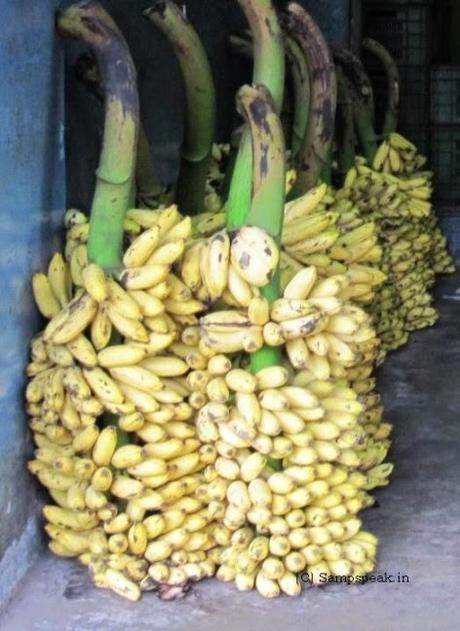
Banana, that delicious fruit is the common name for herbaceous plants of the genus Musa ~ interestingly, bananas do not grow from a seed but from a bulb or rizhome. Once the alluvial belt alongside the river Kaveri in Thanjavur, Trichy, Thiruvaiyaru flourished with banana plantation – now with water not fully flowing – understand that the cultivation too has suffered.
Down south inIndia, eating in a banana leaf is fulfilling and traditionally food is served on big banana leaf on ceremonial occasions. ThoughIndiais one of the major cultivators and ranks high in terms of produce, We unfortunately are not on top when it comes to trade, especially export trade. Though not much fromIndia, the banana export has a good market especially fromMexico,Ecuador,Costa Rica, PhilippinesandColombia. The prospective buyers are US andEurope.
Banana continues to be the most common fruit – and most sought after too. Ecuadorian police on the weekend seized a haul of around 2.5 metric tons (MT) of cocaine which was hidden in banana boxes, according to publication Ecuavisa. The Ministry of the Interior said the load had been destined for Europe. “A total of 2,407 packets with a weight of approximately 2.5 metric tons of the drug was found,” the story quoted a ministry statement as saying.
The drugs were reportedly going to set sail for Belgium from the southeastern city of Guayaquil. “The agents blocked the container that belonged to the company Tropikfruit S.A. and that contained banana for export,” the ministry added. A man has been arrested - Ecuador is the world’s largest banana exporter and has increased exports to the European market this year following its accession to a trade deal that lowers tariffs.
Bananas are a wonderful source of potassium and are the perfect on-the-go snack. The only downside to the fruit are those irritating leathery strands - which are actually called 'phloem bundles' - that you get when you peel back a banana skin. Here is an interesting article read in MailOnline now.
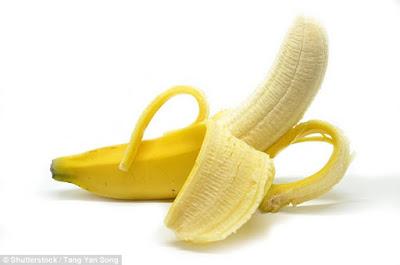 While those stringy bits
may not be the most palatable, they are in fact very important - and we
wouldn't be able to eat bananas without them, according to Nicholas D. Gillitt,
a US academic who shed some light on the mystery this week in a report by
Huffington Post. Banana strands are
called phloem bundles as they are made up of phloem tissue which transports
nutrients and other substances around the whole fruit; the clue as to why those strands are so important
is in their name.
Phloem is one of two types
of transport tissue that you can find in all plants, and moves nutrients and
other substances around the whole plant. In a banana, the phloem strands are
therefore the reason why all the nutrients can reach the whole of the fruit -
which allows it to grow into the fruit we know of. The strands tend to stick on
tight to underripe bananas as they haven't finished the job of growing the
fruit yet, while they peel off easily on ripe or overripe fruit.
Nicholas D. Gillitt, who
is vice president of nutrition research and director at the Dole Nutrition
Institute explained to Huffington Post: 'Phloem bundles are necessary for the
adequate disposition of nutrients throughout the plant.' The phloem bundles are
completely edible and are just as nutritionally rich as the main part of the
fruit, according to Dr Gillitt. In fact, the strands probably contain a lot
more fiber than the rest of the fruit, he says.
It is possible to
genetically modify the fruit to prevent strands from forming - but Gillitt says
there is little point dedicating funds to research this when companies can
better invest in coming up with disease-resistant food or fruit with higher
nutritional content.
Interesting !!
With regards – S.
Sampathkumar
While those stringy bits
may not be the most palatable, they are in fact very important - and we
wouldn't be able to eat bananas without them, according to Nicholas D. Gillitt,
a US academic who shed some light on the mystery this week in a report by
Huffington Post. Banana strands are
called phloem bundles as they are made up of phloem tissue which transports
nutrients and other substances around the whole fruit; the clue as to why those strands are so important
is in their name.
Phloem is one of two types
of transport tissue that you can find in all plants, and moves nutrients and
other substances around the whole plant. In a banana, the phloem strands are
therefore the reason why all the nutrients can reach the whole of the fruit -
which allows it to grow into the fruit we know of. The strands tend to stick on
tight to underripe bananas as they haven't finished the job of growing the
fruit yet, while they peel off easily on ripe or overripe fruit.
Nicholas D. Gillitt, who
is vice president of nutrition research and director at the Dole Nutrition
Institute explained to Huffington Post: 'Phloem bundles are necessary for the
adequate disposition of nutrients throughout the plant.' The phloem bundles are
completely edible and are just as nutritionally rich as the main part of the
fruit, according to Dr Gillitt. In fact, the strands probably contain a lot
more fiber than the rest of the fruit, he says.
It is possible to
genetically modify the fruit to prevent strands from forming - but Gillitt says
there is little point dedicating funds to research this when companies can
better invest in coming up with disease-resistant food or fruit with higher
nutritional content.
Interesting !!
With regards – S.
Sampathkumar
20th June 2017.