So we’re heading into the 37th week of summer here and yet another heatwave. My news feed is full of maps of East Anglia shown purple-red, and overexcited headlines about temperatures reaching 35 degrees (again). The village green on the other side of the road to my desk is the same color as the hay bales on the trucks that trundle past with the absurdly early harvest. I am old enough to remember the summer of ’76 but I don’t recall it very well. My abiding memory is of returning from our annual holiday in Devon and the car overheating. There was no M25 in those days and so our journey took us across London. That meant getting up at four in the morning so that my father could avoid the worst of the traffic, and he always timed it so that we were driving past Big Ben just as it was chiming six. This was my family – hyper organised and ridiculously picky about details.
Anyway, I don’t remember what time of day it was that we went past Big Ben on the way back home, but I do remember parking up in some quiet, leafy suburb in the fierce afternoon heat while we waited for the car to cool down, my mother fretting away as it was just the kind of thing to cause her distress. She spent a lot of mental energy anticipating every possible disaster, so the ones that caught her off guard really stung. My dad used the down time to meticulously clean squashed flies off the windscreen before they baked on, and my brother was trying to perfect the radio reception, one arm out the window, fiddling with the direction of the aerial. I was allowed to take off my dress and sit in my petticoat, the vinyl seat scorching the backs of my thighs, which begs the question of why on earth at seven years old, on a hot day, I’d been put in such elaborate underwear. Once again, I can only point to my family: very correct, very polite, very modest in all senses of the term. Surviving heat requires a kind of relaxed, laissez-faire attitude that we most certainly did not have, and so, although we always did our very best with summer, we were more suited to the other seasons.
I have withstood this summer, but I haven’t enjoyed it. There have been days when stepping outside has felt like stepping into the apocalypse, the air simmering, the ground scorching my bare feet, a weight and intensity to the heat beyond anything I’ve experienced before Only a few years after the summer of ’76, I would be learning in school about greenhouse gasses and the hole in the ozone layer. It seems to me that I have been waiting all my life for someone to do something about a well-flagged issue with potentially devastating consequences. If you’ve gathered anything about the DNA I’ve inherited from my family in this post so far, you will understand that, had I been in charge, I’d have done things differently.
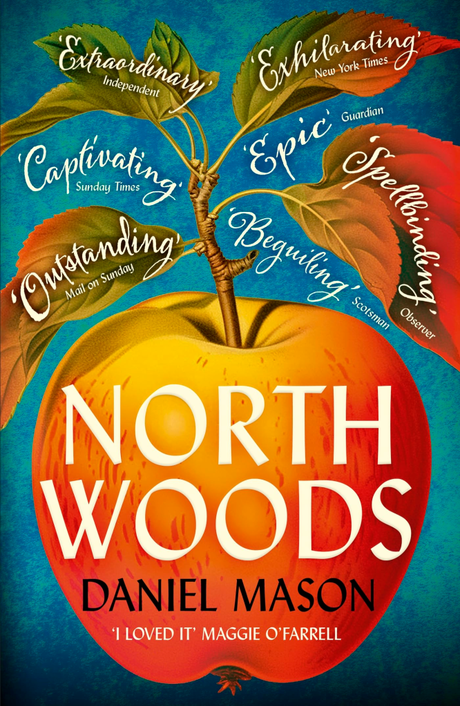
North Woods by Daniel Mason is a book that reveals its eco-credentials quite late in the day, but it flourishes them with aplomb by the conclusion. This was a novel I began with some uncertainty, the first couple of chapters striking me as a little overwritten and melodramatic. But once I’d begun to get into the story of the house and its inhabitants, it became increasingly compelling and by the halfway mark, I was hooked. The story concerns a lemon-coloured house sitting amidst rich woodland in one of the valleys in the Massachusetts mountains, and concerns its various inhabitants through time, from the 1760s to a point beyond our modern day. These inhabitants often weave their ghostly way into later chapters too, the spirit of place in this novel often manifesting as actual spirits. As I listened to an audiobook, the formal innovation was a little less pronounced (each chapter takes a different textual form – letters, case notes, a diary, magazine article and so on), but the wonderful performances by the voice artists showed that for a book essentially about sex and death, it’s really rather jolly. Not so much the ending, though, as the vivid characters of the main narrative recede into the background and nature, which has always threatened to take over the reins of the story in the way it repeatedly invades the rooms of the house, plays out what feels like a now predestined collapse. I did love this novel, but I didn’t feel like writing a full review of it. Somehow it seems to speak perfectly adequately for itself, should you want to read it.
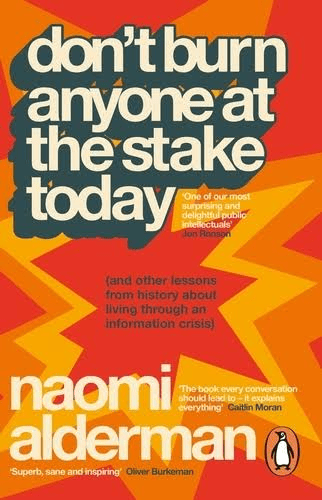
Every lunchtime, Mr Litlove and I share a book over a cup of tea and there are several of these we’ve finished lately that are worth a mention but not a full review. Naomi Alderman’s Don’t Burn Anyone at the Stake Today has a great premise. She argues that we are living through the third era of information crisis, the first two being occasioned by the advent of writing and the invention of the printing press. She points out very convincingly that both these previous crises led to widespread and serious social conflict, as the opposing nature of people’s fundamental beliefs became more apparent. And when people disagree their go-to solution tends to be excessively violent – hence the title of the book. In both previous eras, it took decades if not centuries for the dust to settle, though she fully believes that, in the end, the internet will help us see each other more clearly and find ways to grow in our humanity. She’s very even-handed all the way through – which makes a pleasant change – showing us that all these massive developments produce good and bad consequences in ways that preclude any easy judgment. This is a short book and she packs a lot in, covering all kinds of challenges that the internet poses, and in places, her argument becomes sketchy. But her approach is continually interesting and profound, and this is a book that offers a great deal to think about. Ultimately, her proposal is that we should all try to be a bit kinder to one another online, which seems fair enough to me.
Mostly Mr Litlove and I share non-fiction together, but every so often we branch out, and the next book we read was Clare Mackintosh’s It’s Not What You Think. There have been times in this blog when I have been very rude about twists in thrillers and on the whole I stand my ground – I think they’re very difficult to do right. But I have to hand it to Clare Mackintosh; she pulled off a couple of really good twists in this novel, which we found thoroughly enjoyable. It’s pure popcorn, and there’s nothing wrong with that. No point in me telling you anything about the plot as it would risk spoilers.
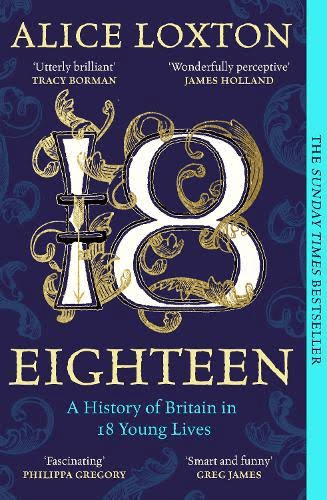
Since then we have moved on to Alice Loxton’s 18, which is turning out to be more problematic. The premise is eighteen chapters, each one featuring a historical figure at the age of 18. So far, we’ve read about the Venerable Bede, the Empress Matilda and Geoffrey Chaucer. Now, the potted biographies have been interesting – particularly Empress Matilda as I’m a Cadfael fan (iykyk). But this notion of being 18 is really nothing more than a gimmick. Bede was about 14 years old when the plague decimated his monastery, leaving only himself and the Abbot alive, and he didn’t start writing until he was about 28. Loxton thinks that age 18 he was probably making parchment. The Empress Matilda was eight when she left England for Germany in order to be groomed (I don’t use the word lightly) for her royal marriage, and she was 33 when her father died, provoking the great battle for succession between herself and her cousin, Stephen. Admittedly, she was ruling Italy when she was 18, and that year her brother died in a shipwreck, leaving her the sole surviving heir. But you see where I’m going with this. There is nothing about being 18 that is particularly distinctive for these figures.
Also in the debit column, the rather painful colloquial prose and the extremely painful party scenes that are inserted between each chapter, intended to provide a little ‘fun’ as our historical figures interact with one another. We’ve agreed to just skip those from now on. What does make an impact, however, is the realisation of how young children were in the past when they were considered mature enough for work and independence. All three figures left their homes around the age of 8 in order to embark on their careers. The thought of Matilda taking on a governing role in the Holy Roman Empire in her teens is extraordinary. It makes me realize how young and cosseted we keep our children these days. I mean, I’m not advocating a return to marriage at 12, but adolescents are capable of far more than we think.
My own reading at present consists of The Benefactors and The Woman Warrior on audiobook, with Slanting Towards the Sea on Kindle. All three are interesting me profoundly, but none has yet captured my heart.
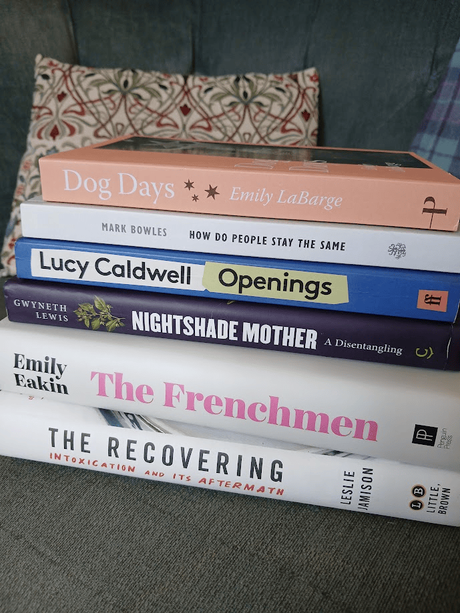
A few acquisitions that have come in lately that are exciting me:
And finally, something I do too rarely, a Substack recommendation. Lilian is a longstanding blogging friend who moved over to Substack where she’s compiling an extraordinary series of posts entitled Women Writing the World Lilian is working her way around the globe alphabetically, each essay exploring the literature of a country through its women writers and the cultural, political, historical context they wrote in. I have learned so much from this blog and it occurred to me that it would interest a lot of readers here at the Reading Room. I don’t have a favorite post as they’re all brilliant, but for a selection, I offer Argentina, Brazil, Bulgaria, and China, and a wonderful extra she wrote on art as an iteration of the Six Degrees of Separation theme.