


86. The Broadway Melody of 1929: This is a complete stinkburger. I haven’t seen any of the other nominees from this year, but if this was the best of 1929, it was a terribly dismal year for film. Overacting, melodrama, and not even good musical numbers to break it up. A complete disappointment.
85. Gigi: It’s a shame that Gigi is ranked this low, because it really is a well-made film. The musical numbers are good and beautifully filmed. Gigi gets the next-to-bottom spot because it’s ugly in its soul. There’s a morally repugnant sense to this film that I can’t get over.
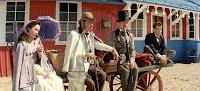 84. Around the World in 80 Days: I can only imagine that this won based on a relatively weak class and a lot of push from the filmmakers to voting members of the Academy. Lots and lots of cameos don’t make a film. The ultimate insult is that Cantinflas is the real star and he got nothing here.
 83. Cimarron: This film features a jackass of a main character who ends up being honored by the end of the film. Beyond that, it was flat and dull. It was mildly progressive for its time, but it’s ultimately a yawn-fest.
82. The Sound of Music: Yeah, I know. This wasn’t really unexpected, though, was it? I know it’s a well-made film and I know some of the songs are good, but I hate every saccharine moment and every touch of diabetes in this too-long sludgefest.
81. The Greatest Show on Earth: An excuse to put a circus on screen with plenty of manufactured drama to give the audience something more to pay attention to. James Stewart in clown white is a high point, and the fact that that’s a high point is damn sad.
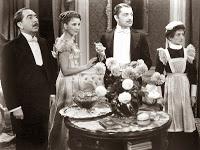 80. Cavalcade: There’s nothing specifically wrong with Cavalcade except that it’s dull. Rather than giving us real drama, it gives us a checklist of important events in England over a 30-year span and rather than showing us those events, we just see the characters react to them. Wake me when it’s over.
 79. Chicago: Another in the series of well-made films I don’t like, Chicago felt like an assault on my senses. I hated virtually every self-serving character in the film and wanted it to end the whole time I was watching it.
78. Forrest Gump: I give this film credit for using archived footage in an interesting way, but that’s where I stop. I’ve got nothing else good or positive or pleasant to say. And that’s all I have to say about that.
77. How Green Was My Valley: This isn’t a terrible film, but the fact that it beat both Citizen Kane and The Maltese Falcon borders on obscene. Really? A film about Welsh coal miners beat one of the greatest films in history and the quintessential film noir? Perhaps the most undeserving win in Oscar history…or maybe the second most undeserving.
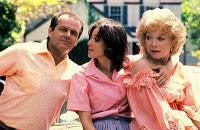 76. Terms of Endearment: I understand why people like this film. I just don’t. I don’t like the story, I don’t like the characters, I don’t like seeing Jack Nicholson wearing pastel shirts. It may well be a great film in its genre; I’ll never watch it again.
 75. You Can’t Take it with You: This is Frank Capra at his corniest, his cheesiest, and his most socialist. There’s a weird message running through this film that I don’t quite understand. Taken to its logical conclusion, it would destroy society.
74. Out of Africa: I won’t deny that Out of Africa is pretty as all hell. It’s also boring as all hell. It’s a big, blustery Harlequin romance that takes most of two hours to get going. Seriously, the romance doesn’t start until the final hour of the film. If you love landscapes, have at it.
73. The Great Ziegfeld: It would be natural to compare this to The Broadway Melody for obvious reasons. The simple fact is, though, that the musical numbers are often pretty spectacular. It’s the biopic parts of the film that drag it down to this level.
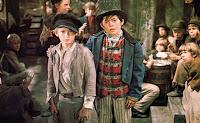 72. Oliver!: Again, not a terrible film. I just can’t figure out who it’s for. It’s a family film that features wanton murder, kidnapping, and child abuse. The main character’s job is to do nothing but look cute and waifish. Bleh.
 71. The Life of Emile Zola: I kind of liked this film, but it suffers from the same problem as a few other films on this list: it’s boring. Not much happens, and while courtroom dramas are fun, this one is less fun than most.
70. The French Connection: I’ve seen this film several times now, and I just don’t get it. I don’t understand the love, because for my money, it’s nothing more than Gene Hackman watching a guy eat. Okay, yeah, the car chase is good. But again, that’s all I get out of it.
69. Chariots of Fire: I offer this challenge to anyone reading: watch Chariots of Fire. A month later, see if you can recall anything from this film other than white guys on a beach running in slow motion.
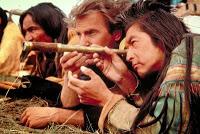 68. Dances with Wolves: Had Kevin Costner shown more restraint in producing this film and, y’know, edited it, it would have ended higher on this list. It’s not a bad story and it’s not a bad film. It’s just way too damn long.
 67. Kramer vs. Kramer: This isn’t a terrible film. I actually kind of like Kramer vs. Kramer. It feels like too small of a movie to win Best Picture. It also suffers terribly from having an overly-happy ending that it doesn’t earn at all.
66. Mutiny on the Bounty: I know that I watched Mutiny on the Bounty but I honestly remember almost nothing about it. I remember Charles Laughton, and his performance is enough to pull the film up to this level.
65. Million Dollar Baby: I really wanted to like Million Dollar Baby a lot more than I did. It’s good, but I don’t love it. I wish I did.
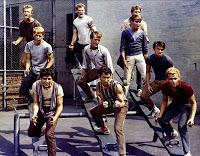 64. West Side Story: It would be easy for people who know me to assume that West Side Story ranks this low because it’s a musical. That’s not the case—the musical aspects of this are really great. No, the problem here is that I’m not a huge fan of the source material. Sorry.
 63. A Beautiful Mind: We’re starting to edge into films I like, or at least appreciate. I liked this much more on an initial viewing than I did on a rewatch. It’s not a film that holds up to repeated viewings very well, although I still think it’s decent.
62. The Deer Hunter: Everyone remembers the Russian roulette scenes, and with reason. What they seem to forget is that the wedding sequence at the start of the film goes on forever. Cut that down, and I’d like this a lot more.
61. Tom Jones: It’s not terrible, but it’s really fluffy. There’s not a lot of actual content here beyond a comedy of errors/romance of errors. Best Picture? I find that difficult to fathom, even in a weak class of films.
 60. Rebecca: As Hitchcock’s only winning film, it deserves some respect. I just wish it were up to the standard of the great Hitchcock films of the 1950s and ‘60s. It’s good, but Hitchcock did a lot better later in his career.
 59. Gandhi: Too long, too slow. There’s a lot of unnecessary fat in this film that I’d love to see trimmed out. It’s an overwhelming movie, and it’s just too much for me to want to sit through it again, despite the great performances.
58. Braveheart: I kind of like Braveheart, but I want to like it more than I do. I think a major reason for this is how historically inaccurate the film is and how ham-fisted it is in pushing its message on the viewer.
57. Crash: Based on the class of nominees, this might well be the most undeserving film to win the top spot. That said, Crash is far better than the vitriol it receives for having had the audacity to beat Brokeback Mountain. If you can watch it without preconceived notions, you’ll find a good story and a good film here.
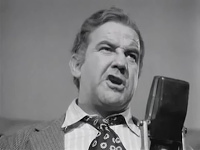 56. All the King’s Men: The biggest issue is that All the King’s Men telegraphs its every move to the audience so that there are no surprises anywhere. It’s solid, but far too predictable to be really great.
 55. A Man for All Seasons: All of the action in this film is internal. While that can be compelling when it’s well done, and this is, it feels as if there is something lacking here. I wanted to see more than just the internal struggle of Thomas More.
54. Rocky: I genuinely like Rocky, but it’s another film that didn’t deserve its win. It was the right movie at the right time in history, and were this award to be voted on again, there’s no way in hell that Rocky wins.
53. An American in Paris: The two biggest problems here are the fluffy story and the ending dance sequence. Sure, that ending number is grand, but when the final 20 minutes or so of your film include no dialogue, it’s easy for the audience to stop caring. I sure did.
 52. The English Patient: So, Ralph Fiennes is a sexy beast when he wants to be. It's a Harlequin romance of a different variety; the ending here really saves the picture. It’s a bit too long. Trim out 20 minutes and we can talk.
 51. Sunrise: A Song of Two Humans: The beginning and the ending of this film are fantastic. What drags it down is the middle portion where it seems to try to become a comedy, and this sort of genre bending only works in certain cases. It doesn’t work here.
50. Shakesepare in Love: I do love me some Billy the Shake, but this odd reworking of historical fact and historical fancy takes a great deal of license to get where it wants to go. It’s fine, but it’s not really anything that special.
49. Going My Way: I was shocked to discover that I really like this film a lot. It’s got a good cast and some great support players. The religious angle bugs me, though. A few of the characters were annoying, too.
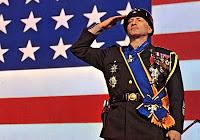 48. Patton: Patton is a decent film. The Oscar, I think, was won for the first few minutes when George C. Scott walks out and delivers that blistering speech in front of the giant flag. After that, provided the film was good enough, it couldn’t lose. Not blinded by that, it’s easy to see that this is a good film, but perhaps not a great one.
 47. The Artist: I like this film just fine. But is it really new ground? Just because it dips back into the silent era, it’s not doing much that’s too special. It’s a darker version of Singin’ in the Rain. I wonder how many people will consider this an essential film 10 years from now.
46. Slumdog Millionaire: I don’t like where this film goes by the end. I’m not sure it earns the ending it comes up with. That’s always a problem for me, one that I have yet to get my wife to understand. I like a happy ending just fine as long as the film in question gets there honestly. This one doesn’t.
50. Driving Miss Daisy: I didn’t expect to love Driving Miss Daisy, and I didn’t love it, but I did like it pretty well. It’s a small movie, and I’m not sure it goes somewhere terribly important, but it is a very good little film, and Morgan Freeman is always worth watching.
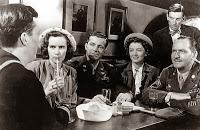 44. The Best Years of Our Lives: Good, but too long. I’m not sure how I’d shorten it, but this is another place where the ending might not be all that deserved. The stories are compelling; I’m just always ready for it to be over about 30 minutes before it is.
 43. Marty: Marty is damned by the fact that it’s not a big movie. It’s a small story, albeit one beautifully told. I genuinely like this film; it’s just of such a smaller scope that I can’t help but think that something grander would’ve been a better choice. Still, I think it’s better than its middle-of-the-pack position here.
42. The Last Emperor: Another film that might be too long for the story it tells, although I can’t really find fault with it anywhere. I guess the main point is that when we’re looking at best pictures from various years, there will be plenty of good or great movies that end up in the middle because other years’ films are just better.
41. Wings: I was consistently impressed by the photography of Wings. While the story is melodramatic and top-billed Clara Bow has little to do with the actual story, the battle sequences are good enough that I was interested to the very end. That’s not always an easy feat with a silent film.
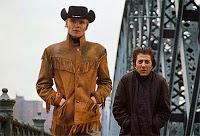 40. Midnight Cowboy: Here’s a case where the final product is less than the sum of its parts. I’m not a fan of the story being told, but I am a fan of the individual performances. Voight and Hoffman are good enough to pull this into the top half, but the story isn’t good enough for the top quarter.
 39. My Fair Lady: This is the highest ranking traditional musical on this countdown. It’s no secret that I don’t love musicals, but I do like this one. Part of that is the solid songs and staging. Part of that is Audrey Hepburn and Rex Harrison. Part of that is that it’s about linguistics. Okay, mostly it’s that it’s about linguistics.
38. Mrs. Miniver: This is one of the great pieces of World War II propaganda. There’s not a great deal of truth in Mrs. Miniver except emotionally. Maybe people couldn’t really handle the truth of the deprivation of the British people during the war, but more historical accuracy would move this to a better position.
37. Hamlet: Hamlet is considered the greatest drama ever written. It might well be. This is only my second-favorite filmed version of the story, but it’s still a great story and features the work of the greatest actor of his generation. That’s got to count for something, doesn’t it?
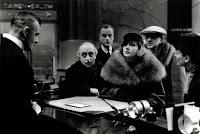 36. Grand Hotel: I hear a lot of complaining about Grand Hotel, and I just don’t get it. I love the interconnected plots and the way everything plays out to something like a legitimate conclusion for each person in the space of time we have. I’d have loved for it to continue with a new round of guests at the hotel—that’s hinted at in the ending, but we don’t get to see it. Damn shame, that.
 35. Platoon: This is a fine movie. The biggest issue I have with it is that the layers of allegory are laid on so thickly that at times its difficult to see the actual story going on behind the symbolism. I’m not specifically looking for a happy romp of a Vietnam film, but something that was more story and less message pounded home would have been appreciated.
34. The King’s Speech: It may be showing my age, but I don’t get the backlash against this winning. Sure, it was a safe pick, but safe pick or not, it’s still one hell of a good movie and has some really terrific performances in it. If you don’t agree, I’d suggest you need to rewatch it. It may not have deserved to win, but it’s by no means a bad film.
33. From Here to Eternity: All people remember from this is the scene in the surf, but there’s a lot more going on here. This was a ballsy film—it’s very anti-military culture, which seems so strange in the decade of the Korean War and just post-WWII. Great story, though.
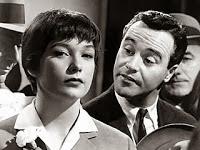 32. The Apartment: I love how dark this film is. I also love Jack Lemmon’s performance throughout. This is cute without being cutesy and smart without being smart-alecky, and that’s a rare thing to find. This is another case where a great film ends up in a lower position simply because there are so many more good films to come.
 31. Gentleman’s Agreement: This feels like a strange winner. I like it a lot, but I would have liked it a lot more if it hadn’t cheated on the ending and given us something that it thought we wanted. There were better endings to be had here, and that’s where it should’ve gone.
30. Titanic: It’s the ending that kills it for me. The romance is perhaps too obvious and done before, but the ship sinking is worth the price of admission. Given my choice, I’d cut the framing story completely—it’s unnecessary for the film, since I don’t really care about what happens to anyone after the ship sinks anyway.
29. It Happened One Night: This is probably a better film than I’m giving credit, but I cannot get beyond the fact that it should’ve lost several of its Oscars to the vastly superior The Thin Man. I like this film, but only as far as it doesn’t intrude on my love for a better film.
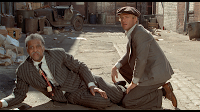 28. The Sting: This is a nearly flawless movie. Everything about it is damn near perfect—the casting, the sets, the plot, the dialogue, the chemistry, even the music and the costuming are spot-on. It’s just such a puff piece in terms of the story that I can’t help but wonder how great it would be if the story actually amounted to something.
 27. Schindler’s List: It’s perhaps forgivable if Spielberg got overly sentimental with this film given its subject matter. However, that’s something Spielberg is prone to, so it always knocks a few points off my score when I see that he’s going for the quick and easy emotional reaction rather than something deeper. Little girl in the red coat, I’m looking at you.
26. Gladiator: The odd camera work in the fight/battle/gladiator sequences bothers me. I don’t understand the artistic statement of making the most exciting scenes in a film difficult for the audience to follow. Show us the damn scenes with clarity. Yeah, I’m entertained, but not as much as I could be with someone who shoots fighting sequences at a mid-long distance so I can actually follow the action. Still, I dig the story a lot.
25. Ben-Hur: There is no doubt in my mind that Ben-Hur won specifically because of the chariot sequence. I have no problem with this because the chariot race is one of the greatest sequences in film ever created. Were the rest of the film completely lackluster, this would still rate as a great film based on that portion alone.
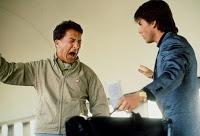 24. Rain Man: Everyone remembers how good Dustin Hoffman is in this. What people tend to forget is that our sympathies are often with the Tom Cruise character, and this is certainly true by the end of the film. Now, consider what an asshole Charlie Babbitt is at the start of the film. That’s a hell of a performance by Cruise, isn’t it?
 23. American Beauty: I love how angry this film is. I love Kevin Spacey’s performance, but there’s a lot here that’s worth seeing. I don’t love the ending, both in terms of what happens and in terms of who does what, but I appreciate that it gets there honestly even if I don’t like it.
22. Gone with the Wind: I think this film belongs in the top 25% or so if only because of its importance. It’s difficult to judge any epic without bringing Gone with the Wind into the conversation simply because of what it is. It’s also dense—much denser that you might remember if it’s been awhile since you’ve seen it.
21. On the Waterfront: One of the high points of Marlon Brando’s career, and that’s saying something. On the Waterfront is not only a great story, it’s also pretty quotable in places, and the social aspects of the film still resonate today. Not many films pushing 60 can say that.
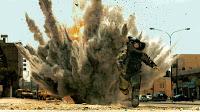 20. The Hurt Locker: I like this film mainly because I don’t think it pulls a lot of punches. Addiction stories are always a little prurient, and thus interesting. When the addiction is so strange, as it is here, it’s even more compelling. I get this film despite having no military experience in my background, because I understand the mindset.
 19. The Lost Weekend: Remember what I just said about addiction? The Lost Weekend is the granddaddy of addiction films. There are few moments in film more filled with despair than watching Ray Milland trying to hock his typewriter for a drink. That’s the kind of thing that stays with you, despite the cheesy uplift ending.
18. In the Heat of the Night: One of the greatest moments in the 1960s in movies was seeing Sidney Poitier slap the shit out of a rich white guy. I like that, but I love how smart this movie is. It would be good if it was strictly about racism against Virgil Tibbs. It’s genius because it’s also about the reality that Tibbs has his own racist tendencies.
17. The Departed: Line up all of Martin Scorsese’s films end to end, and this wouldn’t be my favorite, but it’s the only one of his that has won Best Picture. It’s a hell of a good movie, and it’s the sort of film that is filled with little visual clues for what will happen later, making it completely rewatchable.
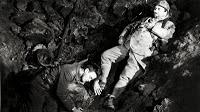 16. All Quiet on the Western Front: There are few films that make a more powerful anti-war statement than this one. More surprising is that this is well past 80 years old, and it still carries the same weight and the same impact it did when it was made. You are poorer as a person if you haven’t seen it.
 15. All About Eve: When one looks at the sorry state of affairs of women’s roles in movies, this is a film I point to. In the less enlightened times of the post-World War II years, women had roles written for them that were rich and deep and wonderful. This is the queen of those films.
14. The Godfather: I know I’m going to take some heat for placing this film this low. The Godfather is a truly great film, but it’s very rarely a film I feel like watching. I don’t dispute its greatness for a second, but I do kind of dispute how much fun it is to watch.
13. The Godfather Part II: My last comment, part II. Again, I won’t dispute that this is one of the greatest films of its decade or that it deserved its win. I just can’t think of the last time I genuinely wanted to sit down and watch it.
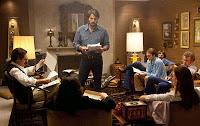 12. Argo: This is proof that Ben Affleck, while he can be good in front of the camera, really needs to spend his time behind it. His not getting a nomination for Best Director was a terrible snub, because he deserved that, too. I’m not convinced this was the best picture of its year, but it’s really, really good.
 11. Ordinary People: Go ahead and hate on me. Ordinary People is a film that is just as vital now as when it was made. The relationships are real and painful and the drama is one that plays out in real life. It’s a heartbreaking film because it is raw and because it is terribly, terribly real. These are not characters on a screen, but real people in very real pain.
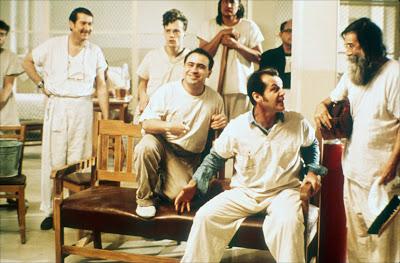 10. One Flew Over the Cuckoo’s Nest: If you put a gun to my head and made me pick Jack Nicholson’s greatest performance, this would be my choice. There are few characters more infused with real world evil than Nurse Ratched. This is a terrifying film because it feels so real. It’s also supported by some of the best performances in the careers of many great actors.
 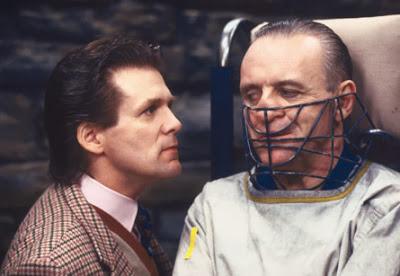 9. Silence of the Lambs: We had to wait a really long time for a genuine horror movie to gain the top award, and it was completely worth the wait. It takes a special film to enter public consciousness at such a level that anybody can reference it whether he or she has seen it or not. Today, 22 years later, you can’t order fava beans without thinking of Chianti.
 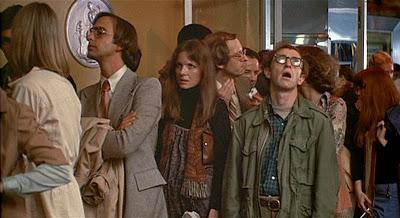 8. Annie Hall: When I was a kid, I was pissed off when Star Wars didn’t win Best Picture and lost to some talky film starring a skinny guy. Now that I’ve seen it, I realize that my child self was wrong. Annie Hall is brilliant in every aspect.
 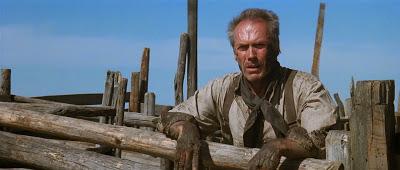 7. Unforgiven: I would call Unforgiven one of the three best Westerns ever made. While it’s not my favorite genre, that’s still a pretty big claim when you consider all of the films “Western” covers. It’s the single best thing Clint Eastwood has ever done either in front of or behind the camera, again because it feels like a real thing rather than just a story.
 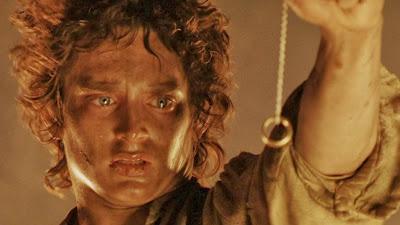 6.The Lord of the Rings: The Return of the King: There was no way this was not going to win its year. Peter Jackson’s accomplishment was huge and needed to be rewarded. Fortunately for all of us, Return of the King deserved this award. It holds together, it’s beautiful to watch, and I even like the extended ending after ending. I’m not sure how it could be better.
 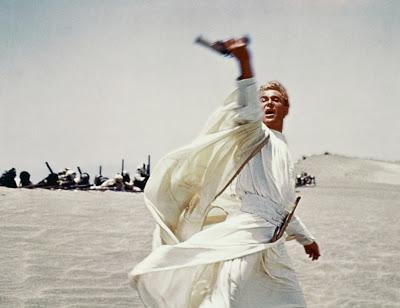 5. Lawrence of Arabia: From 1939 to 1962, epic films were defined by Gone with the Wind. In 1962, Lawrence of Arabia became the new standard for epic films, and nothing has knocked it off of that spot. If you cannot see this in widescreen, you shouldn’t watch it. This is the greatest argument for the letterbox format that exists.
 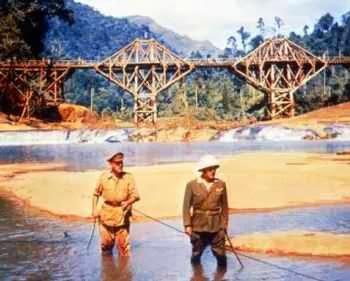 4. The Bridge on the River Kwai: As much as I like Jack Hawkins and William Holden in this, the entire film for me is summed up in the performance of Alec Guinness. I think it is one of the 10 greatest film performances I have ever seen, and I believe it will remain in that top 10 for the rest of my life. The whole film turns on him, and he couldn’t have done it better.
 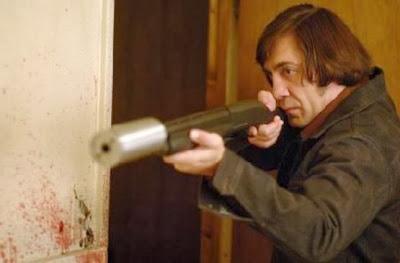 3. No Country for Old Men: If you get why the ending of No Country for Old Men makes sense, you understand exactly why this film is great. I admit to being a Coen geek, so it’s not a huge shock that this film ended high. I think it’s the greatest thing they’ve ever done.
 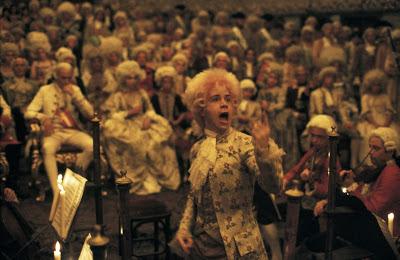 2. Amadeus: You might think that I have rated this too high. Let me ask you a question: when is the last time you watched it? When is the last time you listened to Tom Hulce’s insane giggle or sat back and listened to the glorious music that seems to run through every frame? When is the last time you watched Salieri accept his own part in the tale. I know it’s not historically accurate. I don’t care. It’s wonderful from start to finish.
 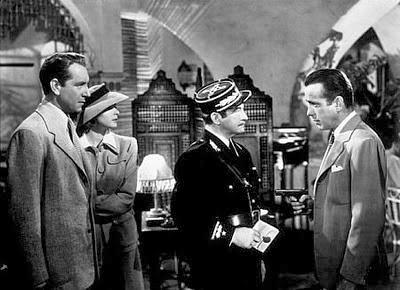 1. Casablanca: And here it is, the single greatest film in Oscar history, at least in my opinion. This is a film that I don’t think can be improved. Every person in every role is perfect. Every line of dialog still snaps. Every twist and turn of the plot still works. Casablanca is a film that stands as a testament to what is possible with story, with character, with performance…it’s flawless.






