"He might be a joy, but don't send a boy to do the work of a man!"
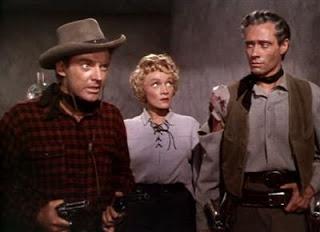
Fritz Lang's first two Westerns, The Return of Frank James (1940) and Western Union (1941), are entertaining but conventional films. Conventional is the last thing you'd call Rancho Notorious (1952), with Lang stylizing a pulp Western plot beyond recognition.Vern Haskell (Arthur Kennedy) loses his fiancée (Gloria Henry) to outlaw Kitch (Lloyd Gough). Vern tracks the outlaw from Wyoming to Texas, following stories of an outlaw hideout called Chuck-a-Luck. Meeting outlaw Frenchy (Mel Ferrer), Vern accompanies him to Chuck-a-Luck. The ranch is run by Altar Keane (Marlene Dietrich), a disgraced saloon girl who offers outlaws safe haven in exchange for work and a ten percent cut. Vern joins Frenchy's crimes and falls for Altar, generating tension even before he locates Kitch.
Rancho Notorious starts as a routine revenge Western but soon deviates from expectations. Daniel Taradash's purple dialog is more noir than Western ("hanging's a clean death, and quieter than eating a banana") while the infiltration plot anticipates many Spaghetti Westerns. Vern's quickly morally compromised, becoming a violent gunfighter and joining a bank robbery; revenge becomes secondary to his character arc. Even with William Lee's pompous ballad commenting on the action, it's among the edgier '50s Westerns.
The script takes a leisurely pace, introducing backstory through bit players' half-remembered tall tales. When we finally meet Altar she matches the hype: sporting cowboy garb and bathed in grease, she intimidates a dozen criminals without losing feminity. Most matriarchal '50s Westerns (Forty Guns, Johnny Guitar) still fall into the Hayes Code dodge of being "tamed" by the right man towards the end. Altar's too far gone for that, redeeming herself instead with a climactic sacrifice.
Rancho Notorious has the requisite action scenes filmed in Hal Moore's blazing Technicolor. Admittedly, many of the outdoor scenes use chintzy sets, but Lang redeems any artificiality with characteristic touches: the rape victim with bloodied nails, a barbershop brawl, a jailhouse filled with crooked politicians. The trademark sequence has Altar and other saloon girls having a "horserace" using their johns as mounts. Another scene has Altar performing a musical number with her gang famed in lascivious close-ups like Dr. Mabuse's henchmen.
Marlene Dietrich is both glamorous and commanding, "a pipe dream in blue jeans or a birthday dress." She's Destry Rides Again's Frenchy with an edge, lamenting that she never met the right man. Arthur Kennedy makes an intense antihero, while Mel Ferrer plays the silver-tongued Frenchy with unusual charm. Character roles go to George Reeves, Jack Elam and Frank Ferguson; Lloyd Gough is a cringing, pathetic villain.
Fritz Lang spent much of his Hollywood career trying to match his style to genre films. Westerns weren't the most obvious medium for the auteur of Metropolis, and his earlier efforts were, well, generic. With Rancho Notorious, though, he finally found the right balance between oater and artistry.