 Three years ago, according
to the the NhRP, there were four chimpanzees on the site, and not long before
that there were six. They "were primarily used in entertainment", Mr
Wise has said. But now, say the NhRP, Tommy is "all by himself - his only
company being a TV on a table on the opposite wall". Patrick Lavery,
Tommy's owner, has insisted that the chimp is comfortable in this environment. Mr
Laverty, who said he and his wife Diane had kept chimps for decades, added that
Tommy had access to TV, cable and a stereo, and that he enjoyed watching
cartoons. He further denied the cage was
small, insisting it was a spacious $150,000 facility with a door to an outside
area. During the winter Tommy stays indoors in a building heated to 21C (70F),
with the walls painted to resemble a jungle, he added.
Whatever the facts of
Tommy's living conditions, he is now the focal point for one of the more
distinctive cases to be considered by a mid-level state appeals court in
Albany. A panel of five appellate judges heard Mr Wise's petition for a writ of
habeas corpus - a request for a custodian to prove he or she has lawful
authority to detain a prisoner. The NhRP's petition argues that New York law
does not limit legal personhood to human beings. The state has previously
conferred legal personhood status on domestic animals who are the beneficiaries
of trusts, the campaign says, as well as extending rights to non-human entities
such as corporations. The lawsuit does not argue
that chimpanzees are human, but that they are entitled to the rights of
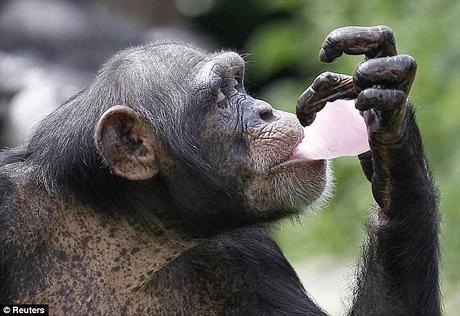
"personhood". The campaigners draw parallels between chimpanzees kept
in captivity - like this one in Dakar - and slavery. The lawsuit refers to an
English case from 1772 that dealt with an American slave named James Somerset,
who escaped from his owner in London. After a plea of habeas corpus was filed,
the court ruled that Mr Somerset was a person rather than a thing and set him
free.
They are calling for the
ageing chimp to be released to live out his days with others of his kind in a
primate sanctuary in Florida. Attorney Steven Wise, of the Nonhuman Rights
Project, argues on behalf of Tommy the chimp before the New York Supreme Court
Appellate Division. The court will decide whether the animal should be declared
a 'person'. Tommy was not in court and nor was his owner. Person is not a
synonym for ‘human being’,” the brief explains, “but designates an entity with
the capacity for legal rights. Should Tommy win his case, it could lead to
broader rights not only for chimps and their fellow primates, but also for
other intelligent animals such as elephants, orcas and dolphins.
Three years ago, according
to the the NhRP, there were four chimpanzees on the site, and not long before
that there were six. They "were primarily used in entertainment", Mr
Wise has said. But now, say the NhRP, Tommy is "all by himself - his only
company being a TV on a table on the opposite wall". Patrick Lavery,
Tommy's owner, has insisted that the chimp is comfortable in this environment. Mr
Laverty, who said he and his wife Diane had kept chimps for decades, added that
Tommy had access to TV, cable and a stereo, and that he enjoyed watching
cartoons. He further denied the cage was
small, insisting it was a spacious $150,000 facility with a door to an outside
area. During the winter Tommy stays indoors in a building heated to 21C (70F),
with the walls painted to resemble a jungle, he added.
Whatever the facts of
Tommy's living conditions, he is now the focal point for one of the more
distinctive cases to be considered by a mid-level state appeals court in
Albany. A panel of five appellate judges heard Mr Wise's petition for a writ of
habeas corpus - a request for a custodian to prove he or she has lawful
authority to detain a prisoner. The NhRP's petition argues that New York law
does not limit legal personhood to human beings. The state has previously
conferred legal personhood status on domestic animals who are the beneficiaries
of trusts, the campaign says, as well as extending rights to non-human entities
such as corporations. The lawsuit does not argue
that chimpanzees are human, but that they are entitled to the rights of
"personhood". The campaigners draw parallels between chimpanzees kept
in captivity - like this one in Dakar - and slavery. The lawsuit refers to an
English case from 1772 that dealt with an American slave named James Somerset,
who escaped from his owner in London. After a plea of habeas corpus was filed,
the court ruled that Mr Somerset was a person rather than a thing and set him
free.
They are calling for the
ageing chimp to be released to live out his days with others of his kind in a
primate sanctuary in Florida. Attorney Steven Wise, of the Nonhuman Rights
Project, argues on behalf of Tommy the chimp before the New York Supreme Court
Appellate Division. The court will decide whether the animal should be declared
a 'person'. Tommy was not in court and nor was his owner. Person is not a
synonym for ‘human being’,” the brief explains, “but designates an entity with
the capacity for legal rights. Should Tommy win his case, it could lead to
broader rights not only for chimps and their fellow primates, but also for
other intelligent animals such as elephants, orcas and dolphins.
With regards – S. Sampathkumar 17th Oct 2014.