


The caterpillar of the Pale Tussock Moth (Calliteara pudibunda) is large and very visible.
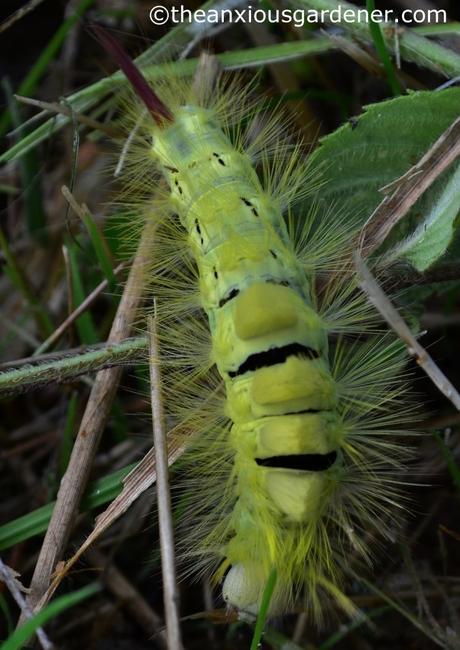
Which is just as well. Otherwise, I would have trundled over this one with the ride-on mower.
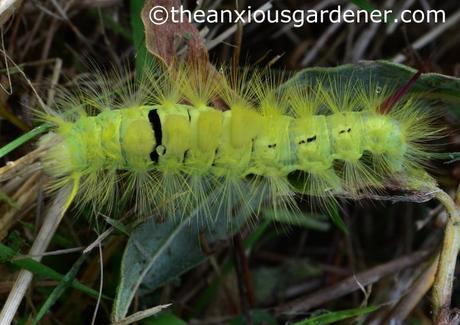
It seemed out of place somehow and far too exotic for a Sussex garden.
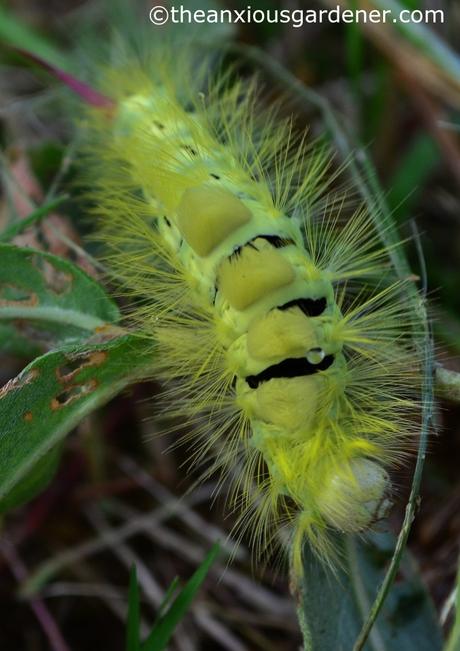
The caterpillars feed on a range of tree leaves including elm, birch, hazel, lime and oak. And hops … which explains (a bit) its colloquial name of ‘hop dogs.’ Here on the meadow, it was probably chomping on my fruit tree leaves – also part of its diet.
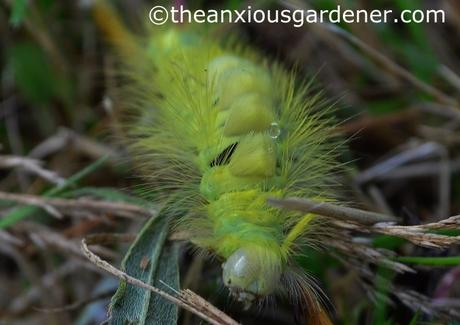
I didn’t pick it up as those hairs looked defensive and sure enough, when I got home, I read that they can cause irritation* and a nasty rash.
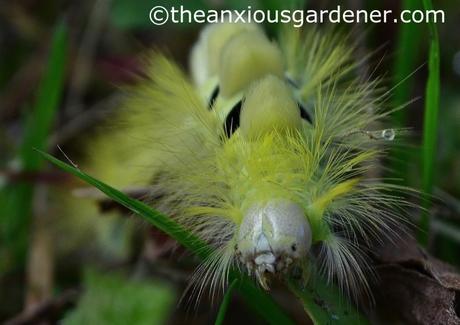
It is always interesting to come across a new creature at the Priory – especially one so colourful. And the adult Pale Tussock Moth is quite ridiculously cute – for a moth. In fact, it is probably the cutest moth you’ve ever seen. Don’t believe me? Well, have a look – there’s a photo of one here.
Told you.
oooOOOooo
*postscript October 2017.
I’ve received the following email from a reader. The hairs on a Pale Tussock Moth Caterpillar are more than just an irritant:
“… In our case, (the caterpillar) wasn’t highly visible as it was on a tennis ball which I picked up whilst playing club tennis under flood lights. Ball and caterpillar stuffed into joggers whilst serving. Searing pain and resultant welts fully visible 48hrs later.
Day 3 and the welts still look angry and itch.
I subsequently got hit from on high by an acorn …”
So don’t pick up a Pale Tussock Moth Caterpillar without gloves and definitely don’t stick one down your pants.
Watch out for falling acorns too.






