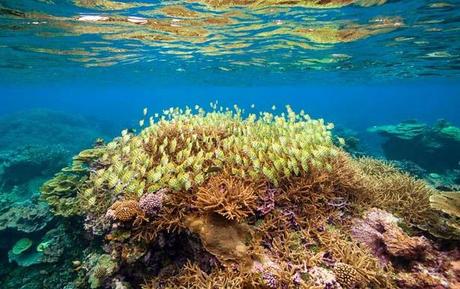
 Palmyra
was first sighted in 1798 by captain Edmund Fanning of Stonington,
Connecticut, master of the American merchant
ship Betsy, on a voyage to Asia. On November
7, 1802, USS Palmyra under Captain Sawle was shipwrecked on the reef, which was
given the name of this vessel. The place is in news now due to the plans of US to
create the world's biggest marine protected area (MPA) in the middle of the Pacific Ocean. Newspaper reports state that the White
House will extend an existing protected area, known as the Pacific Remote
Islands Marine
National Monument. Fishing
and drilling would be banned from an area that could eventually cover two
million sq km. The extended zone would double the world's fully protected
marine reserves. President Obama
announced his intent to make a broad swath of the central Pacific
Ocean off-limits to fishing, energy exploration and other
activities. The proposal, slated to go into effect later this year after a
comment period, could create the world’s largest marine sanctuary and double
the area of ocean globally that is fully protected.
“I’m
going to use my authority to protect some of our nation’s most precious marine
landscapes,” Obama said in a video to participants at a State Department
conference, adding that while the ocean is being degraded, “We cannot afford to
let that happen. That’s why the United
States is leading the fight to protect our
oceans.” The announcement — first reported by The Washington Post — is part of
a broader push on maritime issues by an administration that has generally favoured
other environmental priorities. The oceans effort, led by Secretary of State
John F. Kerry and White House counselor John D. Podesta, is likely to spark a
new political battle with Republicans over the scope of Obama’s executive
powers.
The report
states that Obama has used his executive authority 11 times to safeguard areas
on land, but scientists and activists have been pressing him to do the same for
untouched underwater regions. President George W. Bush holds the record for
creating U.S.
marine monuments, declaring four during his second term, including the one that
Obama plans to expand. Under the proposal, according to two independent
analyses, the Pacific Remote Islands Marine National Monument would be expanded
from almost 87,000 square miles to nearly 782,000 square miles — all of it
adjacent to seven islands and atolls controlled by the United States. The
designation would include waters up to 200 nautical miles offshore from the
territories.
Obama
has faced criticism from a variety of groups — including cattle ranchers, law
enforcement officers and ATV enthusiasts — over his expansion of protections
for federal lands. The ocean area under consideration, by contrast, encompasses
uninhabited islands in a remote region with sparse economic activity. Even so,
the designation is expected to face objections from the U.S. tuna fleet
that operates in the region. Fish caught in the area account for up to 3
percent of the annual U.S.
tuna catch in the western and central Pacific, according to the Pew Charitable
Trusts. When Bush created the monument in 2009, he exempted sport fishing to
address industry opposition.
The
Pacific Remote Islands Area is controlled by the US
and consists of seven scattered islands, atolls and reefs that lie between Hawaii and American
Samoa. Essentially uninhabited, the waters that
surround these remote islands are home to a wide range of species including
corals, seabirds, sharks and vegetation not found anywhere else in the world. What
the announcement of Obama signals is that the area when so designated would be
off limits to fishing and mineral exploitation to the limit of US economic
control - some 200 nautical miles around the islands. It is stated that tropical coral reefs and
associated ecosystems which reportedly are facing the most serious threat from
climate change and ocean acidification, would benefit from this move. The post further
reflects that conserving marine species isn't just the preserve of large
nations like the US.
In recent days the tiny Republic
of Kiribati announced
that the Phoenix Islands Protected Area, will close to all commercial fishing
by the end of 2014. recently, plans to
create two huge marine sanctuaries in Antarctica failed for a third time, after
Russia
again headed nations which blocked the bids. The meeting of the Commission for
the Conservation of Antarctic Marine Living Resources in Australia had sought to protect the Ross Sea and
an area off East Antarctica from exploitation.
But delegates from 24 countries, plus the EU, failed to reach a consensus.
It appears that lot is happening under the bridge – in the waves on
the sea front.
With regards
– S. Sampathkumar
2nd
July 2014.
Palmyra
was first sighted in 1798 by captain Edmund Fanning of Stonington,
Connecticut, master of the American merchant
ship Betsy, on a voyage to Asia. On November
7, 1802, USS Palmyra under Captain Sawle was shipwrecked on the reef, which was
given the name of this vessel. The place is in news now due to the plans of US to
create the world's biggest marine protected area (MPA) in the middle of the Pacific Ocean. Newspaper reports state that the White
House will extend an existing protected area, known as the Pacific Remote
Islands Marine
National Monument. Fishing
and drilling would be banned from an area that could eventually cover two
million sq km. The extended zone would double the world's fully protected
marine reserves. President Obama
announced his intent to make a broad swath of the central Pacific
Ocean off-limits to fishing, energy exploration and other
activities. The proposal, slated to go into effect later this year after a
comment period, could create the world’s largest marine sanctuary and double
the area of ocean globally that is fully protected.
“I’m
going to use my authority to protect some of our nation’s most precious marine
landscapes,” Obama said in a video to participants at a State Department
conference, adding that while the ocean is being degraded, “We cannot afford to
let that happen. That’s why the United
States is leading the fight to protect our
oceans.” The announcement — first reported by The Washington Post — is part of
a broader push on maritime issues by an administration that has generally favoured
other environmental priorities. The oceans effort, led by Secretary of State
John F. Kerry and White House counselor John D. Podesta, is likely to spark a
new political battle with Republicans over the scope of Obama’s executive
powers.
The report
states that Obama has used his executive authority 11 times to safeguard areas
on land, but scientists and activists have been pressing him to do the same for
untouched underwater regions. President George W. Bush holds the record for
creating U.S.
marine monuments, declaring four during his second term, including the one that
Obama plans to expand. Under the proposal, according to two independent
analyses, the Pacific Remote Islands Marine National Monument would be expanded
from almost 87,000 square miles to nearly 782,000 square miles — all of it
adjacent to seven islands and atolls controlled by the United States. The
designation would include waters up to 200 nautical miles offshore from the
territories.
Obama
has faced criticism from a variety of groups — including cattle ranchers, law
enforcement officers and ATV enthusiasts — over his expansion of protections
for federal lands. The ocean area under consideration, by contrast, encompasses
uninhabited islands in a remote region with sparse economic activity. Even so,
the designation is expected to face objections from the U.S. tuna fleet
that operates in the region. Fish caught in the area account for up to 3
percent of the annual U.S.
tuna catch in the western and central Pacific, according to the Pew Charitable
Trusts. When Bush created the monument in 2009, he exempted sport fishing to
address industry opposition.
The
Pacific Remote Islands Area is controlled by the US
and consists of seven scattered islands, atolls and reefs that lie between Hawaii and American
Samoa. Essentially uninhabited, the waters that
surround these remote islands are home to a wide range of species including
corals, seabirds, sharks and vegetation not found anywhere else in the world. What
the announcement of Obama signals is that the area when so designated would be
off limits to fishing and mineral exploitation to the limit of US economic
control - some 200 nautical miles around the islands. It is stated that tropical coral reefs and
associated ecosystems which reportedly are facing the most serious threat from
climate change and ocean acidification, would benefit from this move. The post further
reflects that conserving marine species isn't just the preserve of large
nations like the US.
In recent days the tiny Republic
of Kiribati announced
that the Phoenix Islands Protected Area, will close to all commercial fishing
by the end of 2014. recently, plans to
create two huge marine sanctuaries in Antarctica failed for a third time, after
Russia
again headed nations which blocked the bids. The meeting of the Commission for
the Conservation of Antarctic Marine Living Resources in Australia had sought to protect the Ross Sea and
an area off East Antarctica from exploitation.
But delegates from 24 countries, plus the EU, failed to reach a consensus.
It appears that lot is happening under the bridge – in the waves on
the sea front.
With regards
– S. Sampathkumar
2nd
July 2014.
Photo credit : nature.org