


Once, at a streetcorner, waiting for the light, I was passed by a turbaned Sikh; an Asian; a headscarved Muslim; a Black woman; a Latino.
Here was the American pluralism I loved.
Cass Sunstein’s 2025 book is On Liberalism — In Defense of Freedom. I read it out on my deck, wearing sunscreen.

Sunstein is a Harvard prof, who worked in the Obama White House. The book reminded me of that episode above, because it casts liberalism as having two key facets: freedom and pluralism.
Such “liberalism” refers to a broad classical philosophy, most notably expressed in the writings of John Stuart Mill (1806-73). The word has different connotations in American politics. And many modern critics of “liberalism” (and “neoliberalism!”) don’t know what the heck they’re talking about.
Mill too stressed pluralism. Sunstein sees its virtue in exposing us to diverse perspectives and viewpoints, broadening our own, making us better informed, smarter, wiser, than in a dull monoculture. He also vaunts what Mill called “experiments in living.” Not all such may prove salutary. But even failed experiments teach us something.
My streetcorner experience reminded me how America attracted people from all over, enabling them to thrive here. That Muslim woman, for example, likely more free and secure here than in many Muslim nations. Making ours a good society. But today’s American regime is ripping apart that ethos.

This is indeed what prompted Sunstein to write. For a time, especially after WWII, liberalism was on a roll. Prompting me to write, in 2009, The Case for Rational Optimism. In hindsight that was a halcyon moment. Sunstein says that now “liberalism is under pressure, even siege.” He quotes Nineteen Eighty-Four: “All this marching up and down and cheering and waving flags.” And that book’s final words — its protagonist “loved Big Brother.” Sunstein sees today a lot of marching, cheering, and flag-waving. And many seem to love Big Brother.
Sunstein’s opening paragraph defines liberalism as enabling people to follow their own paths and inclinations, promoting freedom from fear, so they can feel safe. And so he queries: Who is not a liberal?
And who’s not for freedom (that word in the book’s subtitle)? Even its worst abusers (Democratic People’s Republic of Korea!) pretend to promote a perverted kind of freedom.

But if liberalism and freedom might seem no-brainers, there are actually countervailing tendencies in the human psyche. Reverberations from childhood, with its protective parents. We crave, if not Big Brother, then Big Daddy. The lure of the strongman. People may think they want freedom, but part of the unconscious may actually want the crack of the whip.
Some see liberalism, and especially its cousin libertarianism, as promoting the self at the expense of the commonality. But Sunstein observes that both terms derived originally from liberality — a generosity of spirit, not just embracing the freedom of others to do as they choose, but acting positively to advance their interests. The antithesis of a Scrooge.
Sunstein gives pride of place to Mills’s “harm principle” — “The only purpose for which power can be rightfully exercised over any member of a civilized community, against his will, is to prevent harm to others.” This is central to my own libertarian instinct. As Hobbes explained, we create government not to rule us but to protect us from harm. No law can be justified unless it does that. If you think some behavior you disapprove of (like homosexuality) should be banned, what gives you that right?
Chapter 3 is titled “Hayek on Mill.” Friedrich Hayek was another icon of liberalism. However, Sunstein here focuses not on Hayek’s analysis of Mill’s philosophy but of Mill’s love affair with Harriet Taylor. Good! A welcome respite from Sunstein’s often didactic, pedantic writing.
With a penchant for casting ideas in terms of “liberals think” this or that, which I found annoying. And he often states the blatantly obvious as though it’s some revelation. Take this passage in the “Freedom of Speech” chapter:
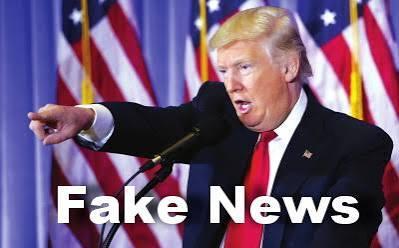
“Liberals emphasize that if public officials are allowed to punish or censor what they characterize as false, they might end up punishing or censoring truth. The reason is that their own judgments may not be reliable. They might be foolish or ignorant . . . Worst of all, their judgments are likely to be self-serving. If a president . . . tries to censor speech as ‘fake news,’ the real reason might not be that it is fake. The real reason might be that it casts them in a bad light.”
Gee, ya think?
Sunstein spends many pages disavowing something liberals don’t believe in: Laissez faire. Indeed, the idea that government should be “hands off” toward the free market is a straw-man used by anti-libertarians to discredit the philosophy. Businesses must be subject to laws regulating their conduct, to combat harms (pursuant to Mill’s harm principle) — just as we’re all subject to laws barring murder, robbery, fraud, and jaywalking. In fact it’s thanks to such laws that a free market can function at all.
But Sunstein misses a big point here. We do need government, yet must be mindful of the pitfalls. As with the paragraph quoted above, government doesn’t always act with Olympian virtue and wisdom. There are many pathologies endemic to government. You’d never guess that from reading this book. It’s why true liberals view government with a wary, gimlet eye.

All that said, Sunstein does wax lyrical in places. Writing much about FDR’s “Four Freedoms” speech, calling it our Second Bill of Rights; with security an indispensable foundation of freedom. A precursor here was the only book FDR wrote, in 1926, already laying out this theme. A really far-seeing, eloquent work. Roosevelt was not a perfect man; the Japanese internment reflected a callous prejudice. Yet to read his words here, so thoughtful and wise, with great generosity of spirit, struck me with the contrast against his current successor.
Discover more from The Rational Pessimist
Subscribe to get the latest posts sent to your email.
Type your email…