


The United Kingdom is a hiker’s paradise, adorned with vast landscapes of natural beauty. However, navigating the legal landscape of where you can and cannot hike requires an understanding of two crucial concepts: Open Access land and Public Rights of Way. This guide aims to demystify these terms, ensuring hikers can confidently explore the UK’s countryside.
Open Access Land
Open Access land refers to areas where you can walk freely without sticking to paths. This land, often marked in light brown/yellow wash on Ordnance Survey (OS) maps, includes mountains, moors, heaths, and downs that are mainly open and uncultivated. The Countryside and Rights of Way (CRoW) Act 2000 primarily governs access to these areas in England and Wales, granting the public the freedom to roam for recreation.
Signage: In reality, Open Access areas are usually marked with a symbol of an open walker. You may encounter signs at the start of these areas, indicating that you’re entering Open Access land, alongside any necessary restrictions (for example, during specific breeding seasons for ground-nesting birds).
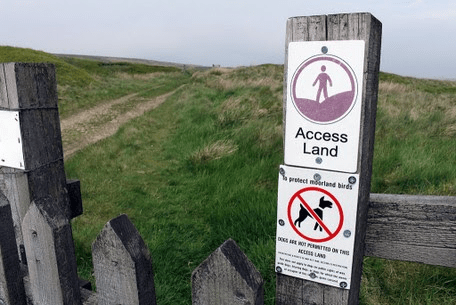 Open access land signpost
Public Rights of Way
Contrastingly, Public Rights of Way are specific paths where the public has a legally protected right to pass. These paths are categorized as:
- Footpaths: For walking, running, mobility scooters, or powered wheelchairs.
- Bridleways: Open to walkers, horse riders, and cyclists.
- Restricted Byways: Open to all traffic except motor vehicles.
- Byways Open to All Traffic (BOAT): Open to walkers, cyclists, horse riders, and vehicles, though primarily used for walking and riding.
Maps and Signage: On OS maps, Public Rights of Way are clearly marked with distinct symbols: dashed lines for footpaths and bridleways, and solid lines for restricted byways and BOATs. Real-life signage includes yellow arrows for footpaths, blue for bridleways, plum for restricted byways, and red for BOATs, often mounted on wooden or metal posts at path entrances.
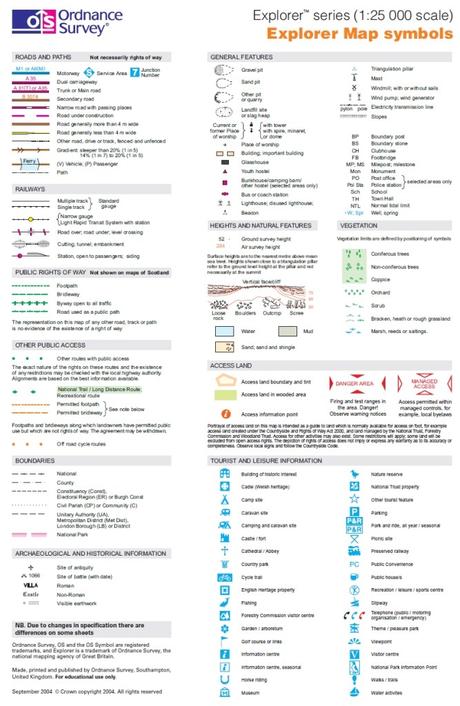 OS Map legend
Navigating with Respect
Understanding these rights is key to enjoying the UK’s natural landscapes responsibly. Both Open Access lands and Public Rights of Way allow us to explore nature, but they come with responsibilities. Hikers are encouraged to follow the Countryside Code or the Scottish Outdoor Access Code in Scotland, which includes guidelines for protecting the environment, respecting wildlife, and ensuring the countryside remains beautiful and accessible to everyone.
The “Leave No Trace” principles also play a crucial role in preserving these landscapes for future generations. Whether wandering through open moorland or following a historic footpath, these guidelines help ensure minimal impact on the natural world.
In summary, the UK’s system of Open Access land and Public Rights of Way offers hikers unparalleled freedom to explore some of the country’s most stunning landscapes. By understanding and respecting these access rights, hikers can ensure these areas remain open and enjoyable for all who wish to explore them.






