


Born in 1947, I finished law school in 1970, but was still an immature, clueless kid, a dud at job seeking. Finally I interviewed at the State Public Service Commission, not even knowing what the agency did. But a new chairman was reorganizing it, needing a bunch more lawyers. Breathing, I qualified. Moved to Albany from my family home in Queens.
The work initially seemed dull — serving as mouthpiece for staff accountants, engineers, and other experts, in hearings. They’d hand me cross-examination questions for utility company witnesses; then material to assemble into a final brief. This characterized my first big proceeding, a rate increase application by Consolidated Edison, New York City’s power company. Actually serious stuff, much in the public eye. (One of my legal motions actually prompted a full front-page Daily News headline!)
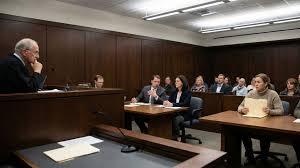
Con Ed’s chief lawyer was a legendary figure, Bernie Sanoff, a real bulldog. I began to learn by watching him, and to understand the complex issues. Gradually — little me! — gaining a rep as a tiger myself. When the next Con Ed case came, I was ready. Reshaping my role as no longer just a mouthpiece, but our team captain; now writing testimony for the staff people. And then, in our brief, forcefully marshaling our case.
I’ll never forget Sanoff’s terse phone call. “Did you write this brief yourself?” he asked. I answered yes. “Kid,” he said, “you’ve got a future.”
Soon I’d be up against an even bigger, tougher foe: the telephone company. Con Ed seemed warm and cuddly in comparison. (Finally in 1977 I ascended from the trenches to the Olympian heights as an administrative law judge.)

But those PSC cases were not my only battles. Back in Queens I’d been active politically, awakened by the 1964 Goldwater campaign. In Albany I renewed my involvement, the town ruled since 1921 by the almost mythically powerful O’Connell Democratic machine. Republicans were the good guys, reformers. A very different sort of politics for me, but an energizing cause. In 1972 I was elected ward leader.
Now no longer just playing at politics, I had to fight the machine at ground level. My ward’s eight polling places were run by Democratic operatives, often flouting the law, conflicts endemic. Lacking enough aggressive Republicans, I recruited some reformist Dems as election inspectors, and we actually wrested control of seven districts.
A big year was 1973 — a mayoral race we almost won. In ’75 I was on the ballot myself, for city court judge (a hopeless race), but focused on county legislator candidate Reszin Adams, a longtime neighborhood activist fixture. Tough getting her and her left-wing confreres to accept a Republican nomination — and selling this to Republican higher-ups. But in the end we lost that election too.
Also lost was the Albany GOP’s reformist zeal, evidenced by a new city chairman, a cynical opportunist whose election I opposed. Booed at the county meeting, I soon resigned (and he later went to prison).
Meantime too, in the early ’70s, I got involved with a new local “alternative” newspaper, the Washington Park Spirit. Mostly a bunch of hippie types — I was very square — but we got along, and I did many articles. One I assigned to myself profiled the political boss, Dan O’Connell. Researching in library files, I realized this could be a book. Surprisingly, no one had ever written it — but I could! Soon it was not just O’Connell’s story, but a dissection of the whole machine and its workings.
I interviewed longtime Mayor Erastus Corning and others, and even visited the ancient O’Connell himself, but should have reached out to more sources. Still, I felt I got the picture right. The book was published by the Spirit in September 1973, providing my Warholian “fifteen minutes of fame,” at least locally. It’s still remembered (recently called “seminal” in Albany’s newspaper), and will be the first line of my obituary. (The book was later republished by an academic press.)
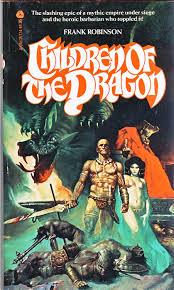
I was dabbling in other writing too, sci-fi/fantasy stories. Had one published in 1970, and used that to seek a literary agent. One I contacted was Virginia Kidd, only because she was the only non-male and non-New Yorker on the list. Turned out she was a big name in sci-fi and became something of a mentor. I abused her indulgence with much crap, but she finally did get my novel Children of the Dragon published by Avon. It sold 50,000 copies.
Also during this period I wound up president of a neighborhood association, and of the Albany Numismatic Society, continuing my lifelong devotion to coin collecting. Became the first local male member of the League of Women Voters and was instrumental in their producing a pamphlet on voters’ rights (that the machine hated). Oh, and was appointed to the 1972 U.S. Assay Commission, by President Nixon (true).

So these early 1970s were an intense time for me on multiple fronts. And there was yet another battleground: girl chasing. Here too I started out clueless, and found it very challenging, requiring great efforts. Eventually I figured things out (somewhat), and in 1975 did form a lasting relationship.
Whew! Looking back, this all seems amazing to me now. I’ve had a great life. And it feels like, after those feverish action-packed few years, the remaining half century has been just coasting.







