


Hello everyone, I hope all is well with you. I’m back today after a week of work and writing. My story is coming together. I’m in the editing process, and I’m happy with the progress I’m making.
But enough about that. Today, I watched the documentary on Netflix “American Murder: Gabby Petito.” It was the heartbreaking story of a young woman who was the victim of domestic violence at the hands of her fiancé Brian Laundrie.
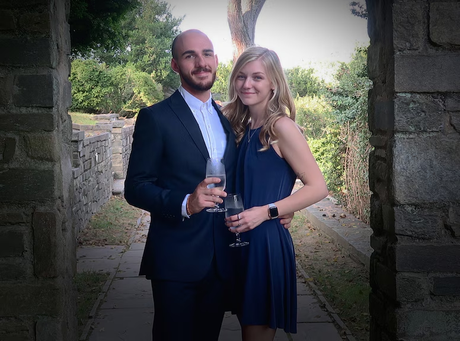
Domestic Violence is an insidious killer. Approximately four thousand women die of domestic abuse every year. One in three women will experience this kind of abuse in their lifetime. In fact, a woman is more likely to be killed by a partner or former partner than any other person. This is a scary fact.
We see posts on social media on how to protect yourself from an unknown assailant, but we never see posts on how to protect yourself from your partner. Domestic violence is so much more than just physical abuse. Below is a list of different types of abuse.
• Coercive control (a pattern of intimidation, degradation, isolation and control with the use or threat of physical or sexual violence)
• Psychological and/or emotional abuse.
• Physical or sexual abuse.
• Financial or economic abuse.
• Harassment and stalking.
• Online or digital abuse.
It’s hard to prove domestic abuse sometimes especially when it’s more Psychological or emotional abuse. This type of abuse doesn’t leave any physical marks. In most cases, the abuse starts as emotional then escalates to physical then to death.
Women need to learn to recognize the signs and get out of the situation before they end up dead. Below is a list of the signs of abuse.
• Calls you names, insults you or puts you down.
• Often acts jealous or possessive.
• Tries to control how you spend money or your access to money.
• Tracks where you go, what you do online or who you talk to on the phone.
• Prevents you from going to work or school.
• Stops you from seeing family members or friends
• Threatens to keep you from seeing your children.
• Gets angry or abusive when drinking alcohol or using drugs.
• Tries to control whether you can see a healthcare professional.
• Threatens you, your children or your pets with violence or a weapon.
• Hits, kicks, shoves, slaps, chokes or otherwise hurts you, your children or your pets.
• Forces you to have sex or engage in sexual acts against your will.
• Controls your birth control or demands that you get pregnant.
• Blames you for problems in the relationship or violent behavior, or tells you that you deserve it.
If you’re gay, bisexual, transgender or gender diverse, you also may be experiencing domestic violence if your partner:
• Threatens to tell friends, family, colleagues or community members about your sexual orientation or gender identity without your consent.
• Tells you that leaving the relationship means you’re admitting that gay, bisexual or transgender relationships are wrong.
• Justifies abuse by telling you that your gender identity or sexual orientation isn’t “real.”
• Tells you that law enforcement won’t help a gay, bisexual, transgender or gender-diverse person.
Click this link to read the full article: https://www.mayoclinic.org/healthy-lifestyle/adult-health/in-depth/domestic-violence/art-20048397
If anyone is a victim of these behaviors please reach out to a friend or call the domestic abuse hotline. 1-800-799-7233.

Domestic abuse is the building block for mass shootings and generational abuse. It is learned. Kids learn it from their parents and other family members. It breaks my heart that this happened to Gabby.
There were some heartwarming moments though. The way the community rallied behind her was amazing. Social media also played an important role in helping build the timeline of her demise.
It did upset me when I learned the part his parents played in protecting their son. I wonder if they made him face the consequences of his actions, would he be alive today? I believe he would be. How about you? Do you have any ideas on how to prevent domestic abuse? Leave a comment! I’d love to hear from you!







