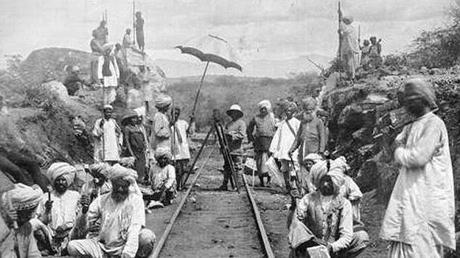
 Construction of the
original line began in Mombasa 1895 and the railway reached Nairobi in 1899. By
December 1901, it had reached the shore of Lake Victoria; building the line proved no easy task for the
British. The aim then was to create a route linking Mombasa to Uganda, the
source of the Nile and to open up Africa's 'interior'. But huge costs - both financial and in human
life - drew strong opposition and the project soon became known as the 'Lunatic
Line'.
Now
comes the news that it is to be built
all over again — this time by China.
A new standard gauge track will be constructed from Kenya’s coast on the Indian
Ocean to its western border with Uganda. President Uhuru Kenyatta has struck a
£3.2 billion deal with Xi Jinping, his
Chinese counterpart. The Chinese funding
includes an array of projects, including new hydro-electric dams and the
expansion of Kenya’s ports, but the railway is expected to swallow most of the
money. Its British-built predecessor was rendered almost derelict by decades of
state-sponsored looting of Kenya Railways, forcing almost all freight on to
clogged and potholed roads. Of the 1,700
miles of track that were operational under British rule in the Fifties, no more
than 700 are used today. Trains rarely go faster than 20mph even on the best
maintained sections.
Construction of the
original line began in Mombasa 1895 and the railway reached Nairobi in 1899. By
December 1901, it had reached the shore of Lake Victoria; building the line proved no easy task for the
British. The aim then was to create a route linking Mombasa to Uganda, the
source of the Nile and to open up Africa's 'interior'. But huge costs - both financial and in human
life - drew strong opposition and the project soon became known as the 'Lunatic
Line'.
Now
comes the news that it is to be built
all over again — this time by China.
A new standard gauge track will be constructed from Kenya’s coast on the Indian
Ocean to its western border with Uganda. President Uhuru Kenyatta has struck a
£3.2 billion deal with Xi Jinping, his
Chinese counterpart. The Chinese funding
includes an array of projects, including new hydro-electric dams and the
expansion of Kenya’s ports, but the railway is expected to swallow most of the
money. Its British-built predecessor was rendered almost derelict by decades of
state-sponsored looting of Kenya Railways, forcing almost all freight on to
clogged and potholed roads. Of the 1,700
miles of track that were operational under British rule in the Fifties, no more
than 700 are used today. Trains rarely go faster than 20mph even on the best
maintained sections.
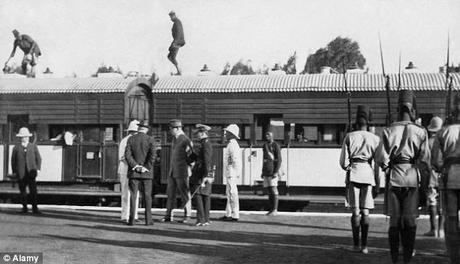 China’s
new engagement with Africa was “very similar to the British engagement in the
past: railways, roads, bridges, major infrastructure”,
said Aly-Khan Satchu, a Kenyan economist. Today, big construction projects have
fallen out of favour with Western donors. Meanwhile, Mr Kenyatta is due to
stand trial before the International Criminal Court in November for alleged
crimes against humanity. All this has strained Kenya’s relations with
traditional allies – Britain has nothing but “essential” contact with Mr
Kenyatta – and China has quickly stepped into the breach. Chinese car
manufacturers and television stations all operate in Kenya. An English edition
of China Daily is printed in the capital, Nairobi.
Few doubt that new
railways would help Kenya to sustain its economic growth, already running at a
healthy annual rate of 5 per cent. A new rail link could knock 79 per cent off
the cost of shifting freight across East Africa, according to the government. But critics point out that trade between China and
Kenya is almost entirely one-way. Kenya’s exports to China totalled only £32 million last year,
compared with imports of £1.2 billion. Some worry that Mr Kenyatta’s tilt away from the West
could alienate traditional allies and place all of Kenya’s eggs in the Chinese
basket.
The lunatic line, branded
by Winston Churchill as 'one of the finest expositions of the British art of
muddling through’ is all set to chugh again, this time funded by China. The £3.8billion project will run from Nairobi
to Mombasa and eventually link to Uganda, Rwanda, Burundi and South Sudan. Under
the agreement, China will finance 90 per
cent of the railway while the Kenyan government will foot the rest. Construction work on the standard gauge line
is expected to start in October this year, and the 610 km (380-mile) stretch
from the coast to Nairobi is due to be finished in early 2018.
The deal was signed
at State House in Nairobi and witnessed by presidents Uhuru Kenyatta of Kenya,
Yoweri Museveni of Uganda, Paul Kagame of Rwanda and Salva Kiir of South Sudan
as well as Chinese Prime Minister Li Keqiang.
Any
reference to the railway would be incomplete without reference to ‘Tsavo
Man-Eaters, the most notorious lions in
history who terrorised the British-led team of railway-bridge builders at
Kenya's Tsavo river in 1898. Over a
nine-month reign of terror, the two maneless male lions would sneak into the
labourers' camp in the dead of night and snatch men from their tents, devouring
them on site. A separate post follows on that ………….
With regards – S.
Sampathkumar
China’s
new engagement with Africa was “very similar to the British engagement in the
past: railways, roads, bridges, major infrastructure”,
said Aly-Khan Satchu, a Kenyan economist. Today, big construction projects have
fallen out of favour with Western donors. Meanwhile, Mr Kenyatta is due to
stand trial before the International Criminal Court in November for alleged
crimes against humanity. All this has strained Kenya’s relations with
traditional allies – Britain has nothing but “essential” contact with Mr
Kenyatta – and China has quickly stepped into the breach. Chinese car
manufacturers and television stations all operate in Kenya. An English edition
of China Daily is printed in the capital, Nairobi.
Few doubt that new
railways would help Kenya to sustain its economic growth, already running at a
healthy annual rate of 5 per cent. A new rail link could knock 79 per cent off
the cost of shifting freight across East Africa, according to the government. But critics point out that trade between China and
Kenya is almost entirely one-way. Kenya’s exports to China totalled only £32 million last year,
compared with imports of £1.2 billion. Some worry that Mr Kenyatta’s tilt away from the West
could alienate traditional allies and place all of Kenya’s eggs in the Chinese
basket.
The lunatic line, branded
by Winston Churchill as 'one of the finest expositions of the British art of
muddling through’ is all set to chugh again, this time funded by China. The £3.8billion project will run from Nairobi
to Mombasa and eventually link to Uganda, Rwanda, Burundi and South Sudan. Under
the agreement, China will finance 90 per
cent of the railway while the Kenyan government will foot the rest. Construction work on the standard gauge line
is expected to start in October this year, and the 610 km (380-mile) stretch
from the coast to Nairobi is due to be finished in early 2018.
The deal was signed
at State House in Nairobi and witnessed by presidents Uhuru Kenyatta of Kenya,
Yoweri Museveni of Uganda, Paul Kagame of Rwanda and Salva Kiir of South Sudan
as well as Chinese Prime Minister Li Keqiang.
Any
reference to the railway would be incomplete without reference to ‘Tsavo
Man-Eaters, the most notorious lions in
history who terrorised the British-led team of railway-bridge builders at
Kenya's Tsavo river in 1898. Over a
nine-month reign of terror, the two maneless male lions would sneak into the
labourers' camp in the dead of night and snatch men from their tents, devouring
them on site. A separate post follows on that ………….
With regards – S.
Sampathkumar
16th Apr 2015. photos and news source : www.dailymail.co.uk