Hiking is an activity that often crosses borders, both literally and figuratively. One such border is the measurement system used to indicate distances and elevations. Most of the world uses the metric system (kilometers, meters), but there are a few countries, most notably the United States, that still predominantly use the imperial system (miles, feet). This can be confusing for hikers who are accustomed to one system and suddenly find themselves having to make conversions.
Quick Conversions
Being able to quickly convert between miles and kilometers (and vice versa) is a useful skill for any hiker. Here are some tips for doing mental conversions:
- Miles to Kilometers: To convert miles to kilometers, you can use the fact that one mile is approximately 1.6 kilometers. So, to convert miles to kilometers, you can multiply the number of miles by 1.6. For example, 5 miles x 1.6 = 8 kilometers.
- Kilometers to Miles: To convert kilometers to miles, you can use the reverse of the above conversion, which is one kilometer is approximately 0.62 miles. So, to convert kilometers to miles, you can multiply the number of kilometers by 0.62. For example, 10 kilometers x 0.62 = 6.2 miles.
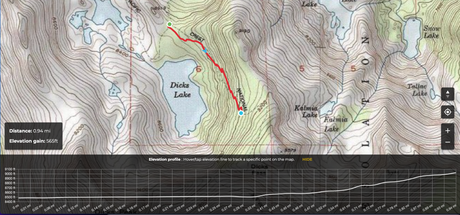
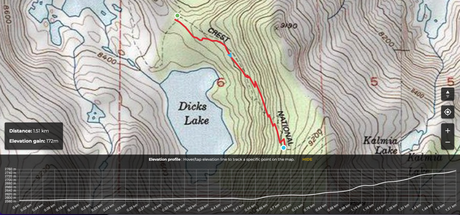
Topographic Maps
Topographic maps are essential tools for hikers, showing the contours of the land, trails, and important landmarks. These maps can be found in both imperial and metric measurements.
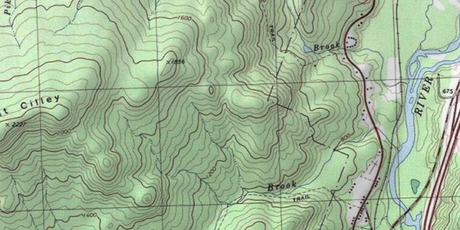
- Contour Lines: Contour lines on a topographic map represent lines of equal elevation above sea level. The distance between these lines, known as the contour interval, can be represented in either feet or meters. It is important to check the map legend to understand the measurement being used.
- Scale: The scale of the map indicates the ratio between a distance on the map and the actual distance on the ground. For example, a scale of 1:50,000 means that 1 cm on the map represents 50,000 cm (or 500 meters) on the ground. Scales can be represented in both imperial and metric units.
Understanding the measurement system used on a trail and being able to convert between the two is crucial for navigation and safety. By remembering the quick conversion tips and understanding how to read the measurements on a topographic map, you can ensure a successful and enjoyable hiking experience.
With HiiKER, you can customise your measurements throughout the app, so even if you are well-used to hiking with miles and feet, you may need to correlate with signage in a foreign country that uses the metric system. You can even measure your trails in Lightyears! But this is definitely not an ideal way to measure things on earth as every trail will be 0ly (we can’t fit that many decimal points).
Do you have any interesting or clever ways to convert measurements? Or do you like to combine a variety of systems for different situations?