Lucet tips: how to make a loop - from #LRCrafts - DIY Passion: if you can think it, you can make it by Rici86.
The lucet is an easy tool to use for making cords and braids, even if you are not a skilled crafter. I think it’s the main reason why it’s popular in Medieval reenactments, to show off a historically plausible craft.
You can use a lucet to make several projects, both historical and modern.
I found it quick to make, for example, a strap to carry a blanket or yoga mat. I got the idea from Pinterest, from a pin showing how to make one with the macramé technique. So I said to me: why not trying with my lucet?
While making my own strap, I developed a technique to make a loop at the end and the beginning of my cord.
This way I could make my strap without the need for a needle.
Just a way to speed the process and use just one tool for the job: a needle is another faithful companion for most of my projects.
If you are not comfortable with sewing, though, maybe you’ll find this tip useful.
How to lucet a loop at the beginning of the cord
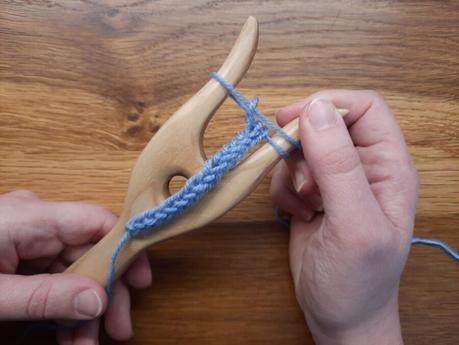
Step 1. start your lucet cord
The first step is just beginning a cord. Use your favorite technique (and if you need a quick beginner tutorial, we got you covered) and make it as long as the circumference of your desired loop.
When I make the loop, from time to time I check the lenght of my future loop by simply bringing the start of my cord to the latest worked stitch.
As you reach the desired lenght, be sure you have closed the latest stitch: have the working thread ready on the right prong and the stitch on the left prong closed.
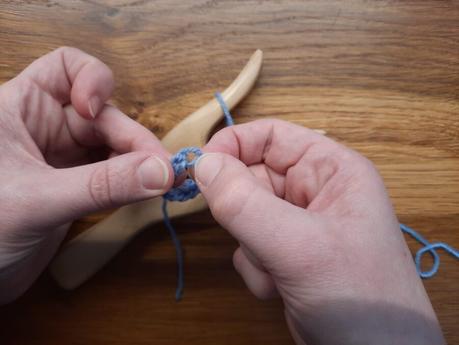
Step 2. open up one of the first stitches
When you are ready to make the loop with your lucetted cord, take up the beginning of your cord: here you have to open one of the first stitches.
Gently pull the thread so you can make a small loop at the beginning of your cord.
Be careful your thread doesn’t slip out of the prongs, while doing this! Leave your lucet on the table and be sure not to move it too much.
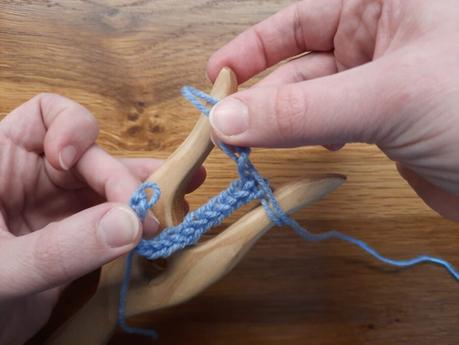
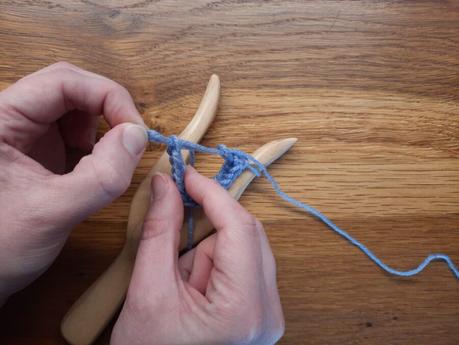
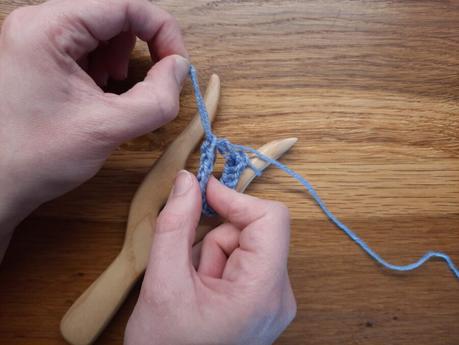
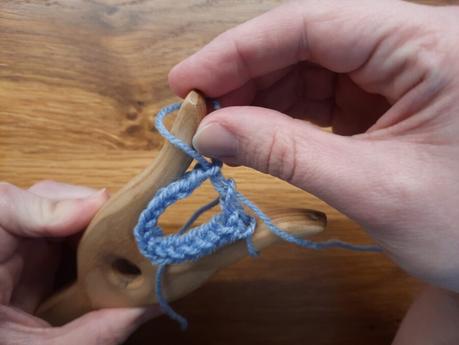
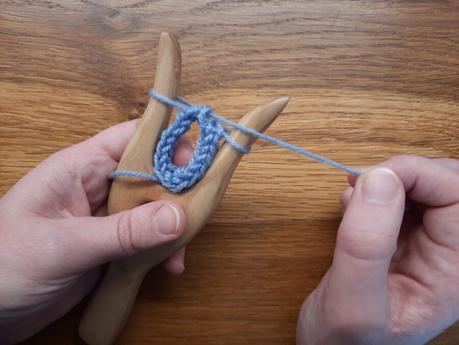
Step 3. get the thread on your left prong inside the small loop
Now pay attention your working thread doesn’t come loose.
Take the thread out of the left prong, then use a crochet hook or tambour needle or a comparable tool to help you pass the thread inside the loop you made.
When done, put the thread back on the left prong.
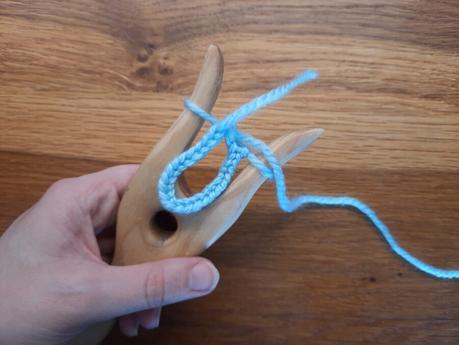
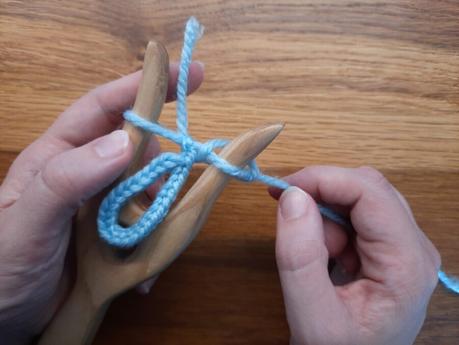
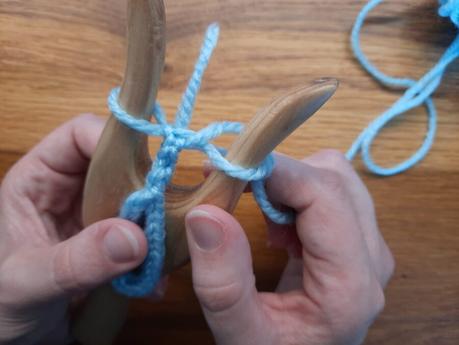
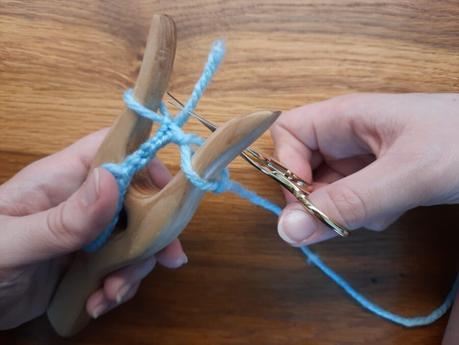
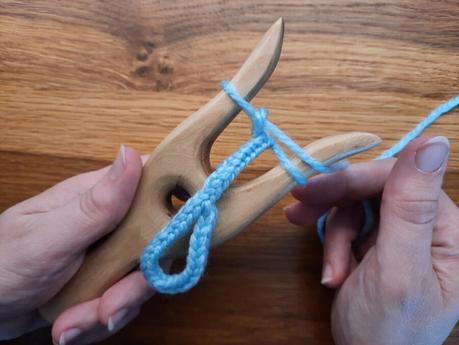
Step 4. go on making your braid
You can then go on braiding. Lucet as usual, using your favorite technique.
You just have to hide the tail inside the new stitches. Always keep the tail in between your prongs.
After making one stitch or even two, just to adjust the tension, pull the tail inside the working loop before making another stitch. Then repeat: pull the tail in the middle of the working thread, then make a stitch.
Go on as long as you wish, but 5-6 stitches should be enough to secure the tail. If it’s long and there’s more thread coming out of your braid, simply cut it off.
Now, with a few simple moves, you have a lucetted braid beginning with a loop.
I used this technique to make, among the other things, a doorstop to keep my windows open during windy days. As always, no limit to creativity!
The lucet may appear to be too simple to be useful, but it’s not true. If you, like me, do not feel comfortable enough with crochet or knitting, you might find the lucet to be a valid alternative.
’’’’What if I don’t have a lucet?
A lucet is maybe the easiest tool to make, if you don’t own one. We make ours out of scrap wood, but if you don’t have the right tools, materials or skills, don’t worry. You can find lucet-like tools in everyday items! You could use a fork with just two prongs, a camping fork, even a Swiffer duster. The only limit: your imagination.
How we made our first lucet