


Grace Thoughts
Living Christian In ‘This Present World’ (Part 14)
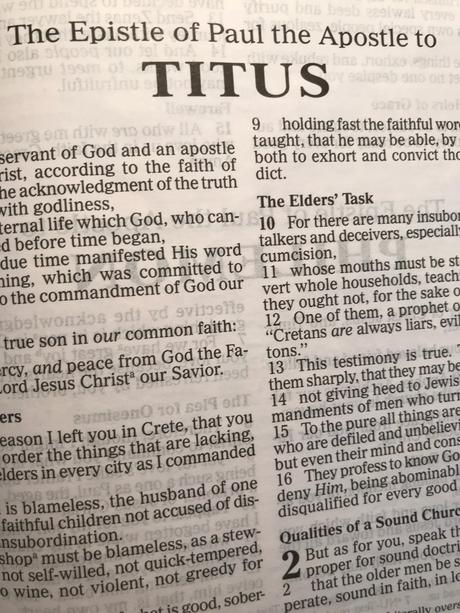
Copyright © 1982 by Thomas Nelson. Used by permission. All rights reserved.
" data-orig-size="3024,4032" sizes="(max-width: 816px) 100vw, 816px" data-image-title="Titus Page" class="attachment-rowling-post-image size-rowling-post-image wp-post-image" data-orig-file="https://gracelifethoughts.com/wp-content/uploads/2020/12/titus-page.jpeg" data-image-description="Copyright © 1982 by Thomas Nelson. Used by permission. All rights reserved.
" height="1088" width="816" data-medium-file="https://gracelifethoughts.com/wp-content/uploads/2020/12/titus-page.jpeg?w=225" data-permalink="https://gracelifethoughts.com/titus-page/" alt="" decoding="async" srcset="https://gracelifethoughts.com/wp-content/uploads/2020/12/titus-page.jpeg?w=816 816w, https://gracelifethoughts.com/wp-content/uploads/2020/12/titus-page.jpeg?w=1632 1632w, https://gracelifethoughts.com/wp-content/uploads/2020/12/titus-page.jpeg?w=113 113w, https://gracelifethoughts.com/wp-content/uploads/2020/12/titus-page.jpeg?w=225 225w, https://gracelifethoughts.com/wp-content/uploads/2020/12/titus-page.jpeg?w=768 768w, https://gracelifethoughts.com/wp-content/uploads/2020/12/titus-page.jpeg?w=1440 1440w" data-image-meta="{"aperture":"1.8","credit":"","camera":"iPhone 7","caption":"","created_timestamp":"1609338905","copyright":"","focal_length":"3.99","iso":"25","shutter_speed":"0.025","title":"","orientation":"1"}" data-large-file="https://gracelifethoughts.com/wp-content/uploads/2020/12/titus-page.jpeg?w=616" />Copyright © 1982 by Thomas Nelson. Used by permission. All rights reserved.
The apostles of Christ lived two-thousand years ago. Yet, their writings continue to guide God’s people to this day. Why is that? Jesus Christ explained it to them in this way –
Our Guide
I still have many things to say to you, but you cannot bear them now. However, when He, the Spirit of truth, has come, He will guide you into all truth; for He will not speak on His own authority, but whatever He hears He will speak; and He will tell you things to come. He will glorify Me, for He will take of what is Mine and declare it to you. John 16:12-14
The apostles, guided into “all truth” by the Holy Spirit, explained it this way –
For we did not follow cunningly devised fables when we made known to you the power and coming of our Lord Jesus Christ, but were eyewitnesses of His majesty. For He received from God the Father honor and glory when such a voice came to Him from the Excellent Glory: ‘This is My beloved Son, in whom I am well pleased.’ And we heard this voice which came from heaven when we were with Him on the holy mountain. And so we have the prophetic word confirmed, which you do well to heed as a light that shines in a dark place, until the day dawns and the morning star rises in your hearts; knowing this first, that no prophecy of Scripture is of any private interpretation, for prophecy never came by the will of man, but holy men of God spoke as they were moved by the Holy Spirit. 2 Peter 1:16-21
All Scripture is given by inspiration of God, and is profitable for doctrine, for reproof, for correction, for instruction in righteousness, that the man of God may be complete, thoroughly equipped for every good work. 2 Timothy 3:16-17
Paul the Apostle, inspired by the Holy Spirit to write to Titus in Crete in the early part of the 7th decade of the 1st century AD, shared what was and still is necessary to live Christian in the present age. ‘Living Christian’ didn’t change because of the passage of time. It’s still true today and absolutely foundational to Christianity.
For the grace of God that brings salvation has appeared to all men, teaching us that, denying ungodliness and worldly lusts, we should live soberly, righteously, and godly in the present age, looking for the blessed hope and glorious appearing of our great God and Savior Jesus Christ, who gave Himself for us, that He might redeem us from every lawless deed and purify for Himself His own special people, zealous for good works. Speak these things, exhort, and rebuke with all authority. Let no one despise you. Titus 2:11-15
Notice the ‘spiritual keys’ Paul passed along to Titus, that he would then pass along to the elders in each of the churches on Crete –
- the grace of God that brings salvation has appeared to all men
- teaching us that, denying ungodliness and worldly lusts, we should live “soberly”
- teaching us that, denying ungodliness and worldly lusts, we should live “righteously”
- teaching us that, denying ungodliness and worldly lusts, we should live “godly”
- teaching us that, denying ungodliness and worldly lusts, we should live soberly, righteously, and godly in this present age
- looking for the blessed hope and glorious appear of our great God Savior Jesus Christ
- who gave Himself for us
- who gave Himself for us that He might redeem us
- who gave Himself for us that He might redeem us from every lawless deed
- who gave Himself for us that He might redeem us from every lawless deed and purify for Himself His own special people
- who gave Himself for us that He might redeem us from every lawless deed and purify for Himself His own special people zealous of good works
Look very carefully at these ‘spiritual keys’ that the Holy Spirit gave to Paul to give to Titus to give the church elders to give to the people of God.
Our Helper
If I may be so bold, I’d like to say that God is not playing games with us. God is not offering His people choices in how to live Christian in this present age. God is not offering a ‘cafeteria’ system of faith and practice. God is serious and gave us His Spirit to help us live the life He wants us to live.
Paul told Titus to “Speak these things, exhort, and rebuke with all authority. Let no one despise you.” Prior to ascending back to Heaven after His resurrection, Jesus said that He had all authority “in heaven and on earth” (Matthew 28:18). Based on that authority, Jesus told His disciples to “make disciples of all the nations.” Based on that authority, Jesus told His disciples to teach every disciple they made to “observe” (obey) all of the things He had commanded them to believe and do. Even though Jesus was ascending back to Heaven, He told His disciples that He would be with them “always, even to the end of the age.” How could Jesus do that? Through the Holy Spirit –
“Nevertheless I tell you the truth. It is to your advantage that I go away; for if I do not go away, the Helper will not come to you; but if I depart, I will send Him to you. And when He has come, He will convict the world of sin, and of righteousness, and of judgment: of sin, because they do not believe in Me; of righteousness, because I go to My Father and you see Me no more; of judgment, because the ruler of this world is judged. John 16:7-11
Jesus ascended to Heaven to rule and reign, even as He sent “the Helper.” The Holy Spirit, Eternal God who is Co-Equal with God the Father and God the Son, would come and “convict the world of sin, and of righteousness, and of judgment.”
- Convict the world of sin
- Convict the world of righteousness
- Convict the world of judgement
Why?
of sin, because they do not believe in Me; of righteousness, because I go to My Father and you see Me no more; of judgment, because the ruler of this world is judged.
- of sin, because they do not believe in Me
- of righteousness, because I go to My Father and you see Me no more
- of judgment, because the ruler of this world is judged
God is not playing. He’s serious – deadly serious. God is Almighty. He is All-Knowing. He is All-Seeing. He is Everywhere Present at the same time. He is Unchanging. He is Eternal. He is the Creator. He is the Sustainer of all things. God is the great “I AM.”
There really is no “secret” to living Christian in this present age. It once was a secret (e.g. Ephesians 3), but God revealed many secrets (mysteries) to Paul that the apostle then revealed to Christians. Once a secret is revealed it is no longer a secret. If Christians read Paul’s letter to Titus (along with Paul’s other letters), they’ll know how to live for God in difficult circumstances. Only one thing to fear – God. Fear God. That fear is the beginning of wisdom, knowledge , and true understanding.
Learning from Paul
We have learned a great deal from the Apostle Paul’s letter to Titus already, but there is more to come. I hope you will read previous parts of this study (Parts 1-13) to help you better understand this next part.
But avoid foolish disputes, genealogies, contentions, and strivings about the law; for they are unprofitable and useless. Reject a divisive man after the first and second admonition, knowing that such a person is warped and sinning, being self-condemned. Titus 3:9-11
Paul is writing to Titus, a colleague of the apostle, who is setting in order “the things that are lacking,” and appointing “elders in every city” on the island of Crete (Titus 1:5). The context of Titus chapter 3 is for Titus to remind the Christians in churches across Crete “to be subject to rulers and authorities, to obey, to be ready for every good work, to speak evil of no one, to be peaceable, gentle, showing all humility to all men.” The verse that leads into verses 9-11 is – “This is a faithful saying, and these things I want you to affirm constantly, that those who have believed in God should be careful to maintain good works. These things are good and profitable to men.”
So, we now have the context. Without context, we will never correctly interpret the Bible. We will never experience the Word of God “rightly divided” (2 Timothy 2:15). Without experiencing the Word of God rightly divided, we will never be “approved to God, a worker who does not need to be ashamed.” The unfortunate fact that many pastors and Bible teachers in our country (and across the world) do not preach or teach the Bible in context demonstrates that God does not approve of their work. They need to get to work and do a much better job preparing God’s people “for the equipping of the saints for the work of ministry, for the edifying of the body of Christ” (Ephesians 4:12). Otherwise, they should be ashamed.
I know that sounds harsh, but would you prefer I skip over Scripture that causes some people who attend church to feel “uncomfortable?” I hope you don’t want me to do that. Don’t ask me to do that. I won’t do that. Why? Because God is God, and He has spoken. God’s Word is unchanging. It cannot be interpreted on the whims of just anyone who wants to call themselves a pastor, or preacher, or Bible teacher. If someone who claims to preach or teach God’s Word but won’t take the time to “rightly divide” God’s Word, they should be ashamed, counseled, and possibly removed from any position of leadership in a church, denomination, or school until they grow in their understanding of what it means to “rightly divide” God’s Word.
One of the first things I would recommend for a group of church elders to do is determine if the offending pastor, teacher, or preacher is saved. If they are saved, the elders should work to restore the offender. If they are unsaved, the elders should determine if the person is misled or a misleader. If they are misled, the elders should work with the unbelieving offender to determine how they could become a preacher or teacher without first being a believer, then preach the Gospel to the the unbeliever. If the unbeliever confesses with their mouth that Jesus is Lord and believes in their heart that God raised Him from the dead, the elders should treat the former preacher/teacher as a new believer and begin a process of teaching them. If the unbeliever will not confess or believe, yet desires to continue to preach or teach, the elders should remove the offender from the church and not allow them to influence church members any further.
Is that any easy process? Absolutely not. Is it what God demands church leaders do? Absolutely.
Being a church leader is not easy for many reasons. Some of them are spelled out in Titus. You’ll find others in Paul’s letters to Timothy, as well as his other letters, and what he did and said as recorded in the Book of Acts. You’ll find more reasons in letters written by Peter, James, Jude, and John, and especially in what Jesus said to the pastors of the seven churches in the Book of Revelation.
Avoid
Much of what God teaches us in His Word concerns things we should “avoid.” God created us. He knows how the “fall” into sin affected us. He knows what things and activities we should “avoid.”
Paul used the Greek word περιΐστημι (periistémi). It means “block out, to stand around, to avoid, shun.” It’s a strong word that Paul also used in his second letter to Timothy – “But shun profane and idle babblings, for they will increase to more ungodliness.” (2 Timothy 2:16) The word comes from ἵστημι (histémi) which means “to make to stand, to stand.” Paul wanted Titus and Timothy to make a stand against certain teachings and practices in the churches. In his letter to Titus, Paul wrote him to “avoid” –
- foolish disputes
- genealogies
- contentions
- strivings about the law
Let’s look at each one from both the text (original language) and context (how people would have understood Paul’s words in the 1st century).
Foolish disputes – the word “foolish” comes from the Greek word μωρός (móros). It means “stupid, slow, dull, foolish, silly.” It is the the root word for the English words, “moron, moronic.” The people of Crete would know that Paul was describing something that made no sense (nonsense). The word móros is an adjective that described “disputes.” That is a translation of the word ζήτησις (zétésis) which means “debate, controversy, meaningless question.” Paul wanted the Christians in Crete to “avoid” stupid controversies that so often come from meaningless questions. Unfortunately, we see a lot of that in a lot of today’s churches. Foolish disputes waste valuable time and distract Christians from their primary calling to preach the Gospel, make disciples, and equip each other for ministry. It’s definitely one of Satan’s favorite tricks in his continual attack on churches and denominations.
Next, we see Paul addressing the issue of avoiding “genealogies.” γενεαλογία (genealogia) concerns a person’s “pedigree.” Paul also issued a similar warning in his first letter to Timothy –
As I urged you when I went into Macedonia—remain in Ephesus that you may charge some that they teach no other doctrine, nor give heed to fables and endless genealogies, which cause disputes rather than godly edification which is in faith. 1 Timothy 1:3-4
The Bible is full of genealogies. They were important to God and His people for many reasons, the most important being those that pointed to the Messiah. Here are some examples –
This is the book of the genealogy of Adam. In the day that God created man, He made him in the likeness of God. Genesis 5:1
This is the genealogy of Noah. Noah was a just man, perfect in his generations. Noah walked with God. Genesis 6:9
Now this is the genealogy of the sons of Noah: Shem, Ham, and Japheth. And sons were born to them after the flood. Genesis 10:1
This is the genealogy of Isaac, Abraham’s son. Abraham begot Isaac. Genesis 25:19
Now this is the genealogy of Perez: Perez begot Hezron; Hezron begot Ram, and Ram begot Amminadab; Amminadab begot Nahshon, and Nahshon begot Salmon; Salmon begot Boaz, and Boaz begot Obed; Obed begot Jesse, and Jesse begot David. Ruth 4:18-22
The book of the genealogy of Jesus Christ, the Son of David, the Son of Abraham: Matthew 1:1
This is not the “genealogies” Paul was referring to in Titus 3 or 1 Timothy 1. It was something much different and divisive. Our “share” in the genealogy of Christ “by grace through faith” brings people together. It unifies; it does not divide.
In Paul’s letter to Timothy, he combined “fables and endless genealogies.” In Titus, Paul connected the words “foolish disputes, genealogies, contentions, and strivings about the law.” Might that be a clue for us to understand? Timothy was in Ephesus and Titus was in Crete (hundreds of miles from each other), but the people in both places spoke Greek and were part of the Roman Empire. They would have understood the word γενεαλογία in a similar fashion. Remember the definition of the word – “pedigree.” The idea contains a sense of self-importance and superiority. In Christ, we are all the same and receive our position by grace through faith in Him.
Paul addressed something similar in his letter to the churches in Galatia –
For you are all sons of God through faith in Christ Jesus. For as many of you as were baptized into Christ have put on Christ. There is neither Jew nor Greek, there is neither slave nor free, there is neither male nor female; for you are all one in Christ Jesus. And if you are Christ’s, then you are Abraham’s seed, and heirs according to the promise. Galatians 3:26-29
There is no place for arguing one’s importance or ‘pedigree’ in a church setting. It’s a waste of time, as well as being divisive. I don’t think the arguments concerned the geneaology of Jesus Christ because that would have been important. Whether the churches of the 1st century were arguing because of the gnostics’ or Judaizers’ emphasis on “geneaologies,” Paul wrote that the arguments were “unprofitable and useless.” The apostle’s concerns were about unity of purpose in the service of God. These arguments had the potential of dividing church members by “geneaology” – Jew or Gentile. As we saw in Galatians 3, and also read in Ephesians 2, Christ died to make one new man out of the two old men (Jew and Gentile).
For He Himself is our peace, who has made both one, and has broken down the middle wall of separation, having abolished in His flesh the enmity, that is, the law of commandments contained in ordinances, so as to create in Himself one new man from the two, thus making peace, and that He might reconcile them both to God in one body through the cross, thereby putting to death the enmity. And He came and preached peace to you who were afar off and to those who were near. For through Him we both have access by one Spirit to the Father. Ephesians 2:14-18
Titus and the church elders knew what Paul meant and that they needed to address the problem right away.
Here’s a bit more insight from Ellicott’s Commentary for English Readers (1 Timothy) –
Endless genealogies.—Genealogies in their proper sense, as found in the Book of the Pentateuch, and to which wild allegorical interpretations had been assigned. Such purely fanciful meanings had been already developed by Philo, whose religious writings were becoming at this time known and popular in many of the Jewish schools. Such teaching, if allowed in the Christian churches, St. Paul saw would effectually put a stop to the growth of Gentile Christendom. It would inculcate an undue and exaggerated, and, for the ordinary Gentile convert, an impossible reverence for Jewish forms and ceremonies; it would separate the Jewish and Gentile converts into two classes—placing the favoured Jew in an altogether different position from the outcast Gentile.
In the Gentile churches founded by the Apostles, for some years a life and death struggle went on between the pupils of St. Paul and his fellow Apostles and the disciples of the Rabbinical schools. In these earnest warnings of his Pastoral Epistles the great Apostle of Gentile Christianity shows us, how clearly he foresaw that if these Jewish fables and the comments of the older Jewish teachers were allowed to enter into the training of the new-formed congregations, the Church of Christ would shrink, in no long space of time, into the narrow and exclusive limits of a Jewish sect. “Judaism,” writes the anonymous author of Paul of Tarsus, “was the cradle of Christianity, and Judaism very nearly became its grave.”
Paul addressed this further in his next words in Titus 3:9 – “contentions, and strivings about the law.” The word “contentions” comes from the Greek ἔρις (eris), which means “strife, wrangling, contention.” The word “striving” comes from the Greek μάχη (maché), which means “battle, fight, conflict.” It comes from the word μάχομαι which means “to engage in a battle, fight.” The idea is that people are “contending” about something. That something, Paul wrote, was about the “law” (νομικό, nomikos). The people were fighting about legal views they considered important important enough to divide them from one another. What did Paul write? “they are unprofitable and useless.”
The word “unprofitable” comes from the Greek word ἀνωφελής (nóphelés). It means “of no advantage, useless.” The word “useless” comes from the Greek μάταιος (mataios). It means “vain, useless, without purpose, ineffectual, unproductive.” That’s what Paul thought of some of the conversations being introduced into the churches of Crete. That’s why Paul wrote these words next:
Reject a divisive man after the first and second admonition, knowing that such a person is warped and sinning, being self-condemned. Titus 3:10-11
Paul gave Titus and the church elders a direct order – “Reject a divisive man after the first and second admonition.” The word “reject” is the Greek word παραιτέομαι (paraiteomai) and means “shun, avoid, refuse, decline, reject.” The word “divisive” is the Greek word αἱρετικός (hairetikos) and means “factious, heretical, sectarian, disposed to form sects, causing division.” It is used only once in the New Testament – here in Titus 3:10.
Notice that Paul told Titus that a person who caused divisions in the church should be rejected (shunned, avoided, refused) after the first and second “admonition.” Paul believed in giving people a chance to repent, which is good for us to remember. However, we also need to remember that allowing someone to cause divisions in a church without any call to repentance is also good to remember. Paul, as did Jesus in Matthew 18, wanted unity in the church and allowed only a small number of chances for repentance –
Moreover if your brother sins against you, go and tell him his fault between you and him alone. If he hears you, you have gained your brother. But if he will not hear, take with you one or two more, that ‘by the mouth of two or three witnesses every word may be established.’ And if he refuses to hear them, tell it to the church. But if he refuses even to hear the church, let him be to you like a heathen and a tax collector. Matthew 18:15-17
The word “admonition” comes from the Greek word νουθεσία (nouthesia) and means “warning, counsel, admonition.” Paul directed Titus and the elders of the churches in Crete to reject a divisive person after “first and second admonition.” Two chances to heed the warnings of church elders. That’s the apostolic rule.
But doesn’t that seem a bit harsh? Can you imagine the problems following such a rule would cause in today’s ‘modern’ church where everyone has their own idea of truth (subjective)? Yes, I understand what would happen. The ‘modern’ church would finally start acting like the ‘church’ Jesus wants.
God knows the danger of hairetikos people not being challenged by church leaders. They are – “warped and sinning, being self-condemned.” The word “warped” comes from the Greek word ἐκστρέφω (ekstrephó) and means “corrupt, turned inside out, perverted, completely out of place, warped.” The word “sinning” is ἁμαρτάνω (hamartanó) and means “miss the mark, do wrong, sin.” The word “self-condemned” comes from the Greek word αὐτοκατάκριτος (autokatakritos) and means “self-judged, self-condemned.” The idea is that the person is worthy of punishment (κατακρίνω). It’s used only once in the New Testament – here in Titus 3:11.
An Important Warning for Today
Paul is coming near the end of his letter to Titus. He began by writing, “For this reason I left you in Crete, that you should set in order the things that are lacking.” Paul ends with one of the most important aspects of setting in order “things that are lacking” in the church –
- But avoid foolish disputes, genealogies, contentions, and strivings about the law; for they are unprofitable and useless
- Reject a divisive man after the first and second admonition, knowing that such a person is warped and sinning, being self-condemned
Avoid and reject. What Paul wrote Titus to instruct church elders in Crete two thousand years ago needs to be echoed throughout Christendom today. Every church needs to deal with hairetikos immediately. Those are the people who cause divisions in churches and will not repent when admonished by the elders of those churches.
Church leaders need to do what they’ve been commanded to do by the Apostle Paul, other apostles, and most importantly by the Son of God, Jesus Christ our Lord. If they don’t, then they will reap what they have sown and receive what they deserve. Unfortunately, members of churches where pastors and other church leaders refuse to obey God’s Word will continue to suffer because of them.
As someone who loves God and His people, that is heart-breaking. So many “little ones” are being led astray by hairetikos and church leaders who either don’t have the knowledge or the courage to do what God commanded them to do.
This reminds me of the words of the Lord’s earthly brother – “My brethren, let not many of you become teachers, knowing that we shall receive a stricter judgment.” (James 3:1) People who present themselves as preaching and teaching God’s Word will one day stand before Him and receive “a stricter judgment.” God help us all.
Next Time
We will finish our study of the Book of Titus in the next part of our special series, Living Christian in the Present World.
Scripture taken from the New King James Version®. Copyright © 1982 by Thomas Nelson. Used by permission. All rights reserved.
GraceLife © 1990-2025
 Apostle PaulBible StudyChristianityChurch DisciplineHoly SpiritJesus ChristLiving ChristianTitus

Published by gracelifethoughts
Founder & Director of GraceLife Ministries View all posts by gracelifethoughts






