


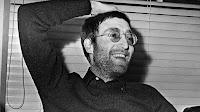
So, as promised, my review of Lennon's solo albums begins.
By January of 1970, the last time the Beatles ever worked together as "The Beatles" was more than four months in the past. Lennon had been divorced from his first wife Cynthia for over a year, and he'd been married to Yoko for nearly one; he'd also recorded and released two big solo hit records, "Give Peace a Chance" and "Cold Turkey," and was working on a third, "Instant Karma," which would do even better on the charts than either of the previous two. He'd cut his hair short, he and Yoko had (for the moment) quit heroin, and he'd long since privately told his fellow Beatles that the band was over, though they'd all agreed not to make any public announcement. Through all this, it's not clear what the end of the Beatles meant for John; in interviews while he and Yoko were traveling Europe and then again when "Instant Karma" came out, he'd talk about how what was ending wasn't so much a band as an "image," and that the current confusion as to the direction of the band might easily be a "rebirth." Lennon seemed happy--which was always a difficult thing to determine with him, but the signs were there.
But then the spring of 1970 brought Paul's release of his first solo album, McCartney (honestly, I don't think it's very good), triggering John's defensive, jealous spirit; Paul's incredibly ill-conceived (however frustratingly justified) promotional interview which was taken as a public declaration that the Beatles were finished, which John saw as a presumptuous betrayal; the release of both Let It Be the album and Let It Be the documentary film, with its (incorrectly!) depressing take on the "Get Back" sessions that produced both of the above, and the latter of which reduced John to tears when he saw it; and, finally, John's discovery, in March, of the psychotherapist and wanna-be guru Arthur Janov, whose book The Primal Scream convinced Lennon--a man who, as Rob Sheffield put in in Dreaming the Beatles, had always been "deeply attracted to conversion experiences and renunciation scenes"--that he desperately needed to scream his way out of his problems, his frustrations, his abiding and confusing hates and regrets. He and Ono spent four months, in London and Los Angeles, going through Janov's therapy. In the meantime, Yoko miscarried, Lennon turned 30, and had a terrible row with the father who had abandoned him as a child, whom he never saw again after his birthday. I'm hardly the first to say that you can't make sense of Lennon's first solo album, Plastic Ono Band (his name for the floating line-up of musicians that played with him and Yoko) without considering all of this.
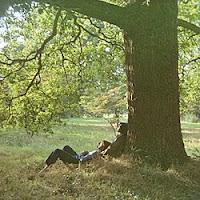 So the entire album is a work of therapy? Not quite; there are a couple of songs on it that could have been developed in any context. "Love" is a sweet, stripped-down tune, with Lennon's voice stretching to sing lyrics as sappy as anything Macca ever wrote (I mean, "Love is asking / To be loved"?), while "Look at Me" is a polished if rather plain ditty that had its roots in something Lennon was working on way back in India in 1968. But besides those, every song on Plastic Ono Band, to one degree or another, is an explicit expression or a reflection of John's resentments, his immaturities, his angers, his fears. "Working Class Hero" is a masterful political statement, a perfectly tight bit of quiet, controlled folky fury, which Lennon apparently obsessed over more than any other song on the album. "Hold On" is more an idea than a fleshed out song, but his use of tremolo, complemented by Ringo's superb drumming, makes it seem like genuine moment of hope in the midst of comprehensive despair. "I Found Out" and "Well Well Well" are both darkly bitter, pulsing, insistent songs of righteous indignation and John's shouting, all about making do and living life despite the betrayal of others. "Remember" and "Isolation" are both full of dissonances and rhythmic shifts; they're worth pairing together, though the sadness of the first is staccato and accusatory, and on the second its bluesy and reflective. I think they're all pretty solid tunes, however inseparable they are from the album's overall vibe.
That just leaves Plastic Ono Band's bookends, "Mother" and "God" (leaving aside the creepy, brief, monotone "My Mummy's Dead" ditty at the album's conclusion). "Mother" is the fullest artistic work on Plastic Ono Band, I think, and really is kind of a masterpiece of raw, musically expressed pain; his repeated, increasing hoarse cries at the end--"Mama don't go; Daddy come home!"--deepen and propel the song towards its conclusion. "God," though, is odd. It's an artfully arranged but sing-songy incantation, a kind of anti-mantra; if it wasn't for the tremendous combination of Billy Preston's gorgeous piano and Ringo's furiously controlled drumming, the whole thing would sound kind of petulant. Or at least I think that--but then, I've never been famous, and there's basically no chance I or anyone else who reads this will ever be remotely as famous as Lennon was. So maybe I've no place to say that his plaintive concluding lines--"I don't believe in Beatles....I was the walrus / but now I'm John. / And so, dear friends, / you'll just have to carry on. / The dream is over."--don't deserve the ponderousness he delivered them with. Like I said before, the end of the Beatles was huge--and to the extent that John was considered by many the Beatles' wounded artistic muse--thanks in no small part to John spending the first years after the break-up constantly telling himself and everyone else that--his pronouncements in "God" perhaps deserve all the respect they received. (As far as I'm concerned, though, the best thing about "God" is that it inspired Bono to write "God Part II," a mostly forgotten track from Rattle and Hum which is, I think, the best rock tune U2 ever recorded.)
I give Plastic Ono Band a solid B, maybe even a B+; it's better as a personal artistic document than as an album of popular music, but it's not entirely lacking in the latter. It'll be interesting to see if I decide that Lennon ever did better than this dark but mostly compelling first solo album of his.







