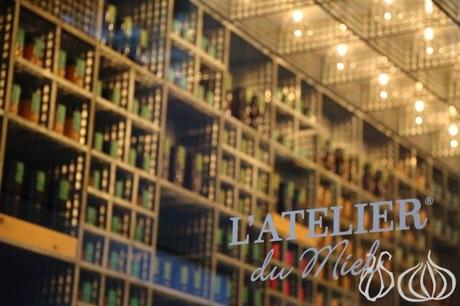
 Facing “Les Caves Du Taillevent” in Tabaris, a single door shop cannot be missed. Wooden doors decorate a large glass facade showing the activity inside. Hundreds of honey jars just waiting to be discovered.
The concept is simple yet innovative:
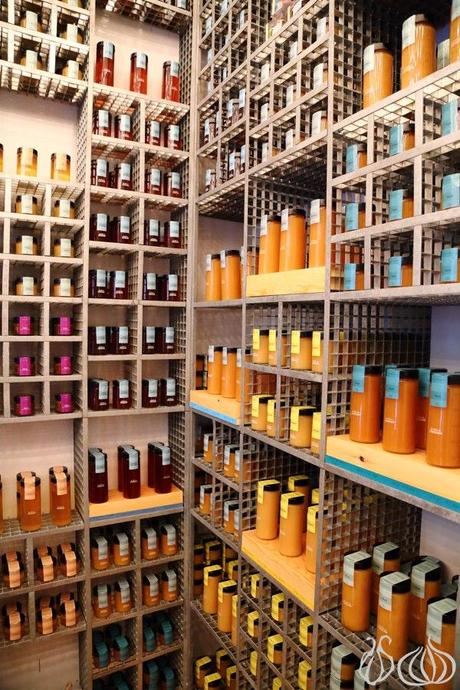
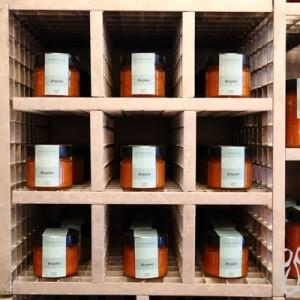
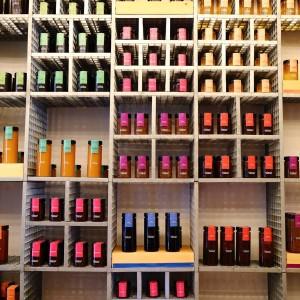
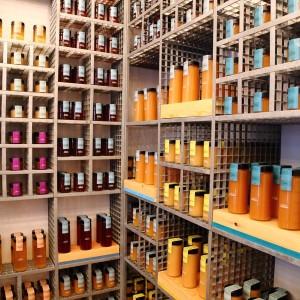
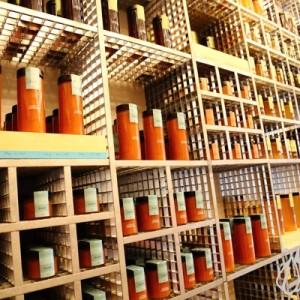
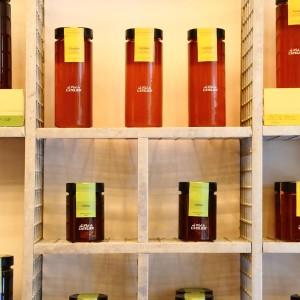
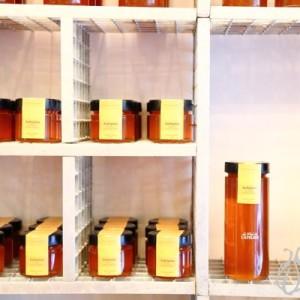
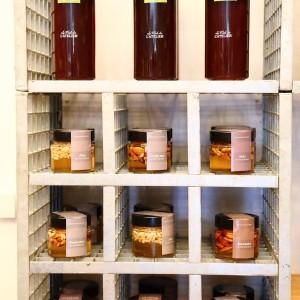
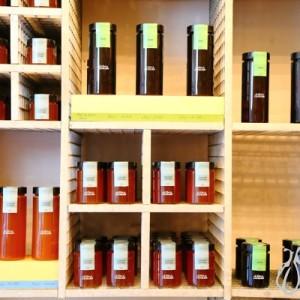
The main architectural challenge faced when designing the boutique was to be able to display the largest variety of honey types that come in three jar sizes each, and to stock the largest quantity of honey in a small space of 30 sqm. L’Atelier du Miel is a result of a joint effort between architectural design and graphic design, and proposes a solution that unifies display and storage in custom designed modules that would fit the three jar sizes. Today, the 30 sqm boutique can fit more than 3 tons of honey simultaneously, and display more than 30 kinds of honey and honey products while giving each kind its importance in the overall design.
Facing “Les Caves Du Taillevent” in Tabaris, a single door shop cannot be missed. Wooden doors decorate a large glass facade showing the activity inside. Hundreds of honey jars just waiting to be discovered.
The concept is simple yet innovative:
The main architectural challenge faced when designing the boutique was to be able to display the largest variety of honey types that come in three jar sizes each, and to stock the largest quantity of honey in a small space of 30 sqm. L’Atelier du Miel is a result of a joint effort between architectural design and graphic design, and proposes a solution that unifies display and storage in custom designed modules that would fit the three jar sizes. Today, the 30 sqm boutique can fit more than 3 tons of honey simultaneously, and display more than 30 kinds of honey and honey products while giving each kind its importance in the overall design.
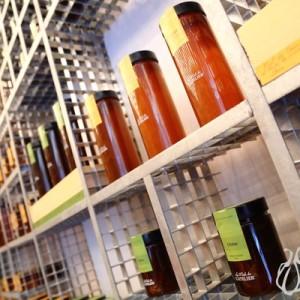
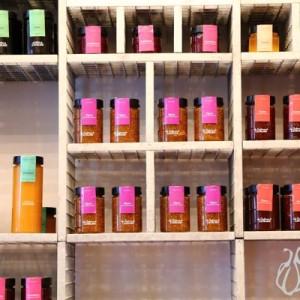
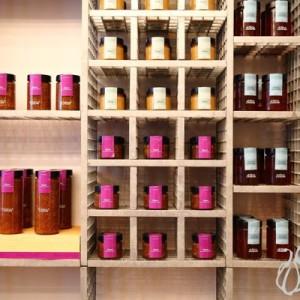
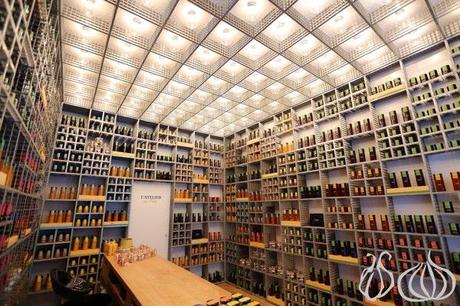 “We carefully chose the galvanized metal grating as material for our modules, because its lightness and reflectiveness give emphasis to the products rather than just creating storage space. Much more than only proposing a solution, the design also tells a story – one that reflects nature’s cycle and the seasonal work of the bees. In fact, given each honey kind is branded with a different color, the dominant color of the boutique changes according to the season and the honey we harvest – for example in the spring the dominant color in the boutique is red reflecting cherry blossom honey harvest, while in the summer, the color of the boutique tends towards green reflecting the oak honey harvest.” Marc tells me.
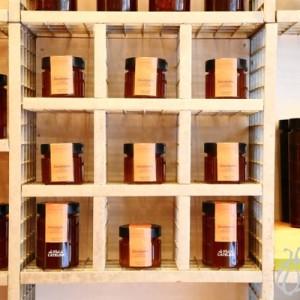
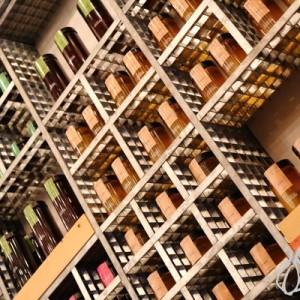
The 2 tons harvest is displayed in small jars, each in its own module, exactly the way bees store nectar of flowers in the hexagons of their hives. The continuity of modularity in the metal grating itself, repeating the modularity of the jar cubicles at a smaller scale, also opens up a window to sends us back to where it all began – in the fields
Wanting to look into the details of honey, I went to L’Atelier Du Miel where Marc welcomed me for few hours where I learned a lot. I don’t remember the hundreds of questions I asked, but I can assure you, that since that day, my perception about honey and bees has changed drastically. I can honestly tell you that I have been reading about bees and tasting honey every single day since.
“We carefully chose the galvanized metal grating as material for our modules, because its lightness and reflectiveness give emphasis to the products rather than just creating storage space. Much more than only proposing a solution, the design also tells a story – one that reflects nature’s cycle and the seasonal work of the bees. In fact, given each honey kind is branded with a different color, the dominant color of the boutique changes according to the season and the honey we harvest – for example in the spring the dominant color in the boutique is red reflecting cherry blossom honey harvest, while in the summer, the color of the boutique tends towards green reflecting the oak honey harvest.” Marc tells me.
The 2 tons harvest is displayed in small jars, each in its own module, exactly the way bees store nectar of flowers in the hexagons of their hives. The continuity of modularity in the metal grating itself, repeating the modularity of the jar cubicles at a smaller scale, also opens up a window to sends us back to where it all began – in the fields
Wanting to look into the details of honey, I went to L’Atelier Du Miel where Marc welcomed me for few hours where I learned a lot. I don’t remember the hundreds of questions I asked, but I can assure you, that since that day, my perception about honey and bees has changed drastically. I can honestly tell you that I have been reading about bees and tasting honey every single day since.
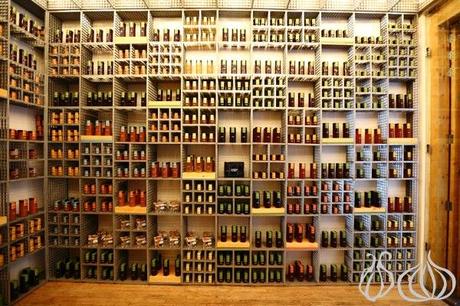 The place is superb… A great piece of architecture:
- Everything is perfectly displayed on the hundredth of shelves
- Galvanized steel is used all the way with a white background of wood
- Real wood covers the floor
- Only earth materials are used to remember the origins of the bees work
- A long bar, in the middle, constituted of wood as well, serves as a tasting counter
- Wooden doors differentiate the shop from all other shops on the same street
- 88 lamps light the shop in style
- Honey constitutes 98% of the shops products, as well as candies, jams and and a fridge
- The details of architecture are so perfect that the Air Conditioning is also covered
 The interesting things I learned:
- The physical properties of honey vary, depending on water content, the type of flora used to produce it (pasturage), temperature, and the proportion of the specific sugars it contains. Fresh honey is a supersaturated liquid, containing more sugar than the water can typically dissolve at ambient temperatures. At room temperature, honey is a supercooled liquid, in which the glucose will precipitate into solid granules. This forms a semisolid solution of precipitated glucose crystals in a solution of fructose and other ingredients
- Honey is a mixture of sugars and other compounds. With respect to carbohydrates, honey is mainly fructose and glucose, making it similar to the synthetically produced inverted sugar syrup, which is approximately 48% fructose, 47% glucose, and 5% sucrose. Honey’s remaining carbohydrates include maltose, sucrose, and other complex carbohydrates.As with all nutritive sweeteners, honey is mostly sugars and contains only trace amounts of vitamins or minerals.Honey also contains tiny amounts of several compounds thought to function as antioxidants, including chrysin, pinobanksin, vitamin C, catalase, and pinocembrin.The specific composition of any batch of honey depends on the flowers available to the bees that produced the honey
- Royal Jelly is a honey bee secretion that is used in the nutrition of larvae, as well as adult queens. It is secreted from the glands in the hypopharynx of worker bees, and fed to all larvae in the colony, regardless of sex or caste. When worker bees decide to make a new queen, either because the old one is weakening, or died, they choose several small larvae and feed them with copious amounts of royal jelly in specially constructed queen cells. This type of feeding triggers the development of queen morphology, including the fully developed ovaries needed to lay eggs. Royal jelly is filled with vitamins and great for the body
The Local Honey produced by L’Atelier du Miel:
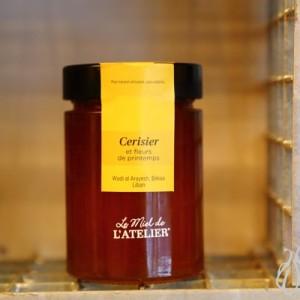
- 1‐Cerisier et fleurs de printemps (Wadi el Arayesh, Bekaa)
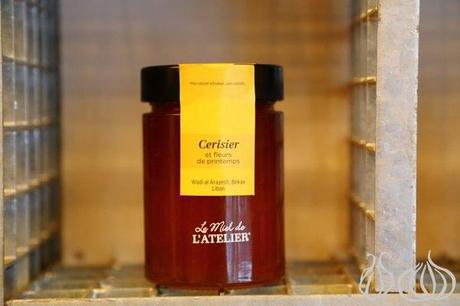
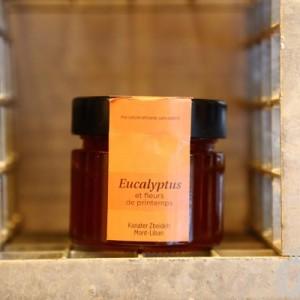
- 2‐Eucalyptus et fleurs de printemps (Kanater Zbeideh, Mount Lebanon)
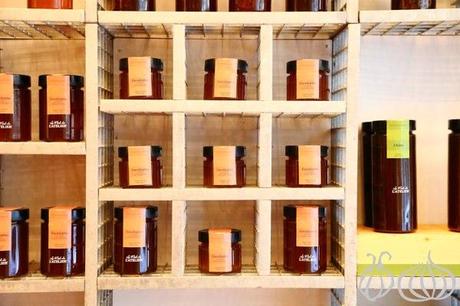
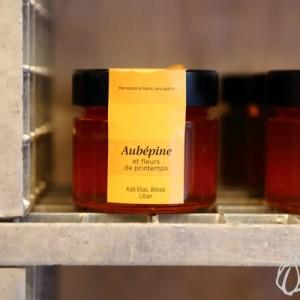
- 3‐Aubepine (Zaarour) et fleurs de Printemps (Kab Elias, Bekaa)
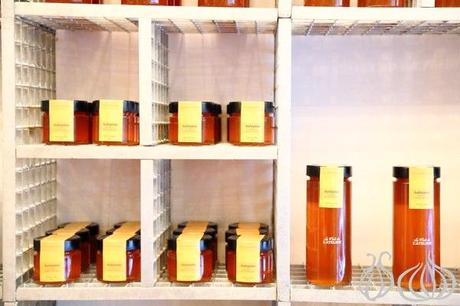
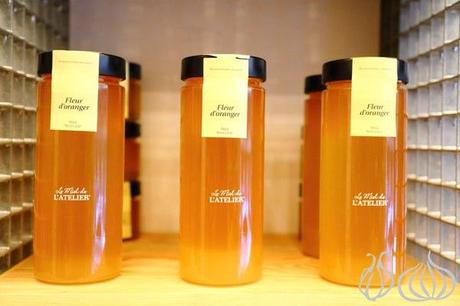
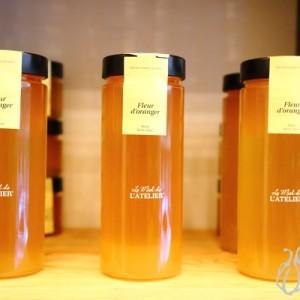
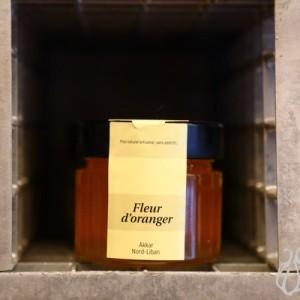
- 4‐Fleur d’oranger (Akkar, North Lebanon)
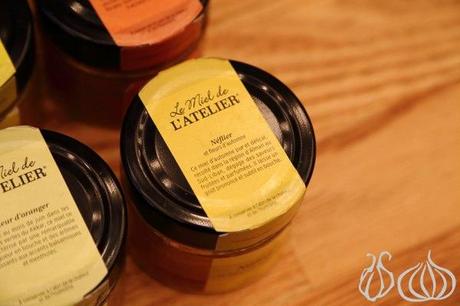
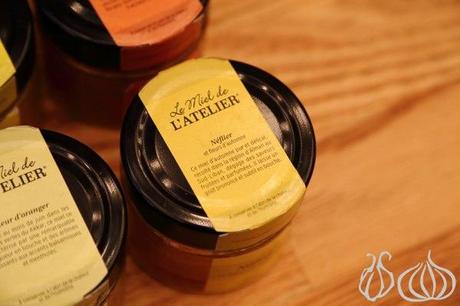
- 5‐Neflier et fleurs d’automne
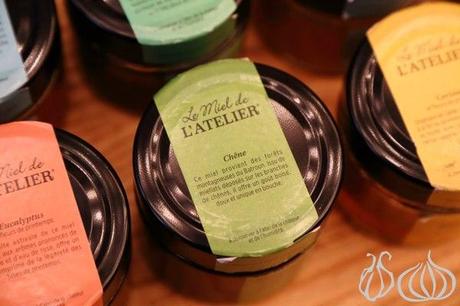
- 6‐Chene (Ghebeleh)
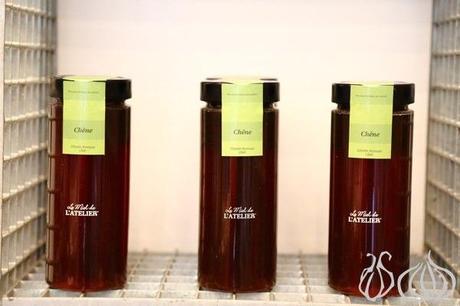
- 7‐Chene (Batroun)
- 8‐Chene en Rayon (with Honeycomb) (Ghbeleh) 9‐ Cèdre et fleurs d’été (Barouk)
- 10‐Cèdre et fleurs d’été (Tannourine)
- 11‐ Epines et fleurs d’été
- 12‐Néflier et fleurs d’automne (Alman, South Lebanon)
- 13‐ Thym et fleurs d’été
- 1‐Noix et Miel d’Acacia
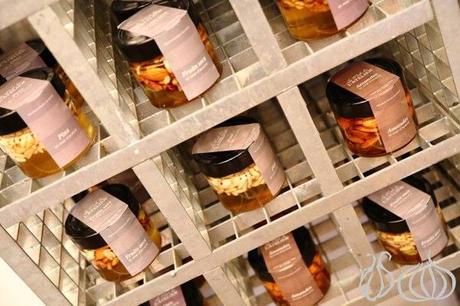
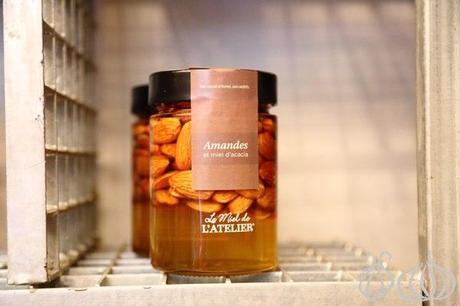
- 2‐Amandes et Miel d’Acacia
- 3‐Pins et Miel d’Acacia
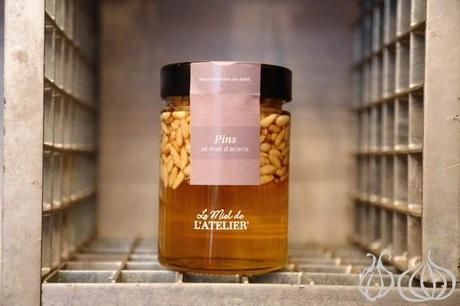
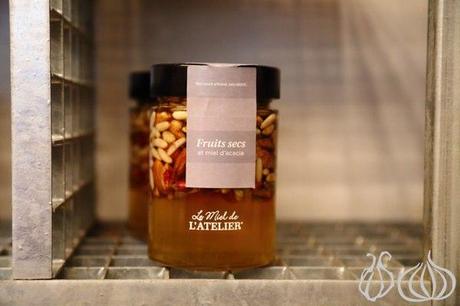
- 4‐Fruits secs et Miel d’Acacia
 International Honey :
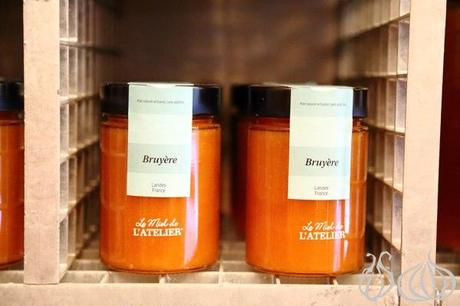
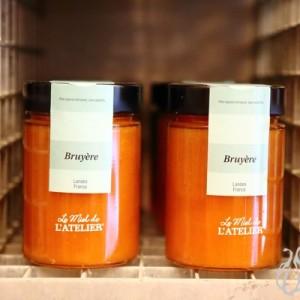
- 1‐Bruyere (Landes, France)
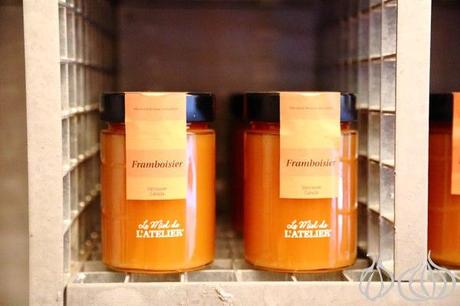
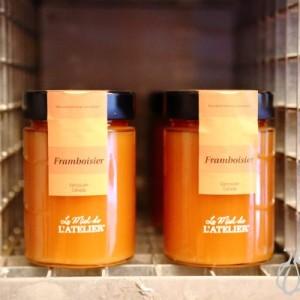
- 2‐Framboisier (Vancouver, Canada)
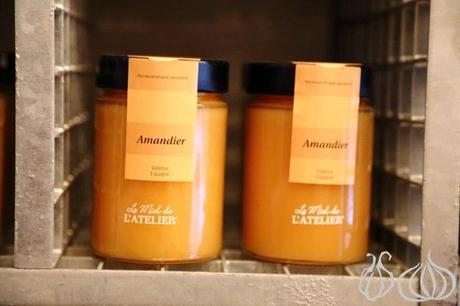
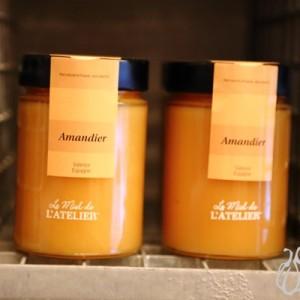
- 3‐Amandier (Valencia, Spain)
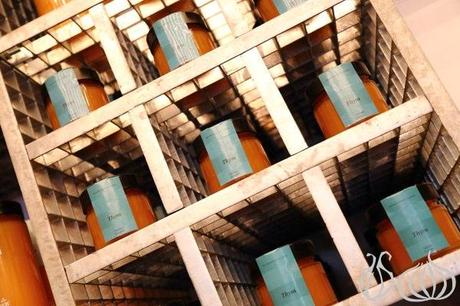
- 4‐Thym (Valencia, Spain)
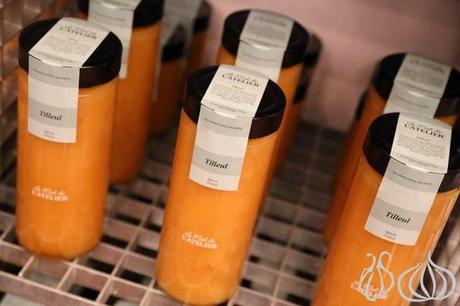
- 5‐Tilleul (Nievre, France)
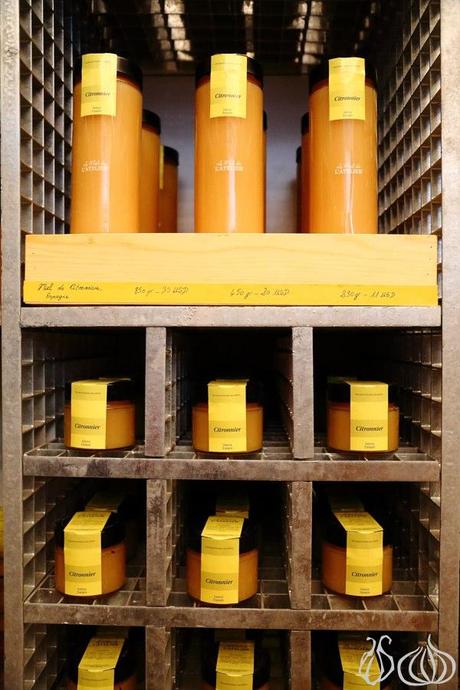
- 6‐Citronnier (Valencia, Spain)
- 7‐Romarin (Narbonne, Espagne)
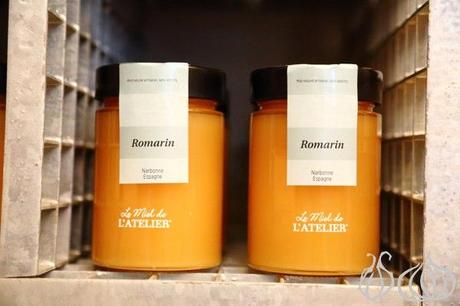
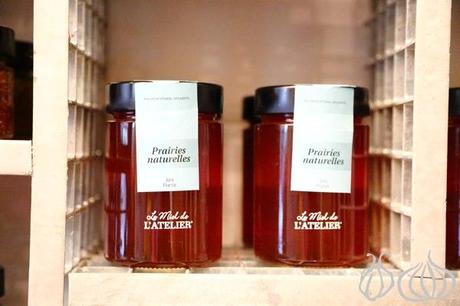
- 8‐Prairies Naturelles (Jura, France)
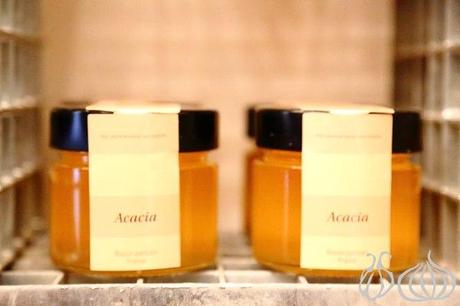
- 9‐Acacia (Bassin Parisien, France)
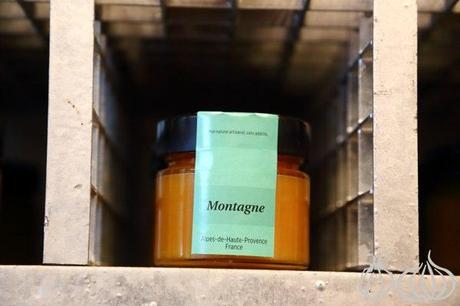
- 10‐Montagne (Alpes de haute provence, France)
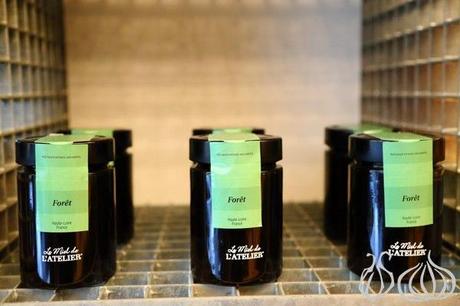
- 11‐Foret (Haute Loire, France)
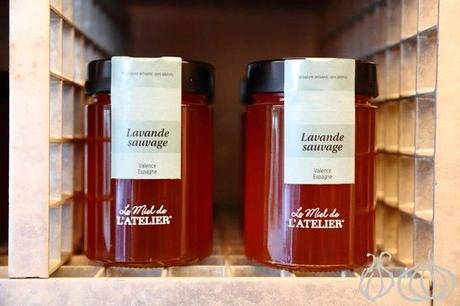
- 12‐Lavandes Sauvages (Valence, Spain)
- 13‐ Gelee Royale Bio
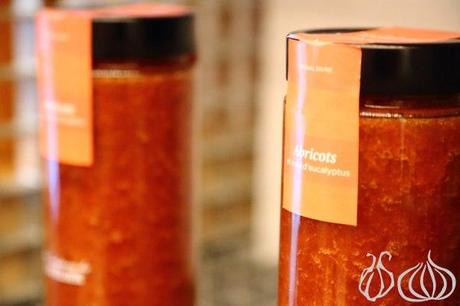
- 1‐Apricots
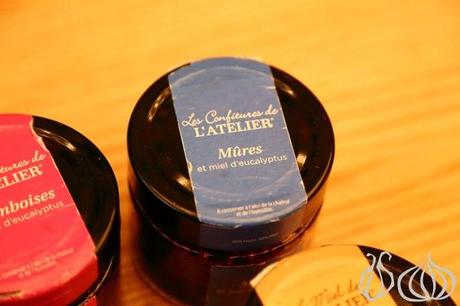
- 2‐Mures
- 3‐Fraises
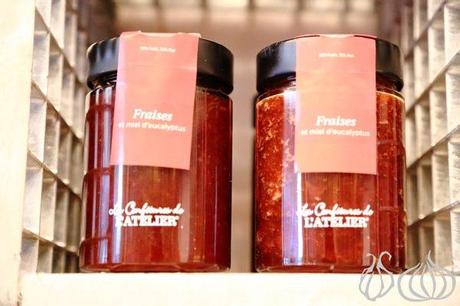
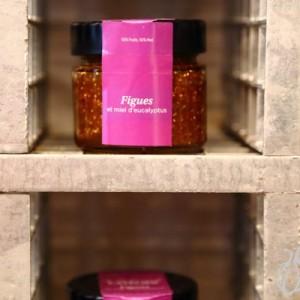
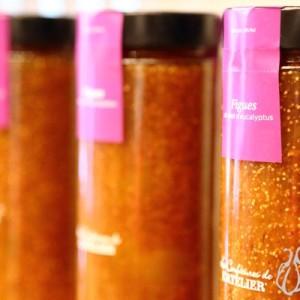
- 4‐Figues
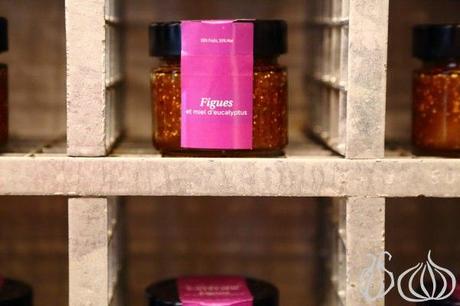
- 5‐Framboises
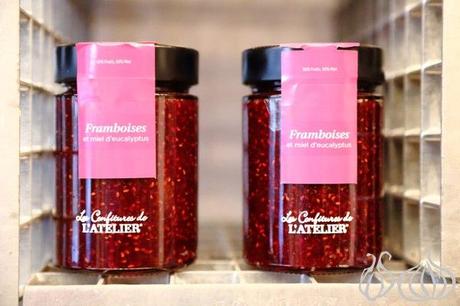 Les Gourmandises de l’Atelier:
- Bonbon dur au miel
- Bonbon Fourree au miel Vinaigre au miel Moutarde au miel
- Pain d’epices
- Financiers
- Nougat
- Bouquet de miel et confiserie (Box of 8 different kind of honey 30g)
- Maamouls au miel
- Maamouls au miel et cannelle
- Glaces with ND (Nathalie Dimas): Honey based Ice cream with yellow fruits
- The most popular honey in Lebanon is the oak tree
- The Medlar tree (Neflier) is the least available and rare to find
- Known as “3asal bishahdo” is Honey with its honeycomb
- The average prices are as follows: (35$ for the 850g). (11$ for the 230g). (19,5$ for the 450g)
The tasting session:Lebanon:
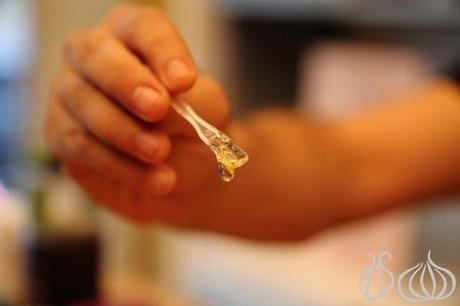
- Oak tree: One of the darkest colours. Lightly sweet with one single aroma. It’s a honey to taste alone without bread. Can be enjoyed with a spoon. Unifloral. It’s consistency is harder than the eucalyptus
- Eucalyptus: Many flavors. Sweeter. Many after tastes follow. This honey has a reddish color. Takes you to trip around the mountains
- Hawthorn (Zaarour) aubepine: Lightly yellow. Multifloral. Great benefits (2 seasons) includes honey dew as well. Light flavor.
- Neflier: Different consistency. Crystallized. One of the most famous and the rarest. No aftertaste
- Orange blossom: Considered as a digestive. Strong concentration of sugar
- Figs Jam: Aromas caress your nostrils before even crunching into the natural figs mixed with honey
- Blackberries: Crunching bites, a bit too sweet but rich
- Prairies naturelles: close to the supermarket taste
- Accacia: too sweet and enjoyed by children
- Tilleul: One of my favorite among the imported range
The day spent at L’Atelier du Miel is a day I will remember. A day where I learned about bees and their majestic life. A day where I got introduced to the empire of honey, its different aromas and flavors. Until today, I wasn’t a fan of what I considered simply sugar. I can assure you, that after visiting L’Atelier Du Miel, you will be amazed to the extent that you will start eating honey every single day, just like I do now.
Pages [ 1 ] [ 2 ] [ 3 ] [ 4 ] [ 5 ]