Gardening Magazine

Keeping Busy, Keeping Warm

By David Marsden @anxiousgardener

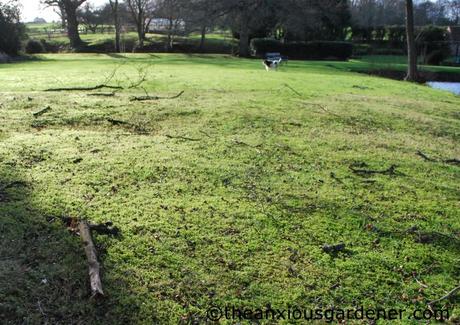
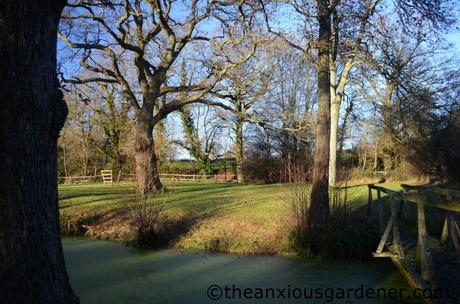
The grounds of the Priory can be a scary place when the wind gets up.
Keeping Busy, Keeping Warm
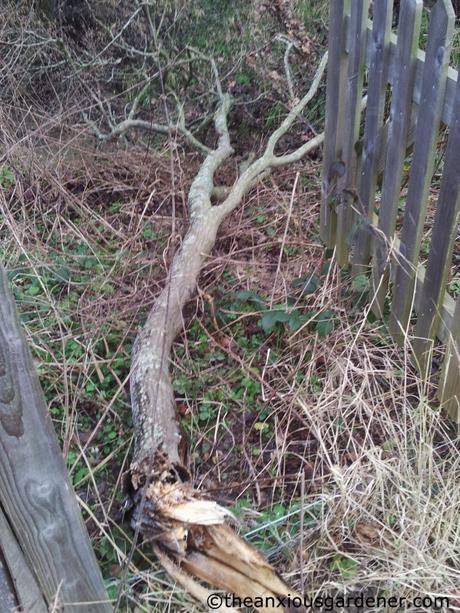
Even the largest trees twist and sway alarmingly; creaking, groaning and occasionally hurling down dead branches.  Generally, I think of trees as benign stalwarts but in high winds, I keep a wary eye on them and avoid walking beneath those shuddering arms.

Keeping Busy, Keeping Warm
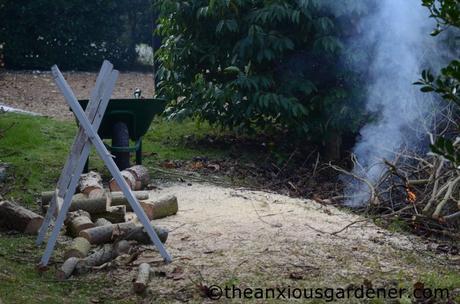
Afterwards, I collect all the branch and twig litter and barrow it off to the bonfire site.

Keeping Busy, Keeping Warm
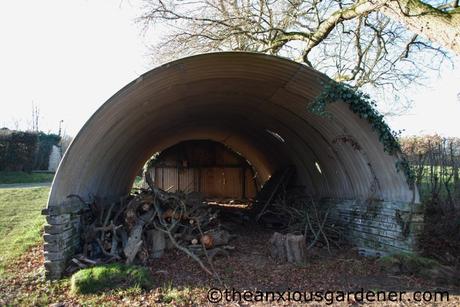
Except for bigger, heftier branches.  These I haul off to the ‘Nissan Hut’.

Keeping Busy, Keeping Warm
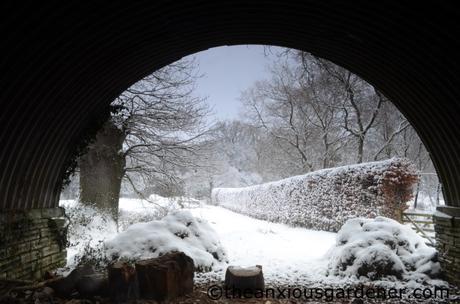
This is one of two that we have and is, I think, a 1940’s construction.  It isn’t a building of great beauty (though not without some charm), and as it is gently crumbling, we did consider demolition.  But its roof is asbestos and professional removal would have been prohibitively expensive.  One day, when one of the huge oak boughs above crashes down, we will have to dismantle it, but in the meantime I’m glad we kept the ‘hut. 
Keeping Busy, Keeping Warm
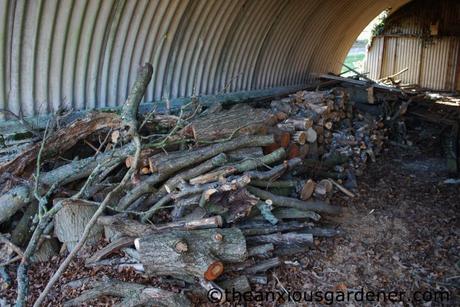
It makes a fine, temporary log store for wind-fallen and pruned branches, as well as any felled trees.  It is a dry place to work when it is pouring with rain or …

Keeping Busy, Keeping Warm

… snowing.  With the radio on, one might even call it cosy.

Keeping Busy, Keeping Warm
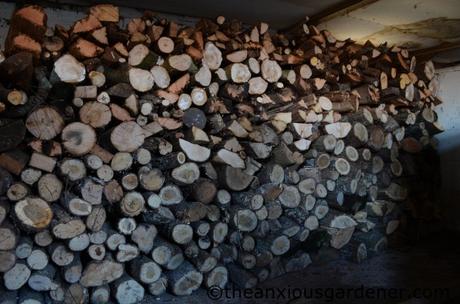
Using an axe is obviously warm work but, perhaps surprisingly, so is wielding a chainsaw.  Perfect cold-weather work and lots of it too.  Once chain-sawed or split, I take the logs to another outbuilding containing old pigsties.

Keeping Busy, Keeping Warm
This sty holds all the logs I’ve cut/split this winter: a stack five foot high, fifteen long and five rows deep.  We have quite a backlog (!) of firewood, so these logs won’t be burned for three or four years; more than enough time to season.

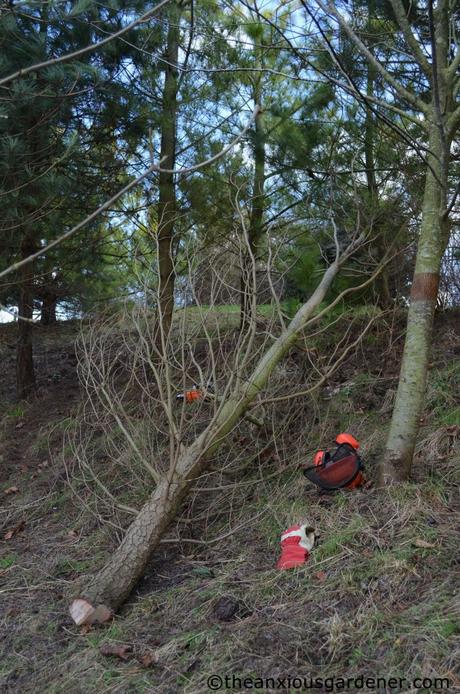
I don’t think we shall be cutting any trees down at the Priory this year, but at the Old Forge, I’ve felled half a dozen dead pines.
Keeping Busy, Keeping Warm
Call me over-cautious, call me timorous but working alone with a chainsaw and on a slope, this is about as big a tree as I will tackle.

Keeping Busy, Keeping Warm
Cut up, mixed with hardwood and seasoned, the pine will eventually be used on the house woodburner.

Incidentally, if you’re unsure which wood burns best, the following poem is a good starting point.

‘Song of the Forest Trees’

Logs to Burn! Logs to Burn!
Logs to save the coal a turn.
Here’s a word to make you wise
when you hear the woodman’s cries.

Beechwood fires burn bright and clear
Hornbeam blazes too;
If the logs are kept a year
To season through and through.

Oak logs will warm you well,
That are old and dry;
Logs of pine will sweetly smell
But the sparks will fly.

Birch logs will burn too fast;
Chestnut scarce at all;
Hawthorn logs are good to last –
Cut them in the fall.

Holly logs will burn like wax,
You should burn them green;
Elm logs like smouldering flax,
No flame to be seen.

Beech logs for the winter time,
Yew logs heat as well;
Green elder logs it is a crime
For anyone to sell.

Pear logs and apple logs,
They will scent your room;
Cherry logs across the dogs
Smell like flowers of broom.

Ash logs, smooth and grey
Burn them green or old,
Buy up all that comes your way
Worth their weight in gold.*

Holly and ash do indeed make fine firewood and may be burnt ‘green’ – though you shouldn’t have to.  Ideally, season all firewood for a year or two.  Personally, despite the above, I find Sweet Chestnut burns well – perhaps they mean Horse Chestnut which I haven’t tried.  The poem doesn’t mention willow or alder; the Priory has plenty of both and when dry and seasoned, they too make excellent firewood.  Burning too much conifer can lead to a build up of resinous tar in your chimney and increase the risk of a chimney fire.  And you seriously don’t want that.  If you’re ordering a load of firewood, do ask what sort of wood you’re buying: rather a mix of oak and ash than, say, leylandii!  And order only from a recommended, reputable supplier.  A friend of mine didn’t and had a huge tipper-load of sopping wet logs dumped on her driveway.

Anyway, back at the Priory, I also keep warm by tending to the …
Keeping Busy, Keeping Warm
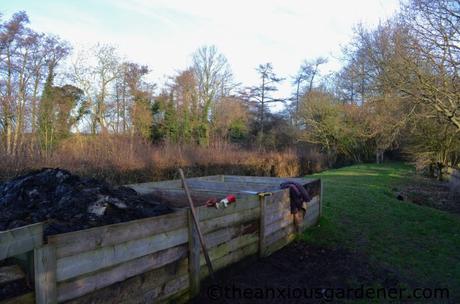
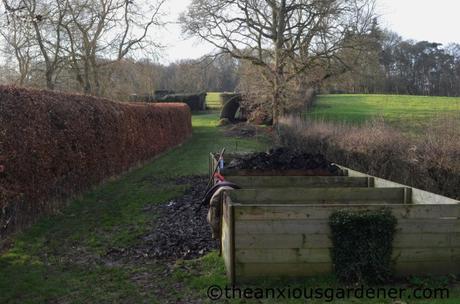
… seven large compost bins.  I turn the contents regularly, though when I built them …

Keeping Busy, Keeping Warm
… I hadn’t foreseen how much rainwater they would hold and how that would turn the surrounding ground into a quagmire.  Definitely, welly work.  After a few minutes pitch-forking, I’ve already removed two of my statutory five-layer, winter clothing.

Keeping Busy, Keeping Warm
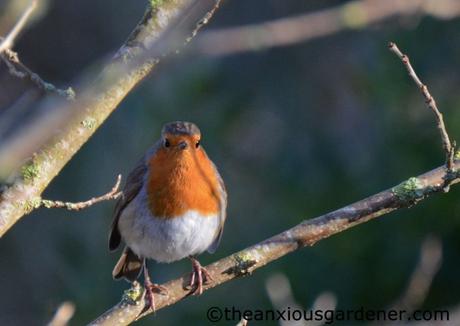
Whenever, I turn compost there will always be a robin close by.  Always.

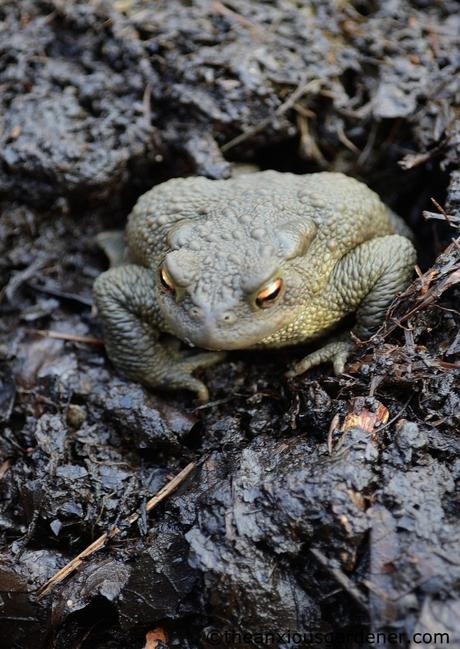
And living in the compost …

Keeping Busy, Keeping Warm
… is a fine, big, fat toad (November 2012).  Feeding on my worms, no doubt.  I occasionally get mole hills beside the bins too – it seems allsorts of creatures covet my lovely worms.  Frogs and toads in the compost would explain why a grass snake (Natrix natrix) has taken to hanging about – (filmed last summer).

Beauty isn’t he?  And a big ‘un.

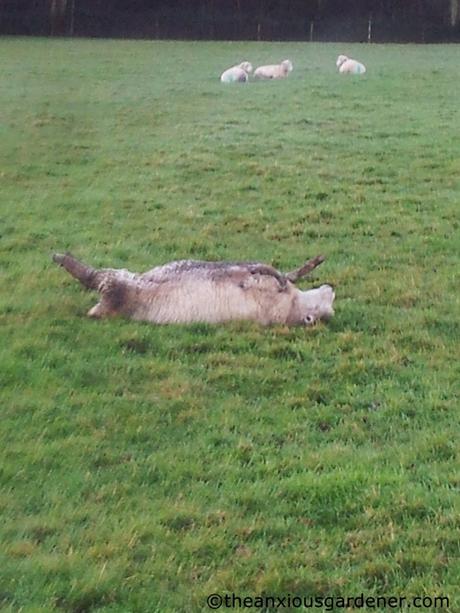
As I’m jogging about the estate, doing star jumps, staving off frostbite, I keep an eye on Margaret’s sheep.  Occasionally, after heavy rain I’ll see a ‘cast’ ewe, ie one on its back and unable to right herself.
Keeping Busy, Keeping Warm

Her ‘friends’ are supremely un-concerned by her plight

Sorry, not a great photo – I used my phone as it seemed discourteous to leave the poor thing feebly waggling her legs whilst I ran for my camera.  Once tugged back upright, she was fine and wobbled away without so much as a thankful nod or glance.  Left alone, wet, and particularly pregnant, ewes are often unable to get on to their feet and can die; a soaked fleece is very heavy!  So if you see a cast sheep, do help out.  It won’t thank you but the farmer will.
Keeping Busy, Keeping Warm
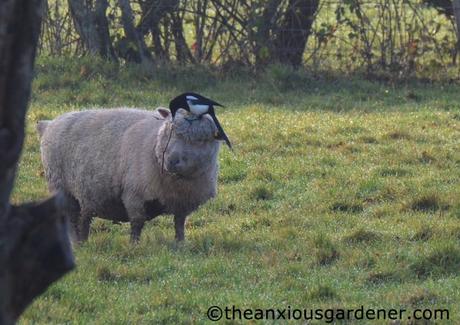
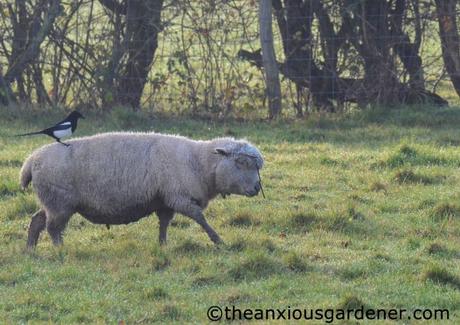
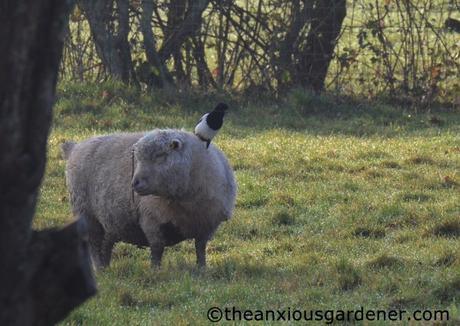
I’d never seen this before.  Like an oxpecker on an impala, this magpie is feeding on parasites.

Keeping Busy, Keeping Warm
Initially, I worried it was pecking at the ewe’s eyes.  But no, it was just gently probing about for ticks and grubs.  It also spent some time diligently probing the ewe’s bottom – I’ll spare you that photo.

Keeping Busy, Keeping Warm
Happy magpie, happy sheep.  Such a simple, symbiotic, Serengeti-ish, Sussex sylvan scene.

Warms my heart.

* Reproduced from ‘Learning to Live in the Country’ by Kathy Jones


Back to Featured Articles on Logo Paperblog