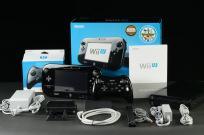
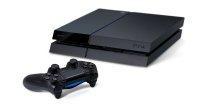
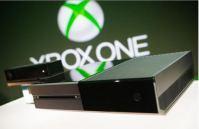
With the Xbox 360 and PS4 launching the past few weeks, it only made some sense to confuse this blog for more than just anime and manga. Oh right, we do sometimes write about games as well. And other stuff.
Anyways, I asked some questions to the bloggers at Damage Control Blog about the next gen consoles, why they’re not getting it, and where they stack up at this point. Feel free to share if you guys decided to purchase a console, or you’re just going to wait it out, and why. Well, as long as it’s game related, share what you have to say below, while also digesting thoughts from DMGC Blog as well.
What exactly is the biggest reason you’re not planning on purchasing a next-gen system at this time?
Angela Moseley (Co-Founder of Damage Control Blog): I’ve never been the type to be an early adopter for anything tech related, especially gaming. There are never any games in the launch lineup that interest me enough to justify the high price tag of a console and these new systems are no different. Furthermore, waiting a few years usually results in a cheaper console with a better build and plenty of interesting games to play.
Geoffrey Barnes (Co-Founder of Damage Control Blog): The lack of compelling launch window software on PS4 and Xbox One is the biggest issue. The software lineup is similar to what every console in recent memory has received after launch, except there’s a plethora of cross-generation titles. This means there aren’t many third-party next-gen console exclusives at the moment, though that will change after a year or so. I’m also waiting for others to beta test the hardware, to find the defects so later hardware releases will be free of. The price is also a factor, though that’s unlikely to drop in a year.
Joseph Daniels (Writer for DMCBlog): A lack of money is the biggest reason, although if I’m allowed to answer twice, I would say that I have more than enough games on older systems to worry about the small release library on the latest consoles.
Drew (Contributor at DCMBlog): One of the biggest limitations to brand-new (or brand-newish) consoles is having the scratch, especially heading into Christmas presents/snow tires/heating oil season. I’d say cash flow is the biggest reason because if my other reasons for not buying a console were removed, lack of funding would stop me cold.
Also, I like that it is presumed we won’t be buying them. This is far and away what the majority of us are doing. Hearing about 1 million Xbox Uno and PS4s being sold at launch is a drop in the bucket compared to the lifetime sales of their predecessors, which are more than 80 times greater.
The PS4 and the Xbox One have now come out, and along with the Wii U, now represent the “next-gen” of consoles. Out of those three, which one would you be willing to get if you were able to (or forced to, for some reason) and why?
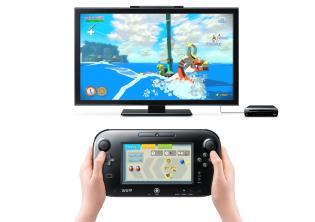
 Angela: The Wii U, hands down. I recently had the chance to spend a few hours with it and the experience was very enjoyable. The gamepad was surprisingly fun to play with and MiiVerse (Nintendo’s solution to social networking) was great. There are a few games on the Wii U that interest me and unlike the PS4 or Xbox One, Nintendo’s HD console is backwards capable with my backlog of Wii games. Even during software droughts the Wii U would be more than a high tech paperweight. Also, there’s Fire Emblem X Shin Megami Tensei. Nintendo said that was going to happen someday.
Geoffrey: The PS4 is the most intriguing option at the moment, due to the pedigree of Sony’s first-party developers and the number of third parties on board. Microsoft has a tendency to deliver a number of exclusives in the first few years of a console’s life, but will scale down eventually. Meanwhile, it appears the Wii U will be a home for some fantastic Nintendo-developed first-party games, but not much else.
Joseph: At this point, I would probably pick the Wii U, oddly enough. I don’t feel confident enough in my usual good luck with game consoles to purchase a PS4 or an Xbox One this close to launch. Plus, there are games available for the Wii U that I would play. My choice might change in a year or two, but currently, that’s my answer.
Drew: Well, if you hold the Zapper to my head, I’d have to go with the Wii U. It’s slightly cheaper, and has the words “DON’T PANIC” on the cover in big, friendly letters.
But the usual growing pains modern consoles have at launch, which are naturally dogging the new guys, are behind the first-to-market wonder. The system software has seen a few face-lifts, and the hardware has had a proper shakedown. Any new Wii U bundle I buy will have the “Day 1″ update and some of the subsequent ones already installed.
The software library has had time to grow, though, to be fair, the only reason I’d buy it is for the first-party games. With Super Mario 3D Land and the remake of Wind Waker out, I can no longer count on one hand the number of (unique to the platform) games on the market I want to play.
Neither the PS4 nor the Xbox One has more than a couple launch titles I’m interested in, and some of them I can get on the PS3 I already have (hellooooooooooo, Super Motherload!).
I think it’s fair to say all three systems have come out, and in turn, have had first day issues, whether it’s lack of games, system issues, etc. Do you think this is a sign that companies are just rushing out their products without proper testing, timing, etc? And these issues should completely convince people that they shouldn’t buy a system so early right?
Angela: I don’t know if I’d consider the early adopter problems to be a complete symptom of rushing units out the door. Honestly, it’s been about eight years between console generations and all three console makers have had plenty of time to design and test their systems. I’m going to give console manufacturers some benefit of the doubt and chalk many early problems up to unforeseen problems. After all, internal testing isn’t the same as putting a product out into the wild and design flaws will always arise. Then hindsight kicks in. That said, there will always be gamers determined to have latest systems right away, problems or not.
Geoffrey: They’re definitely rushing them out (especially in Microsoft’s case), and I believe the majority of consumers might catch on, depending on how long the next generation is. We’re seeing such a high adoption rate early on because this generation has gone on for so long; consumers were hungry for new hardware from Sony and Microsoft. If the PS4 and Xbox One are on the market as long with no successors, consumers will willingly early adopt again.
 Joseph: Some consoles could use a little more testing to iron out issues, of course. I would also say that, unfortunately, rushing seems to be a thing that happens quite frequently in gaming hardware and software development. But although I do feel that Microsoft and Sony rushed each other to the gate, it does feel a little weird saying they rushed when it’s been seven years since the PS3 launched and eight years since the Xbox 360. The extra year or two should’ve been enough time to work out problems in the PS4 and XBox One. But I guess both companies spent so long developing and re-developing their seventh generation consoles that they didn’t give themselves enough time to work on the eighth generation.
I don’t think that launch problems like the PS4′s faulty HDMI ports, the Wii U’s potential for accidental bricking or the XBox One’s disc drive errors will convince people not to do this all again in the ninth generation. If the issues the Xbox 360, the Wii and the PS3 had at launch a little over a half decade ago didn’t teach gamers a lesson, nothing will.
It’s possible that the reports of hardware failure are due to the large number of consoles that sell on release day and not due to a rushed development cycle. There will always be a rate of failure in anything, and those who purchase a broken console are inevitably the loudest voices on the Internet. But that said, there are some issues that probably shouldn’t happen, yet do. Still, if this is the case, then it doesn’t matter when someone purchases a console, so a release date purchase is just as good as a purchase any time else.
What should convince people not to buy a system early is that there are always hardware revisions and improvements made. Like the PSOne vs. the PlayStation, the PS2 slimline vs. the PS2 original, the PS3 super slim vs. the PS3 slim vs. the PS3 original…
Drew: First-day issues are a reality for many consoles and even games (and not just MMOs). It’s not a “new normal,” we’ve had these problems for some time. Heck, even the Nintendo 64 only had two games for months after launching.
The dirty truth is, everybody rushes. Unless you’re Blizzard or Valve and never, ever tell anybody a release date, there’s going to be crunch and rush. Considering that pre-holiday appears to be far and away the best business-sense time to launch a console (considering that’s the only time they’ve done it for generations, it had better be), missing that mark to work some kinks out of the firmware and disc-drives doesn’t delay launch and manufacturing for a month or two, it delays it until the next November.
And a thousand times yes that these issues should send the message loud and clear: Don’t ever by a console at launch.
Out of all the next-gen consoles, which one do you think is in a good position right now?
Angela: That is a tough question to answer. Right now both initial sales of the PS4 and Xbox One look great with both consoles selling over a million units days after their launch. I’m going with the PS4 because the one million units sold were only in North America, whereas the Xbox One’s sales includes parts of Europe. In terms of sheer numbers Sony has the edge because their console hasn’t even launched in Europe or Asia.Those markets generally favored the PS3 over the 360 during the previous generation.
Geoffrey: The PS4 and Xbox One are both in good positions with superlative sales out of the gate, but Sony’s delivered far more confidence with the PS4, so there’s the current winner. Whether that will stick over the next year remains to be seen, and that’s difficult to predict. The Wii U is in the worst position, and Nintendo’s running out of time to fix this.
 Joseph: Although the Wii U has been out long enough for Nintendo to have smoothed out the rough edges and built up a little bit of a game library…I would have to say none of the above on this question. The PS4 and Xbox One simply haven’t been out long enough and the Wii U’s only competition so far has been previous generation consoles with larger game libraries (well, that and portable systems). The joke for about a year or two after the Xbox 360 and PS3 came out was that the PS2 was winning the seventh generation, so I think that it’s too early to call until a clear leader emerges.
Drew: Sony won the hype war leading up to the console launch. They also hit the market before Microsoft, grabbing the dollars of the early adopters who would have bought either, but hadn’t the cash for both.
That being said, constrained supplies prevented Sony from hammering home the advantage, leaving the PS4 and Xbox One sales neck-and-neck.
The Wii U isn’t really a contender here, though it’ll get the usual holiday bump, as well as an “I can’t find a PS4 or XBone” bump. With a long-awaited more solid first-party support, it might actually catch on a bit, though I don’t see it outperforming the new competition.
I’m calling this one a draw. We’ll see whose glitches are bigger and software is smaller over the coming year.
Last question: which game studio(s) stands to benefit the most thanks to the next-gen consoles coming out, if any?
Angela: Logically, I want to go with the big guys such as Activision and EA just because they have such a huge market share. When the newest Call of Duty or Madden comes out you better believe the fans of those franchises will be there. Both companies have been around for more than 30 years and despite how much flak they get from vocal critics they’re obviously doing something right. On the opposite end of the spectrum I believe indie developers (Supergiant Games, Double Fine Productions, etc) will also benefit. Thanks to digital outlets such as Steam, Xbox Live, PSN and the App Store smaller developers can create games without having to worry about extraordinarily high budgets. Additionally, Sony has been aggressively courting indies for their consoles during the lead up to the new generation, this is certainly something we didn’t see previously.
Geoffrey: Hmm, good question. I would say Nintendo, but not for reasons most would suspect. They’ve been having the same problems many Japanese developers had with PS3 and 360 in having trouble adapting to HD console development. It’s possible Wii U will never make a significant recovery, but because of the experience they’re receiving with developing games with HD assets now, they’ll benefit by being better prepared with their future systems. That includes the eventual successor to the successful 3DS, which could use the assets Wii U games are using now, and will use in the future.
Joseph: That depends. Is it going to cost less to develop for the eighth generation than it did for the seventh? A company like Square-Enix certainly won’t benefit if it means we have to wait even longer for games that probably should’ve come out years ago (but hey, at least they’re not rushing things like I insinuated other companies do in question three, and they did act like they’re making progress at this year’s E3). I honestly can’t think of anyone who will benefit the most from the new console generation. Maybe Ubisoft or Rockstar if I had to make a guess, but that is just a guess.
Drew: There’s no clear winners here, either. The only studios who are even at the party are internals and the “new year, new version” specialists. It’s business as usual for everybody. Sports game from EA, half-empty promises of a blockbuster or two in a few years from Square Enix.
A launch title is a great way for a little-known or new on the scene publisher that has a relationship with the console-maker to make the jump to the prime time. If any are doing it this time around, I must have been looking the other way.
The opportunity does exist for many of the indie publishers to hit the online markets with a vengeance. With the limited launch lineups, a lot of people will be looking there to expand their libraries during the long wait fot the next crop of AAA titles.