Here’s some alternatives to get to know if history repeats itself.
Hmm, we don’t like the look of this!!
In March 2025, the popular route-planning platform Komoot was acquired by the technology company Bending Spoons. This acquisition has raised concerns among users, especially in light of Komoot’s recent expansion of its paywall and the potential for job losses within the company. Given similar patterns observed in the industry, such as Outdooractive’s acquisition of ViewRanger and the downfall of FatMap after it’s integration to Stava, users are understandably apprehensive about the future of Komoot.
What to Look for as a good replacement for Komoot.
When searching for an alternative to Komoot, you should consider:
- Comprehensive Route Database: A robust trail database allows users to discover a wide range of hiking options.
- Detailed and High-Quality Mapping: Access to detailed and reliable maps is crucial for effective navigation.
- Offline Accessibility: The ability to download maps and access them offline is vital for exploring remote areas without reliable internet connectivity.
- Custom Route Planning: An effective platform should enable users to create and customize their own routes.
- User-Friendly Interface: A clean and intuitive interface makes planning your next hike easy!
- Price: Affordability is a significant consideration now that the business has been acquired, already high subscription costs are likely to increase.
1. HiiKER
Overview:
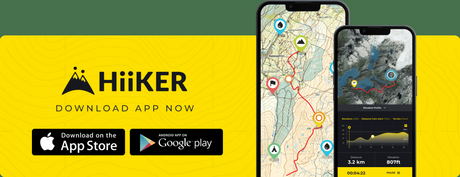
HiiKER is a dedicated hiking app that has gained popularity for its extensive trail database and intuitive navigation features. It offers detailed topographical maps from premium mapping suppliers and allows users to download maps offline for free. HiiKER also integrates with apps like Garmin and Strava, facilitating seamless tracking and sharing of adventures.
Comprehensive Trail Database and Advanced Navigation
HiiKER provides access to over 100,000 hiking, backpacking, and walking trails worldwide, catering to both casual hikers and seasoned adventurers. The app’s intuitive interface facilitates easy route planning and real-time navigation, ensuring users can embark on their journeys with confidence.
Premium Maps and Offline Accessibility
One of HiiKER’s standout features is its provision of free offline maps, allowing hikers to download and access detailed maps without an internet connection—a crucial aspect for remote area exploration. This contrasts with Komoot’s model, where offline map access often requires additional payments. HiiKER’s commitment to safety and accessibility is evident in its approach to offline mapping.
Cost-Effective Subscription Model
HiiKER’s subscription pricing is notably competitive offering premium maps and advanced features often as low as €24.99 per year. In comparison, Komoot’s premium subscription is priced at a hefty €59.99 annually, with additional costs for certain map regions. This pricing structure positions HiiKER as a more economical choice for hikers seeking comprehensive features without a hefty price tag.
Community Endorsements and Safety Initiatives
HiiKER has garnered positive feedback from the hiking community and organizations. Fiona Kelly of the Dublin Wicklow Mountain Rescue Team highlighted that the team utilizes HiiKER to assist volunteers in reaching those in need, praising the app’s provision of free offline maps to promote safety in the mountains.
Why It’s a Great Alternative: With its user-friendly design, global trail coverage, and robust planning and mapping features, HiiKER provides a valuable alternative to Komoot.
2. Alltrails
AllTrails is a widely-used app offering a vast database of over 450,000 trails worldwide. It provides detailed trail maps, user reviews, and photos, facilitating comprehensive trip planning. The platform operates on a freemium model, with the AllTrails+ subscription unlocking features like offline map downloads, real-time activity sharing, and additional map details.
While the platform offers a vast database of routes, it’s not exactly the place for planning real navigators, more a place to find a local forest trail for walking with the kids.
3. Locus maps
Locus Map is a multi-functional navigation app designed for outdoor activities like hiking and biking. It offers a wide range of online and offline maps, route planning, and tracking features. The app supports customization and integration with external sensors, making it a versatile tool for outdoor enthusiasts.
It does have it’s drawbacks though. It has a steep learning curve that can be overwhelming for new users. Its setup is complex, with many customizable options that require time to configure. Users have also reported issues with vector map rendering, particularly with smaller paths and natural features. Additionally, performance problems have occurred on specific devices, and integration with external hardware like smartwatches can be inconsistent.
3. Strava
Strava offers a robust community platform that allows users to track their activities, share routes, and engage with others through features like clubs and challenges. This social aspect fosters motivation and connectivity among outdoor enthusiasts, making it appealing for those who value community interaction.
However, Strava’s primary focus is on performance metrics and competition, which may not align with the priorities of dedicated hikers seeking detailed route planning and comprehensive trail information. Unlike platforms specifically tailored for hiking, Strava may lack in-depth mapping features and offline capabilities essential for backcountry navigation.
When choosing an alternative to Komoot for hiking and outdoor navigation, it’s important to consider what features are most important for your hiking adventures. Whether it’s HiiKER for detailed trail navigation, maps and planning, AllTrails for trail density, or Stravas communities and clubs, these platforms offer unique advantages that make them strong contenders for your next outdoor journey.