


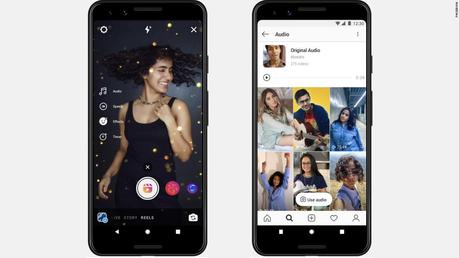


Instagram announced Friday that it is about to launch its own video sharing feature, Reels, in the United States and 50 other countries, just one week after starting to test the platform in India.
Reels' announcement comes as TikTok finds itself in a newly weakened position, after India banned the short form video app and the Trump administration has indicated it will do the same.
"We are still looking at what people want and innovating every day to find new ways to improve people's experiences," a Facebook spokesperson told CNN. "Many platforms have gone before us to create products that meet people where they are - Snap, TikTok, others - but we think we can do it in a way that is unique to Instagram and that meets the requirements of our community. "
The reels will allow people to record and edit 15-second videos to music and audio, and upload them to their stories and Instagram's Explore feature. An official launch date has not yet been announced.
Instagram and its parent company, Facebook , are used to imitating new features from other applications - and being successful. In 2016, the company launched its Stories feature, which allows people to share content that disappears after 24 hours. Eight months later, the competitor of Snapchat has exceeded the number of daily Snapchat users. In mid-2018, Stories wasmore than twice as popular as Snapchat.
Instagram is apparently not the only company that wants to compete with TikTok. YouTube is developing its own TikTok rival, Shorts, which will be released by the end of the year, according to The Information. And Snapchat, like TikTok, will soon allow users to explore public content with a vertical swipe gesture. Neither company immediately responded to a request for comment.
Still, TikTok welcomes the challenge.
"It's great to see that tech companies are enjoying the refreshing and creative experience that TikTok brings to people, which is even more evident as families have stayed at home for the past few months," said a spokesperson for TikTok on CNN. "We have always believed that open competition offers considerable benefits to consumers."






