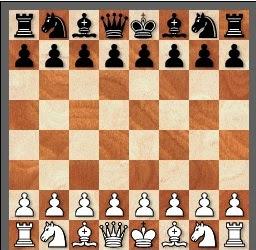
 In
the game of intelligence played on the square board divided into 64 alternating
dark and light squares with 16 pieces each – it is theThe World Chess Federation, FIDE (Fédération Internationale
des Échecs) that awards several
performance-based titles to chess players, highest being the Grandmaster title. Titles generally require a
combination of Elo rating and norms.Once
awarded, FIDE titles are held for life, though a title may be revoked in
exceptional circumstances.
A chess
title, usually in an abbreviated form, may be used as an honorific. For
example, Viswanathan Anand is styled "GM Viswanathan Anand".
FIDE's
first titles were awarded in 1950 and consisted of 27 Grandmasters (GMs), 94
International Masters, and 17 International Women Masters. IMs (International
Masters) usually have an Elo rating between
2400 and 2500. After becoming an IM, most professional players set their next
goal as becoming a Grandmaster. It is also possible to become a Grandmaster
without ever having been an International Master.
Awonder
Liang the US Chess prodigy earned his
third and final IM norm in Dallas in Nov 2015 when he was just 12 years, 7
months and 6 days old, becoming the
youngest American ever to qualify for the title of International Master. Now
there is a great Indian child prodigy – news reported in Indian Express,
Chennai edition of date.
In
the game of intelligence played on the square board divided into 64 alternating
dark and light squares with 16 pieces each – it is theThe World Chess Federation, FIDE (Fédération Internationale
des Échecs) that awards several
performance-based titles to chess players, highest being the Grandmaster title. Titles generally require a
combination of Elo rating and norms.Once
awarded, FIDE titles are held for life, though a title may be revoked in
exceptional circumstances.
A chess
title, usually in an abbreviated form, may be used as an honorific. For
example, Viswanathan Anand is styled "GM Viswanathan Anand".
FIDE's
first titles were awarded in 1950 and consisted of 27 Grandmasters (GMs), 94
International Masters, and 17 International Women Masters. IMs (International
Masters) usually have an Elo rating between
2400 and 2500. After becoming an IM, most professional players set their next
goal as becoming a Grandmaster. It is also possible to become a Grandmaster
without ever having been an International Master.
Awonder
Liang the US Chess prodigy earned his
third and final IM norm in Dallas in Nov 2015 when he was just 12 years, 7
months and 6 days old, becoming the
youngest American ever to qualify for the title of International Master. Now
there is a great Indian child prodigy – news reported in Indian Express,
Chennai edition of date.
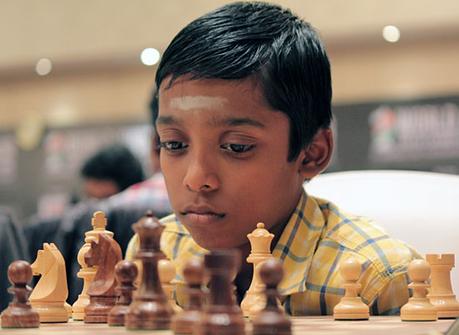 photo credit : enchessbase.com
There is a story that R
Praggnanandhaa’s parents often invoke to peals of laughter from listeners. When
he was taken to Slovenia for his first World Championship in 2012, he turned up
at the venue tired and jet-lagged. When his mother returned to check on him,
she found Praggnanandhaa asleep at the board, his opponent waiting patiently
for him to wake up and make his move.A couple of years on, the kid who slept
during a game is one of the biggest stories in world chess. The 10-year-old
from Chennai achieved his third and final International Master (IM) norm after
beating a Grandmaster and holding two others at the KIIT International Festival
of Chess in Bhubaneswar.
In comparison, Judit Polgar, the
youngest IM to date, did it only at 11-plus. Sergey Karjakin, the youngest
Grandmaster ever and current challenger to Magnus Carlsen’s crown, became an IM
at 11 years and 11 months. Praggnanandhaa is 10 years and 9 months old. “The
youngest International Master in the history of chess,” his coach R B Ramesh
delivers the punchline.“He got his first IM norm three months ago at the Cannes
Open in France. The second came recently at the Aeroflot Open in Russia. In the
Bhubaneswar tournament, he achieved his third norm and ELO rating of 2400 to
become an International Master. Now, we just have to wait for the FIDE to
process the documentation,” Ramesh says.
Praggnanandhaa’s journey began when he
was just over two years, watching his sister R Vaishali, herself a world girls’
under-14 champion, train. “He owes a lot to the two women in his life,” says
his father A Ramesh Babu, a bank employee.“When his sister Vaishali started
playing, we had little idea what to do. But by the time Praggnanandhaa started
playing, we were able to provide him with all that he needs. Maybe that is why
he has progressed so fast,” he says. Praggnanandhaa’s mother, Nagalakshmi, is
the one who accompanies the little champ to every tournament.“I’m physically
handicapped due to polio, so his mother has to
take him and his sister everywhere,” his father says.
Ramesh Babu, while proud, is also a bit
worried. He knows what his son needs now is a lot of international exposure,
and that means money. “Praggnanandhaa needs to play a lot abroad,” says his
coach R B Ramesh, a noted Grandmaster. “His mindset is already that of a
Grandmaster. With the right opportunities, he can overtake Karjakin and become
the world’s youngest ever GM.”
Pray that he becomes one and bring more
laurels to the Nation.
With
regards – S. Sampathkumar
photo credit : enchessbase.com
There is a story that R
Praggnanandhaa’s parents often invoke to peals of laughter from listeners. When
he was taken to Slovenia for his first World Championship in 2012, he turned up
at the venue tired and jet-lagged. When his mother returned to check on him,
she found Praggnanandhaa asleep at the board, his opponent waiting patiently
for him to wake up and make his move.A couple of years on, the kid who slept
during a game is one of the biggest stories in world chess. The 10-year-old
from Chennai achieved his third and final International Master (IM) norm after
beating a Grandmaster and holding two others at the KIIT International Festival
of Chess in Bhubaneswar.
In comparison, Judit Polgar, the
youngest IM to date, did it only at 11-plus. Sergey Karjakin, the youngest
Grandmaster ever and current challenger to Magnus Carlsen’s crown, became an IM
at 11 years and 11 months. Praggnanandhaa is 10 years and 9 months old. “The
youngest International Master in the history of chess,” his coach R B Ramesh
delivers the punchline.“He got his first IM norm three months ago at the Cannes
Open in France. The second came recently at the Aeroflot Open in Russia. In the
Bhubaneswar tournament, he achieved his third norm and ELO rating of 2400 to
become an International Master. Now, we just have to wait for the FIDE to
process the documentation,” Ramesh says.
Praggnanandhaa’s journey began when he
was just over two years, watching his sister R Vaishali, herself a world girls’
under-14 champion, train. “He owes a lot to the two women in his life,” says
his father A Ramesh Babu, a bank employee.“When his sister Vaishali started
playing, we had little idea what to do. But by the time Praggnanandhaa started
playing, we were able to provide him with all that he needs. Maybe that is why
he has progressed so fast,” he says. Praggnanandhaa’s mother, Nagalakshmi, is
the one who accompanies the little champ to every tournament.“I’m physically
handicapped due to polio, so his mother has to
take him and his sister everywhere,” his father says.
Ramesh Babu, while proud, is also a bit
worried. He knows what his son needs now is a lot of international exposure,
and that means money. “Praggnanandhaa needs to play a lot abroad,” says his
coach R B Ramesh, a noted Grandmaster. “His mindset is already that of a
Grandmaster. With the right opportunities, he can overtake Karjakin and become
the world’s youngest ever GM.”
Pray that he becomes one and bring more
laurels to the Nation.
With
regards – S. Sampathkumar
30th May 2016.