Nation is proudly celebrating ‘ Azadi ka Amrit Mahotsav’ – 75 glorious years of Indian freedom .. often described in a terse statement, India achieved freedom ‘without battle or shedding blood’ – Indian freedom struggle was far different perhaps – thousands sacrificed and more number underwent innumerable difficulties for that magic freedom, which we happily enjoy .. .. .. and, Indian History does not have much written about those great martyrs. This morning heard in AIR about a martyr ‘Pannalal’ – sadly, there is precious little info. on someone who gave up life for the Nation. I heard in that radio broadcast that this martyr at his prime youth was banished and died at Andaman Cellular jail – removed from his family.
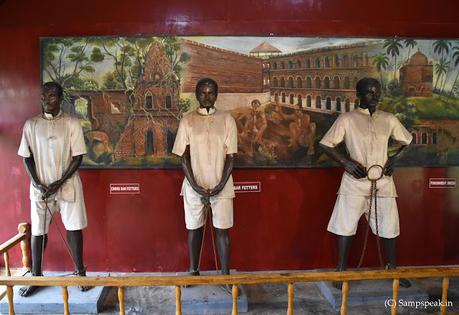
The First war of Indian Independence (there had been a few uprisings earlier – aptly this may not be the first, but of a much bigger magnitude rebellion) against the invaders, who came as Traders (British East India Co) and ruled the Nation for centuries on behalf of British Crown. We were fed a distorted history in our schools and colleges - ‘the uprising of 1857’ not as a National movement, not as a freedom struggle but as sepoy mutiny, only an uprising by a group of soldiers. .. .. and Gandhiji [Nehruji and Congressmen] got us freedom without spilling blood !! ~ British were so kind and noble that they gave freedom on a platter
After gleaning many, found some info that Shri Pannalal was born in Raipur. He was aroused and drawn to National sentiments by the speech that Hanuman Singh, Magazine Lashkar in the British Army (who assassinated Major Cidwel at his residence on 18 January 1858) delivered before a sepoy audience. Immediately, Pannalal joined the rebel soldiers in Raipur; involved in the killing of British army officers; with 16 other rebel soldiers, he was arrested by the British; tried, convicted and sentenced to death; hanged in Raipur on 22 January 1858. [Parliamentary Papers ñ reg. Mutiny further Papers, No.4, 1857-58, NAI, CKI, 1740-1947, p.171]
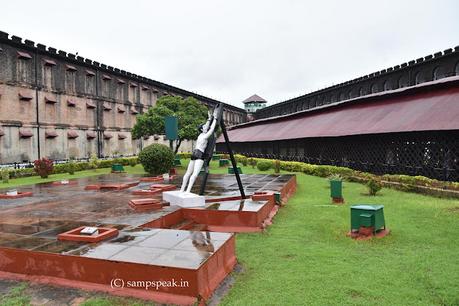
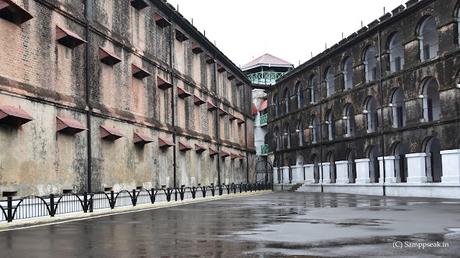
The radio report stated that he was banished to Andaman cellular jail which even today bears evidence to the cruelty of the British Empire towards those who fought against – far far away from the clemency image or the kindness shown to some leaders who were either kept in house-arrest or kept as political prisoners in Allahabad and elsewhere with all facilities. Cellular jail was the hub of inhuman punishments and cruelties of British wardens and jailers. The jail guards the real, painful, and sad stories of British rule and India’s journey to independence.
The reason for building the jail in Andaman &Nicobar islands was strategic in many ways firstly, it would isolate the prisoners from the world, secondly, the place was away from mainland India so prisoners would not be able to contact their friends or family, and lastly, they could not even escape from the island as it was surrounded by ocean from all sides. The prisoners were chained, isolated, whipped and were subjected to most inhumane treatment – yet we hail the British, forgetting all those who fought and underwent such horrorfilled treatment.
Though he died, his death made people revolt – the Third Regular Regiment of British Army was stationed at Raipur where Hanuman Singh was working as Magazine Lashkar. He was only 35 years old. Hanuman singh aided by two friends killed his military officer- Sergeant Major Sidwell on 18 January, 1858. 17 sepoys accompanied him to ammunition depot. British Army led by Lieutenant Smith surrounded them; Singh could escape but rest were arrested and were were hanged in front of the army on 22 January 1858.
These are the real life incidents that Nation must be reading in School books etched in its History – every time I get to read these, I cry .. .. my heart goes out to those martyrs who made our present day life possible. Salutes to them and fie upon all those who hid those great sacrifices and portrayed themselves without doing much.
With regards – S. Sampathkumar14th June 2022.
Bibilo :Dictionary of Martyrs India’s freedom struggle, published by Indian Council of Historical research.