


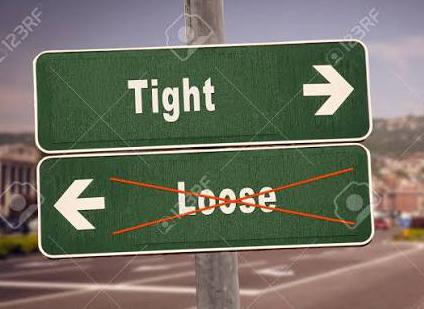
There are two basic cultural tendencies: loose and tight. The loosey-goosey model means shrugging at human differences, with a libertarian live-and-let live ethos. Whereas “tight” societies take rules and norms more seriously, demanding more conformity to them.
That’s the thesis of social psychologist Michele Gelfand, recently discussed on NPR’s Ted Radio Hour. Exemplifying looseness would be the Netherlands, lax about, for instance, prostitution and drug use. She also cites America, New Zealand, and Brazil. In contrast, a country like Singapore has rigid rules and strictures. Others mentioned there are Germany and Japan.
Gelfand ascribes the difference to how threatened people feel, due to a history of conflict, resource scarcity, or invasion, etc., producing a “safety first” mindset. And resulting “tight” societies do tend to be more orderly, with less crime and transgressive behavior.

Actually the “loose” Netherlands suffered, within living memory, a quite harrowing invasion. So it’s not so simple. And I recalled Ayaan Hirsi Ali’s memoir, Infidel. She’d lived in several Muslim countries — certainly at the “tight” end of Gelfand’s spectrum — yet wrote how, upon arriving in the Netherlands as a refugee, she was gobsmacked not by disorder but indeed its opposite. With a policeman actually helping her rather than brutalizing or shaking her down. Quickly realizing that in contrast to her past experience, here is a society that works.
A key difference between the two cultural types is tolerance for human variety. “Tight” societies tend to be hostile toward divergent people; loose ones more open to them. As shown again by Hirsi Ali’s story — she actually got elected to the Dutch parliament! Something like that being unthinkable in tight countries. Gelfand pointed to an experiment with visibly nonconforming people seeking help from strangers. Consistent with Hirsi Ali’s experience, such help was found more forthcoming in “loose” (and less judgmental) countries.
It may be true that looser societies experience more crime and misbehavior; perhaps a price willingly incurred for the sake of their openness. But people are bad at gauging risks, often overrating certain threats and dangers, resulting in sacrificing too much to avoid them.
Thus helicopter parenting. And, as I’ve written, TSA is another perfect example — we accept vast costs, restrictions, and inconveniences, to curb the threat of air terrorism. We’d be far better off just tolerating its occasional recurrence. We do accept over 30,000 traffic deaths annually! Life is full of risks, and trying to eliminate them all is a fool’s errand.
America is actually a kind of hybrid; loose in some ways, tight in others. Maybe that’s eclecticism; or messy compromises. We do have a prudish streak, probably the legacy of a religion-steeped history. But to me, the overall benefits of living in a looser, more open and tolerant society, enabling more human flourishing, far outweigh the downsides. My libertarian mentality would allow people to do as they please so long as no others are harmed.
Hirsi Ali’s memoir is again instructive, recounting how stiflingly repressive “tight” Muslim societies are particularly toward the female half their populations. Today’s Afghanistan is the poster country for this —women hardly allowed to have any life at all. Actually impoverishing life for Afghan men as well. Greater looseness benefits everyone.
I had long felt America was progressing in these regards, growing beyond past tightness meshugas (like with gay marriage, more rights for non-whites and women, etc.).

But lately, alas, we’ve lurched backwards. Exemplified by widespread demonization of transgender people, immigrants, and other minorities. Yet on the other hand, there’s a confounding loosening of standards — shrugging at disgustingness by a president and his minions that would have freaked us out not long ago. A deeply disturbing incongruity of societal trends — the worst of both worlds.







