


Last Updated on 13 April, 2026
Step into the haunting open-world Spirit Realm of Death Howl as Ro, a grieving mother desperate to rescue her son Olvi from beyond the veil. This brutally tactical deckbuilder refuses to hold your hand, leaving many players frustrated by exponential enemy spawns and unforgiving grid encounters. Our comprehensive guide solves these mysteries by offering battle-tested strategies for spatial positioning, strict target prioritization, and highly optimized deck creation from the massive pool of over 160 different cards. By mastering the mechanics detailed below, you will transform overwhelming ambushes into calculated victories and finally survive the shadowy depths of the afterlife.
 Fun Fact: Game Director Malte Burup created the game’s haunting audio by layering raw analog synthesizer sounds. In a Reddit AMA, he confessed to using a single four second audio sample from a library over 100 times. By heavily modifying and layering it within their audio engine, he ensured players would never notice it was the exact same base sound
Table of Contents
- 1. The Mechanics of Mortality and Resource Management
- 2. Dominating the Tactical Grid and Spatial Awareness
- 3. Deciphering Hidden Statistics and Status Effects
- 4. Priority Targets and Monstrous Threats
- 5. Exploiting Card Terminology for Maximum Impact
- 6. Forging the Perfect Arsenal and Deck Efficiency
- 7. Enhancements, Relics, and World Exploration
- 8. Analyzing Defeat and Adapting Your Tactics
1. The Mechanics of Mortality and Resource Management
Redefining Defeat and Checkpoints
Let us dispel a massive myth right now. Death Howl is categorically not a souls-like experience. In those traditional punishment simulators, falling in battle strips away your hard-earned progress and teleports you to a faraway checkpoint. Death Howl takes a completely divergent path. When you perish during a combat encounter, the game simply resets you back to the very beginning of that specific fight. You retain the exact same health pool you carried into the grid. The only penalty you suffer is the forfeiture of your accumulated Death Howls. Because the game handles failure this way, you never truly lose overarching progress to a tactical blunder. You can instantly launch another attempt to correct your mistakes.
Spending Your Wealth Safely
Death Howls serve as your primary crafting currency. You should prioritize spending these items on forging new cards rather than hoarding massive amounts to invest heavily in Teardrops. Entering a high-stakes battle with a large stockpile of currency is incredibly dangerous. Crafting a card that seems mildly useless is mathematically better than losing your wealth to a catastrophic fight. You will unlock new cards to craft regularly, and that seemingly useless card you forged nine encounters ago might suddenly offer amazing synergy with a new deck build.

 Pro Tip: Never carry more than two Death Howls into an uncharted encounter to completely minimize your financial risk and protect your crafting potential.
2. Dominating the Tactical Grid and Spatial Awareness
Pre-Combat Reconnaissance
Every battle unfolds on a bespoke grid, and your starting location heavily dictates your likelihood of survival. When you step onto a combat tile, the actual fight remains paused until you lock in your initial position. This observation phase grants you a colossal tactical advantage. You have the freedom to inspect every single adversary, review their health pools, study their abilities, and draft a battle plan. If the enemy formation looks completely insurmountable, you can simply walk away without suffering any penalties. You can even approach the encounter from a completely different direction to unlock alternative starting squares on the board.
Navigating Attack Vectors
Spirits in this game generally lack the ability to move or attack diagonally. Combat almost exclusively flows in straight rows, creating a distinct intersecting cross pattern across the battlefield. Solid stones and environmental barriers will successfully block the vast majority of incoming strikes. Ranged attacks are denoted by a specific bow and arrow icon. Most ranged abilities require a minimum operating distance, meaning you cannot fire them at a hostile target standing directly adjacent to you. However, ranged strikes excel at piercing the frontline to damage fragile targets hiding in the rear, and certain powerful cards will even strike every single tile in a given row.
Utilizing the Environment
The combat arenas are highly varied. You will encounter narrow chokepoints, sharp corners, and protective alcoves. You can position your back securely against a solid wall to prevent enemies from surrounding you. However, hugging a barrier introduces a severe risk. If a monster hits you with a push attack and there is no empty space behind you, your character will smash into the wall and suffer massive bonus damage. You can easily turn this mechanic against your foes. A basic Shove card might appear weak at first glance. Yet, if you violently push an enemy into a stone block, the resulting collision damage makes that card incredibly cost-effective. Shoving an enemy also opens up the perfect distance for a follow-up ranged attack.

 Pro Tip: Look for grids shaped like an “S” or featuring ninety-degree turns, as you can use these sharp corners to break line of sight, split the enemy forces, and tackle the encounter in manageable chunks.
3. Deciphering Hidden Statistics and Status Effects
The Illusion of Movement Numbers
When you select an enemy portrait, the interface reveals their health, mobility, and special traits. It purposely hides their actual damage output. Furthermore, the listed statistics are notoriously deceptive. If a charging Boar displays a movement stat of three, you absolutely must stand four tiles away to guarantee your safety. Creatures can launch attacks the moment they become adjacent to you. The Boar follows a rigid behavioral loop. It prefers to unleash a strong attack. If that option is unavailable, it marches toward you and performs a standard adjacent strike to set up a devastating blow for the next round. Conversely, avian spirits prefer hit-and-run tactics, striking quickly before retreating out of your immediate reach.
Armor and Defensive Tactics
Inflicting damage is not the only route to victory. Defensive options like the Block of Wood card grant you crucial stacks of Block, indicated by a wooden shield icon. These protective stacks directly absorb incoming physical assaults, completely shielding your vital health pool. Accumulating enough Block allows you to ignore devastating strikes entirely. Block also creates potent offensive synergies. Playing a Defensive Strike card costs significantly less mana for every single stack of Block you currently maintain. However, you must remember that armor stacks cannot prevent poison damage, and certain specialized attacks pierce straight through your physical defenses.
Amplifiers and Impairments
Specific cards provide distinct combat amplifiers. The Enchant Weapon card grants you a valuable stack of bonus damage for your next successful strike. You can hold onto this positive modifier across multiple turns until you find the perfect opening. On the opposite end of the spectrum, hostile spirits can cripple you with stacks of Weak, drastically reducing your damage output. Some creatures even curse the remaining survivors with weakness upon their death. Furthermore, annoying enemies like Owls will actively sabotage you by dropping junk cards directly into your deck. A card like Mind Glare wastes a precious slot in your hand, reducing your overall options since you will only draw four useful cards instead of five. You must burn valuable mana just to purge these useless items from your grip.

 Pro Tip: Completely ignore the junk cards cluttering your hand if you have the offensive output to eliminate the remaining enemies before your deck completely stalls out.
4. Priority Targets and Monstrous Threats
The Horned Menace Pandemic
The Horned Menaces, commonly known as Goats, demand your absolute priority. Do not let their quirky pupils deceive you. These adult creatures are absolute nightmares that warrant immediate eradication. They utilize a severe knockback strike that will easily crush you against environmental hazards for bonus damage. Immediately after striking, they flee to the furthest corner of the map and begin spawning additional spirits. In the worst-case scenarios, they spawn even more Goats, creating an impossible exponential threat. Freshly spawned spirits typically enter the battlefield with half health and require a turn or two to reach you, but they can easily overwhelm you if they possess attacks that ignore Block or hit across the map.
Toxic Crawlers and Trailblazers
Poison mechanics are lethal and stack rapidly. The damage calculates based on your total accumulated stacks. If two Crawling Terrors bite you, they might inflict six stacks of poison. You immediately suffer six points of damage. On the following turn, the stack decreases by one, and you suffer five points of damage. Spiders leap directly over obstacles and close distances rapidly. Snails move slowly but leave highly toxic trails across the floor. Whenever you strike a Snail, it retreats into its shell and generates five points of armor. You must bypass this defense by utilizing piercing attacks like the Mosquito Bite card or by striking them once and retreating safely out of range.
Retaliatory Aquatics
Deep within the Meadows of Delusion, you will face the Dreadfin. These severed Pike or Jackfish heads move sluggishly but harbor a terrifying retaliation mechanic. If you strike them, they instantly strike back. Hitting them from a distance causes them to dash straight through your body, dealing immense damage. You can easily outsmart them. Stand securely against the map boundary to remove their dashing space, neutralizing their counterattack. Alternatively, stockpile your armor, launch a ranged attack to absorb their harmless dash, and then deliver a fatal blow to their exposed rear to exploit their positional weakness.
The Elder Variants and Healers
Elder Spirits guard specific nodes on the map. These colorful variants possess elevated statistics and completely unique, horrific abilities that will likely obliterate you during your first encounter. However, engaging an Elder Spirit is occasionally easier than a standard fight. Facing a single Elder Spirit and one minion is often far more manageable than fighting a massive swarm of five regular monsters. Additionally, you must watch out for healers. Death Howl treats death in a binary fashion; a spirit is either alive or dead. A spirit with one health point and ten stacks of weakness still deals full damage. You must focus down healers and summoners immediately to prevent them from undoing your hard work.

 Pro Tip: If an ambush heavily features a Goat hiding safely behind a healer, immediately abandon the combat, drop your quest item, and teleport to safety so you can approach the grid from a superior angle.
5. Exploiting Card Terminology for Maximum Impact
Opening Moves
Cards featuring the First keyword only activate their bonus properties if you play them at the absolute beginning of your sequence. A solid three-mana card might refund two entire mana points if you deploy it First. Another might bestow massive armor bonuses alongside standard damage. Always prioritize playing these cards at the start of your sequence unless a strict tactical emergency requires a different approach. Keep in mind that standard tile movement does not count as playing a card, so you can safely position yourself before unleashing your opening move.
Stationary Power
The Still keyword transforms a basic card into a devastating weapon, provided you have not moved at all during your current turn. This strict restriction includes both basic grid traversal and card-based movement like Sprinting. Activating a Still effect can allow your character to strike a target twice for double damage, or it might magically return the exhausted card directly back to your hand so you can use it again in the same round.
End of Turn Defenses
Cards carrying the Last designation trigger their special effects when you end your turn, but only if they were the final card you played. These options typically cost zero mana and heavily focus on survivability. A prominent example allows you to carry your unspent armor stacks forward into the subsequent round, while also granting you additional Block stacks for meeting the keyword requirement.

 Pro Tip: Basic grid movement does not register as playing a card, meaning you can still relocate across the map after deploying a Last card without breaking the powerful chain effect.
6. Forging the Perfect Arsenal and Deck Efficiency
The Golden Rule of Deck Size
Death Howl implements a highly unusual deckbuilding structure compared to games like Inscryption or Magic the Gathering. You never lose your cards upon dying, allowing your collection to grow exponentially. You can maintain up to twenty different customized decks simultaneously, though you can only equip one at a time. A valid deck requires exactly fifteen cards at minimum and caps at twenty. Every single turn, you discard your hand and draw a fresh array of options. Operating a minimalist, fifteen-card deck is mathematically superior to carrying twenty cards. A smaller deck guarantees you will draw your highest-value combo pieces with ruthless consistency.
Crafting Harmonious Combos
Do not randomly throw rare cards into a pile. Build every deck with a distinct, focused purpose. For a close-quarters build, deploy First Strike to refund your mana, cast Block of Wood to build armor, and finish with a heavily discounted Defensive Swing. This sequence requires you to start with First Strike and requires the enemy to be close, but it deals solid damage and fortifies your defenses for a fraction of the standard cost. For a ranged archetype, utilize a Shove card to push a hostile target backward, follow up with Aim for the Heart or a Thrown Stone, and employ a Sprint card to maintain a safe operating distance.
The Flygge Dilemma
Early in your journey, you will explore a cave and discover a unique companion card. Ro will mention a bug that her son cherished, unlocking the Flygge. This creature costs two mana to summon. It generates a small beetle on the grid boasting five health points. As long as this beetle survives, your baseline mana increases from five to six at the start of your next turn. It also functions as a brilliant decoy, deliberately absorbing devastating strong attacks meant for you. However, the Flygge is not mandatory. The steep two-mana investment only truly generates a profit on your third turn, which is a very slow return. The bug completely lacks self-preservation instincts. On cramped, narrow maps, finding a safe deployment zone is nearly impossible, making it a highly situational desperation move rather than a reliable engine.

 Pro Tip: If you wish to streamline your deck during a long battle, incorporate Exhausted or Combine cards that permanently thin out your active pile after a single use, ensuring you draw your best cards faster.
7. Enhancements, Relics, and World Exploration
Navigating the Progress Trees
Each distinct Realm houses a unique progress tree. You must aggressively pursue unlocking the Realm’s specific Overwhelmed gauge and temporary Spirit Cards. The Overwhelmed gauge gradually fills as you perform localized actions. In the Realm of Piercing Winds, blocking rapidly fills the meter, granting you an immediate boon like restored mana upon activation. Spirit Cards are incredibly lethal, single-turn options granted upon vanquishing an enemy. Defeating poisonous creatures typically yields a Spirit Card that entirely purges your toxic stacks. Upgrading your tree to reduce the mana cost of these Spirit Cards to zero is vital for long-term survival.
Unleashing Totem Power
While navigating the map, keep your eyes open for Nests protected by Elder Spirits. Conquering these locations rewards you with premium crafting materials, Teardrops, and Totems. You initiate your adventure with a single Totem capacity. Totems dispense massive advantages on your very first turn. One starting relic boosts your initial damage output, while another blankets all adjacent squares with searing fire damage at the end of your round. Another totem grants you three stacks of Block whenever you kill an enemy, though it comes with a downside. You can gradually unlock additional Totem slots by advancing through the regional progress trees or by discovering scenic vistas.
Surviving Cave Ambushes and Quests
Sidequests generally involve carrying a Quest Card to a designated location. These items do not clutter your deck limit, and they frequently carry outstanding mechanical perks. However, holding a Quest Card completely disables your ability to teleport to Sacred Groves. You must walk to your destination manually. The game enthusiastically punishes travelers with brutal ambushes, particularly inside pitch-black caves where your map interface ceases to function completely. If an ambush is overwhelming you, simply open your inventory menu and drop the Quest Card. The item instantly teleports back to its original spawn point, and your fast-travel privileges are fully restored.

 Pro Tip: After dropping a quest item to retreat from a bad ambush, teleport directly to a Sacred Grove to heal your wounds and recalibrate your deck before attempting the treacherous journey again.
8. Analyzing Defeat and Adapting Your Tactics
Identifying Operator Blunders
If an encounter consistently destroys you, stop mindlessly repeating the exact same actions. You must thoroughly diagnose the root cause of your failure. Operator error is incredibly common. Did you thoughtlessly deploy a First card in the middle of your attack chain, squandering its bonus? Did you waste a massive four-damage strike on an enemy clinging to a single health point? And did you ignore enemy health levels entirely? Fixing human error simply requires patience. Slow down your thought process, read your hand carefully, and execute your combos with precision.
Recognizing Unlucky Draws
Occasionally, the discard system will betray you. If you begin a critical turn with barely any health, multiple crippling debuffs, and a hand completely stuffed with useless junk cards while a monster charges you, defeat is inevitable. Poor cyclic draws are an unfortunate reality of the deckbuilding genre. Accept the momentary loss, reset the encounter, and try again without frustration.
Resolving Strategic Flaws
Tactical mismatches cause the majority of repeated deaths. Are you suffering massive damage because heavily armored spirits are physically blocking your path to the fragile backline healers? Are you allowing the Goats to multiply endlessly? And are you absorbing lethal retaliation damage because you stubbornly hit a Dreadfin with close-quarters attacks? You must adapt. If your melee setup fails against a horde of toxic spiders, swap to a highly mobile ranged deck equipped with Aim for the Heart and poison removal cards. If nothing works, walk away entirely. Hunt for easier targets, complete a sidequest, locate a scenic vista, or gather basic crafting materials to forge an entirely new strategy.
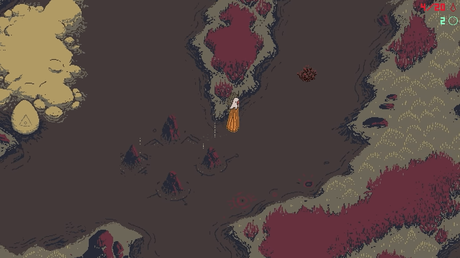
 Pro Tip: If you are completely blocked by a specific battle, seek out alternative map pathways or explore the edges of the environment to bypass the threat and gather strength in an adjacent area before returning for revenge.
Conclusion
Conquering the hostile environments of Death Howl requires far more than just brute force; it demands strategic adaptability and a perfectly streamlined deck. This guide provides the exact blueprints you need to overcome devastating enemy synergies and navigate treacherous quest ambushes with absolute confidence. By applying these lessons to your gameplay, you will transform overwhelming tactical mismatches into systematic victories. Keep experimenting with your card combinations, always prioritize those dangerous Horned Menaces, and claim your rightful place as a master of the grid.

 Did You Know? The game was built by The Outer Zone, an indie studio based in Copenhagen, using the Unity engine. However, because Unity does not handle pixel perfect graphics flawlessly out of the box, the developers had to build their own custom rendering tools and frameworks to achieve the game’s signature grimy, SNES era visual aesthetic






