


How to Clean a Water Bottle to Fight Mold & Bacteria
A reusable water bottle is likely always within reach, whether you’re at home, work, or the beach. It helps you stay hydrated, reduce plastic waste, and save money. But when was the last time you gave it a good scrub? Experts recommend cleaning these trusty water vessels regularly to keep them spotless, safe, and sanitary. So, if you’ve been neglecting giving yours some well-deserved TLC, read on to learn how (and how often) to clean it and why purifying your drinking water is also key for healthy hydration.
Why Should You Be Cleaning Your Reusable Water Bottle?
According to a , the average reusable water bottle harbors over 40,000 times more bacteria than a toilet seat. The thing is, bacteria need moisture to thrive, and water bottles have an abundant supply. And because we’re constantly touching the bottles with our mouths and (dirty) hands, foregoing regular cleanings could make them breeding grounds for mold and bacteria.
By cleaning a water bottle regularly, you help to:
- Prevent sickness. Cleaning minimizes exposure to certain bacteria in water bottles , particularly to vulnerable groups such as immunocompromised people, older adults, and young children.
- Reduce mold exposure. Unwashed parts may cause mold in water bottles, which the American Lung Association says could trigger severe allergy reactions and respiratory infections for those sensitive to it. Washing your water bottle regularly helps to prevent it from going moldy.
- Avoid smelly water bottles. Gunky buildups, funky odors, and strange aftertastes are common features of dirty water bottles. Cleaning your bottle helps keep your beverages tasting and smelling fresh and your bottle safe to use for daily hydration.
How to Clean Water Bottles Correctly
Now that you know some of the benefits of a clean water bottle, you’re likely wondering what the best way is to clean yours. Unfortunately, a quick water squish won’t prevent bacteria and mold buildup in your bottle.
Here’s how experts suggest cleaning a water bottle for the best results:
- Disassemble the bottle, including the straw, lid, and sealing rings or gaskets. Anything that looks detachable (and re-attachable) should come off.
- Fill the bottle with hot water and dish soap, and soak the extra parts in a bowl of hot soapy water.
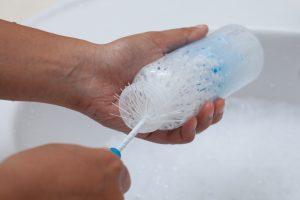
- Use a bottle cleaning brush with a long handle and firm bristles to scrub the inner walls and all the tricky, hard-to-reach nooks and crannies in the lid. Use a straw brush to clean inside the straw.
- Rinse all the parts thoroughly and let them air dry before reassembling and using the bottle.
If handwashing sounds like too much work, you could throw your water bottle in for a cycle in your dishwasher if the bottle is dishwasher safe. Just make sure to place the components on the top rack, open the spouts so hot water can get through them, and use the sanitizer and drying settings on the dishwasher.
Signs Your Water Bottle is Dirty (and Needs to Be Cleaned)
The best way to figure out if your reusable water container is overdue for a good cleaning is to follow your senses. What does inside the bottle or lid look, smell, or feel like? How does the water taste? Depending on what you observe, it may indicate that the bottle is filthy and contaminated.
Here are some common signs of a dirty water bottle:
- A funky smell.If the bottle, or even the lid, smells sour, musty, or otherwise “off,” clean it as soon as possible.
- Blackish, mold-like spots. Any unidentifiable dark or lightly colored formations inside the bottle or on the threads of the twist-off cap, spout, straw, or seals may be a sign of mold. These deposits may appear fuzzy, powdery, velvety, or slimy.
- Slimy residue.A slimy film inside the bottle or on the lip, spout, or straw may indicate biofilm, a sticky substance created by various bacteria (including some from the mouth) and a known trap for germs and scum.
- Gunky buildup. Do you see spots, streaks, floating bits, or other residue inside the bottle or on the cap, straw, or the threads of the lids? Don’t put off cleaning it.
Even if you don’t observe any of these signs, you should still clean your water bottle routinely, as it may still be filthy.
How Often Should You Clean Water Bottles?
Ideally, you should clean your reusable water bottle regularly, but the frequency can depend on how often you use it and the beverages you fill it with. Corkcircle, a company that manufactures insulated drinkware and barware, shares some general cleaning timeframes based on those factors:
- Daily Use:Wash your water bottle thoroughly daily if you use it every day. Clean it immediately after every use if you are sick, someone else drinks from it, or when you fill it with something other than water, like coffee, tea, or protein shakes.
- Regular Use: Cleaning every two or three days is usually enough for bottles that get moderate use.
- Occasional Use:If you only use your bottle once in a while, ensure it is clean before filling it.
Bear in mind that these cleaning recommendations may change based on personal preference, climate, and what you put in your bottle. Be instinctive and watch for buildup, odors, and strange tastes.
Use Filtered Water in Bottles
Healthy hydration isn’t just about toting a clean water bottle. You must also ensure the water does not contain elevated levels of contaminants or impurities that could harm your health and hinder your hydration. Why? Because ingesting waterborne germs can cause gastroenteritis, leading to severe fluid loss and dehydration, Mayo Clinic explains. Plus, if the water tastes bad or smells funky, you’re less likely to drink it and which could led to dehydrated.
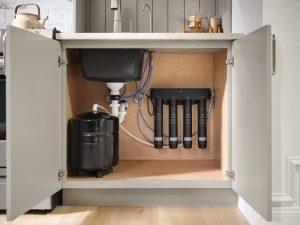
The good news is that purifying your drinking water with a reverse osmosis system can help It can also enhance the water’s odor and taste, so you can take every gulp or sip with confidence.
Learn How A Reverse Osmosis System Works and How to Maintain It.
Final Thoughts
Cleaning your water bottle regularly is essential for your health and hydration. However, for the best drinking experience, you also want to purify your drinking water to help eliminate high levels of potentially harmful contaminants and odd tastes and smells. Moen’s Under-Sink Reverse Osmosis System delivers on average 3It also boasts a stylish, dedicated filtration faucet that makes filling your water bottle easy and convenient.
Hopefully, this guide covered everything you need for happy and healthy hydration. But if you still have questions, contact SpringWell today, and we’ll address all your concerns.
Frequently Asked Questions

Is filtered water better than tap water?
Filtered water is water that has been treated to help remove elevated levels of contaminants and impurities often found in tap water. Therefore, drinking filtered water water and healthier for hydrating at home or on the go.
Do I need to clean my reusable water bottle if I only use filtered or purified water?
You absolutely should. Bacteria can transfer to the bottle from your mouth and hands, developing gunk and unpleasant tastes and odors over time. You should always wash your bottle as advised, no matter what water you use.
Can purified water go bad in my reusable bottle?
Yes. Bacteria from the environment or your mouth could still grow in your bottle if purified water sits in it too long, especially at room temperature. So, always empty, wash, and dry your bottle as recommended.






